Versuchen GOLD - Frei
How the US Supreme Court ruling reshapes US trade policy
The Sunday Guardian
|February 22, 2026
Countries should compare the value of stability under the current deal with the expected gains from renegotiation minus the risk of retaliation.
The US Supreme Court's decision in Learning Resources v Trump is formally a statutory holding about International Emergency Economic Powers Act (IEEPA).
In effect, it is a ruling about the architecture of bargaining power. Chief Justice Roberts frames the claim quite clearly. The President asserted “the independent power to impose tariffs on imports from any country, of any product, at any rate, for any amount of time.” The Court’s answer is that IEEPA cannot bear that weight. Tariffs are “a branch of the taxing power,” the President has “no inherent authority to impose tariffs during peacetime,” and Congress does not delegate the power to tax through vague verbs like “regulate.” The result is not the end of American tariff politics, but the end of a specific operating system that made the past year’s trade diplomacy unusually coercive: rapid, sweeping, and discretionary “reciprocal” tariffs imposed under emergency authority.
Trump's response has been to move immediately to a replacement stack. He invoked Section 122 of the Trade Act of 1974 to impose a 10% global duty for 150 days, tightened the border by reaffirming the suspension of de minimis duty free treatment for low value shipments, and directed USTR to initiate Section 301 investigations into “unreasonable and discriminatory” practices. Each of these tools is real, but each is materially different from IEEPA. Section 122 is time limited. Section 301 requires a record, findings, and process. None delivers the same combination of speed, breadth, and unilateral optionality that powered the reciprocal tariff regime.
The Court's insistence on “clear congressional authorization” therefore changes the production function of US coercion. The United States can still escalate, but escalation becomes slower, more segmented, and more litigable.

Diese Geschichte stammt aus der February 22, 2026-Ausgabe von The Sunday Guardian.
Abonnieren Sie Magzter GOLD, um auf Tausende kuratierter Premium-Geschichten und über 9.000 Zeitschriften und Zeitungen zuzugreifen.
Sie sind bereits Abonnent? Anmelden
WEITERE GESCHICHTEN VON The Sunday Guardian
The Sunday Guardian
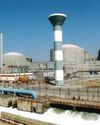
INDIA'S SMALL REACTOR, LARGE AMBITION
Understanding India's small modular reactor project is key in comprehending the vast nuclear energy ambition of the world's most populous, fast-growing country.

8 mins
February 22, 2026
The Sunday Guardian
INDIA-BANGLADESH MARITIME COOPERATION STAYED THE COURSE DESPITE POLITICAL SHIFTS
According to official Indian Navy data, in 2023-2024, India allotted 39 naval training slots to Bangladesh under the ITEC framework, and 37 were utilised.
3 mins
February 22, 2026
The Sunday Guardian
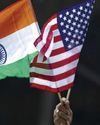
'INDIA SHOULD RE-NEGOTIATE TRADE DEAL WITH THE U.S.'
India should either opt out or delay negotiations or seek fresh terms so that the trade deal looks equitable, say experts.
5 mins
February 22, 2026

The Sunday Guardian
SAD RALLY TARGETS MANN GOVERNMENT AMID RELIGIOUS ROW
Akali Dal intensifies campaign as granthi allegations spark controversy.
2 mins
February 22, 2026
The Sunday Guardian
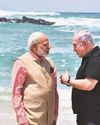
Shalom Namaste: As PM Modi travels to Israel
Israel is India's second largest defence supplier, with a large market for hight technology intensive Israeli arms industry. Israel is also in collaboration with various Indian companies to manufacture in India.
4 mins
February 22, 2026
The Sunday Guardian
India expands intelligence partnerships, turns provider from consumer
India has expanded intelligence-sharing arrangements, surveillance infrastructure, and geospatial cooperation with more than 20 countries since 2014, while simultaneously investing in advanced technologies including artificial intelligence, satellite systems, and digital surveillance platforms to strengthen its intelligence-gathering capacity across defence, intelligence, police, and paramilitary agencies.
3 mins
February 22, 2026

The Sunday Guardian
Karmayogi: How to reclaim meaning in academic life
Karmayogi is not a spiritual ornament but a professional orientation that shifts motivation from reward to responsibility and from anxiety to contribution.
5 mins
February 22, 2026

The Sunday Guardian
US’ renewed Tibet policy matters
For decades, Tibet has lived in the diplomaticshadows—acknowledged but rarely prioritized, invoked but seldom defended with sustained policy attention.
2 mins
February 22, 2026
The Sunday Guardian
EUROPE’S LEADERS SHOULD DERIVE RESERVED COMFORT FROM RUBIO’S SPEECH
Rubio's speech reflects a broader reality: the US is unlikely to abandon Europe, but it is equally unlikely to return to a sentimental conception of the transatlantic bond. The alliance is entering a post-romantic phase.
4 mins
February 22, 2026
The Sunday Guardian
DEMOCRATS DEMAND REFUND AFTER U.S. SUPREME COURT TOSSES OUT TRUMP TARIFFS
Governor J.B. Pritzker sent U.S. President Donald Trump an invoice on Friday demanding nearly $9 billion in tariff refunds for Illinois families after the Supreme Court ruled the President's much-touted levies are illegal.
1 mins
February 22, 2026
Listen
Translate
Change font size