Did America have to unleash the A-bomb to end the war?
The Herald
|August 16, 2025
THE NAPALM BOMBING OF MORE THAN 60 JAPANESE CITIES REMAINS FAR LESS NOTORIOUS THAN THE ATOMIC ATTACKS ON HIROSHIMA AND NAGASAKI, EVEN THOUGH MORE PEOPLE DIED. SO WHY DID AMERICA DECIDE TO USE THE ULTIMATE WEAPON?
IN THE final months of the Second World War, the XX Bomber Command of the United States Army Air Force (USAAF), based 1,500 miles to the southeast on the Mariana Islands, unleashed an intense aerial bombardment over Japan.
Their air campaign would be initially applied through conventional high explosive raids, before strategists opted for indiscriminate firebombing raids and, ultimately, with the deployment of atomic bombs on Hiroshima and Nagasaki.
While historians continue to debate the necessity and morality of the atomic bombings, a critical question remains: could the firebombing campaign alone have forced Japan to surrender, or were the atomic bombs essential to ending the war?
Through three years of study for my latest book, conducting archival research and interviews with eyewitnesses on both sides, I considered the scale of destruction, human cost, military strategy and political context that shaped the final decisions of 1945.
Between 1942 and 1944, American chemists developed one of their deadliest weapons: napalm a highly-flammable gel-like incendiary substance that would stick to surfaces and burn intensely, thus causing widespread fire damage and severe injuries on its target. Though it later found notoriety in the Vietnam War, entering the public consciousness in dozens of war movies, it was first used in industrial quantities against Japan in the spring of 1945. The country's traditional architecture constructed of wood and paper was ripe for such an offensive and the firebombing of Japanese cities, especially Tokyo, would reach unprecedented levels of devastation.
On the night of March 9-10, 1945, in an operation codenamed "Meetinghouse", some 330 American B-29 bombers of the XX Bomber Command led by General Curtis LeMay dropped nearly 1,700 tons of incendiary bombs on densely populated wooden neighbourhoods of Tokyo.

Diese Geschichte stammt aus der August 16, 2025-Ausgabe von The Herald.
Abonnieren Sie Magzter GOLD, um auf Tausende kuratierter Premium-Geschichten und über 9.000 Zeitschriften und Zeitungen zuzugreifen.
Sie sind bereits Abonnent? Anmelden
WEITERE GESCHICHTEN VON The Herald
The Herald
Residents urged to have their say over Devon libraries
DEVON'S residents are being encouraged to take a few moments to take part in the ongoing Libraries Consultation, which will help shape the future direction of library services across the county.

1 min
January 03, 2026
The Herald
Bizarre finds in sewers also have serious message
FOOTBALL, ΤΟΥ CAR AND A TRAFFIC CONE WERE FOUND
2 mins
January 03, 2026
The Herald
'Cold snap will add to NHS pressures'
THE \"bitingly cold snap\" will put extra pressure on NHS hospitals, the Health Secretary has said, as temperatures plummet across the UK.
1 mins
January 03, 2026
The Herald
Sea Cadets stay afloat from ports' firm cash
SEA Cadets in Torpoint will be getting two extra rowing boats thanks a donation from the firm which operates Plymouth's Millbay Docks.
1 mins
January 03, 2026
The Herald
THE LIES HAVE IT
DAWN FRENCH REVEALS TO YOLANTHE FAWEHINMI WHY SHE WAS TEMPTED BACK INTO STARRING IN A NEW SITCOM
4 mins
January 03, 2026
The Herald
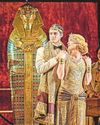
Poirot's on the case again... this time at the TRP
MARK HADFIELD STARS AS THE FAMOUS DETECTIVE IN CLASSIC CHRISTIE THRILLER
5 mins
January 03, 2026
The Herald
US 'locked and loaded'
US President Donald Trump and top Iranian officials have exchanged threats as widening economic protests sweep across parts of the Islamic Republic.
1 mins
January 03, 2026

The Herald
Man bullied and fleeced his own grandparents
THUG THREATENED THEM TO EXTRACT CASH
2 mins
January 03, 2026
The Herald
2025 set a new high for UK warmth
LAST year was the UK's warmest since records began, the Met Office has confirmed.
1 mins
January 03, 2026
The Herald
City's homeless need our help
THE festive season has passed, and we've all been gazing at cards, school plays or decorations bearing the familiar image of a tiny baby born in a manger.
2 mins
January 03, 2026
Listen
Translate
Change font size