
Mit Magzter GOLD unbegrenztes Potenzial nutzen
Erhalten Sie unbegrenzten Zugriff auf über 9.000 Zeitschriften, Zeitungen und Premium-Artikel für nur
Versuchen GOLD - Frei
Spies like Us
The Guardian Weekly
|January 12, 2024
Julian Borger thought his family had survived the Holocaust almost unscathed, and that his great-aunt Malciin Vienna was a gentle oddball. Then he discovered her important role in the resistance during the second world war and its tragic consequences for her family
-

OUR GREAT-AUNT MALCI WAS OUR FAMILY'S LAST LIVING LINK WITH VIENNA. She was my father's aunt, an eccentric figure on the fringes of our lives, to whom my two brothers, my sister and I would write monthly letters in schoolbook French, the language we barely had in common. She knew only a few words in English and we spoke no German.
Her full name was Malvine Schickler, and she was the only member of the family to have returned to Vienna after the second world war and stayed. Every few years, she would visit us in London and we three boys would be told to hide away our toy guns as a gesture of discreet compassion for a woman who had survived the Holocaust.
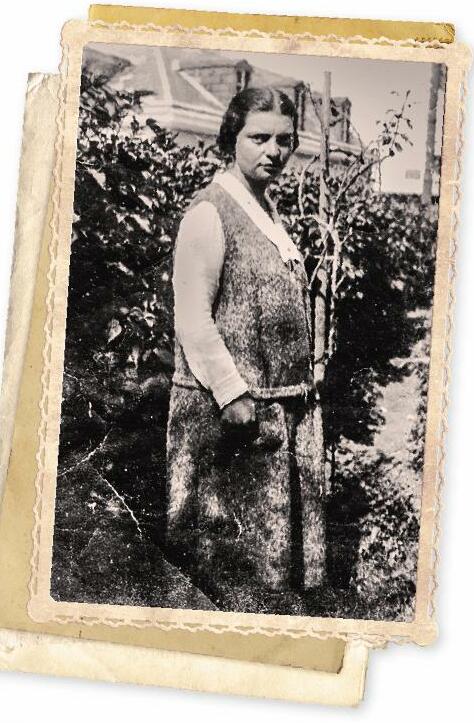
I have a memory of her arriving on our doorstep, a small woman with a crooked nose and protruding, asymmetrical eyes. She looked as if she had dropped in from a different age, dressed in a dark green loden coat, lace-up brown shin boots and an oddly jaunty little Tirolean hunter's hat of a muddy colour with the rim turned up at the back.
On these visits, Malci was happy enough to sit at our kitchen table, benignly observing the noisy life of a family of four children. She would smile at us, often it seemed on the verge of tears, and try out her handful of English words.
Back in Vienna, she lived in a cramped one-bedroom flat in a sevenstorey block in Favoriten, the 10th district, where she led a life of extreme frugality, turning the heating on in winter only on those rare occasions she had visitors.
When we arrived on our first family trip to Vienna in 1975, it was Malci who made arrangements, which resulted in a highly ascetic form of tourism. We slept on heavy-duty metal bunks in a student hostel, and had meals in a college cafeteria.


Diese Geschichte stammt aus der January 12, 2024-Ausgabe von The Guardian Weekly.
Abonnieren Sie Magzter GOLD, um auf Tausende kuratierter Premium-Geschichten und über 9.000 Zeitschriften und Zeitungen zuzugreifen.
Sie sind bereits Abonnent? Anmelden
WEITERE GESCHICHTEN VON The Guardian Weekly
The Guardian Weekly
My boyfriend's use of AI stops him thinking for himself
My boyfriend of eight years, who is 44, has ADHD and runs his own business.

2 mins
February 27, 2026

The Guardian Weekly
'Our land lets us all breathe clean oxygen'
The Congo River basin is home to a biodiverse ecosystem-and a relentless trade in timber and charcoal
3 mins
February 27, 2026

The Guardian Weekly
Nations apart: Andrew's UK arrest highlights US passivity on Epstein files
It is a tale of two nations.
2 mins
February 27, 2026

The Guardian Weekly
Under water: Engulfed by storms, but climate denial grows
In the week between Christmas and the New Year, two Spanish men in their early 50s - friends since childhood - went to a restaurant and did not come home.
3 mins
February 27, 2026

The Guardian Weekly
The crown in court
A brief history of royal run-ins with the law
3 mins
February 27, 2026

The Guardian Weekly
Big in Beijing
James Balmont's band, Swim Deep, plays to crowds of hundreds across the UK - but in China, they play to tens of thousands. And they're not the only ones
3 mins
February 27, 2026
The Guardian Weekly
Trump's Board of Peace is serving private interests more than public good
In Gaza, aid still trickles in at levels relief agencies say are far below what is required.
2 mins
February 27, 2026

The Guardian Weekly
Needle drops Weight-loss pills are here - and big pharma stands to gain
Oral tablets could bring obesity treatment into the mainstream, with the sector predicted to be worth $200bn by the end of the decade
6 mins
February 27, 2026

The Guardian Weekly
How Italians gradually warmed to their Winter Olympics
With the atmosphere in Rome subdued as the Winter Olympics unfolded across northern Italy, travelling to the Games was not on Amity Neumeister's radar.
3 mins
February 27, 2026

The Guardian Weekly
Fire and fury
Violence erupts as security forces kill feared cartel boss.
1 min
February 27, 2026
Translate
Change font size