Versuchen GOLD - Frei
Carbon dioxide removal: The tech that's dividing climate scientists
The Guardian Weekly
|May 05, 2023
Carbon capture technology could be a key tool in tackling global heating. But could it also damagingly shift research focus away from renewables?
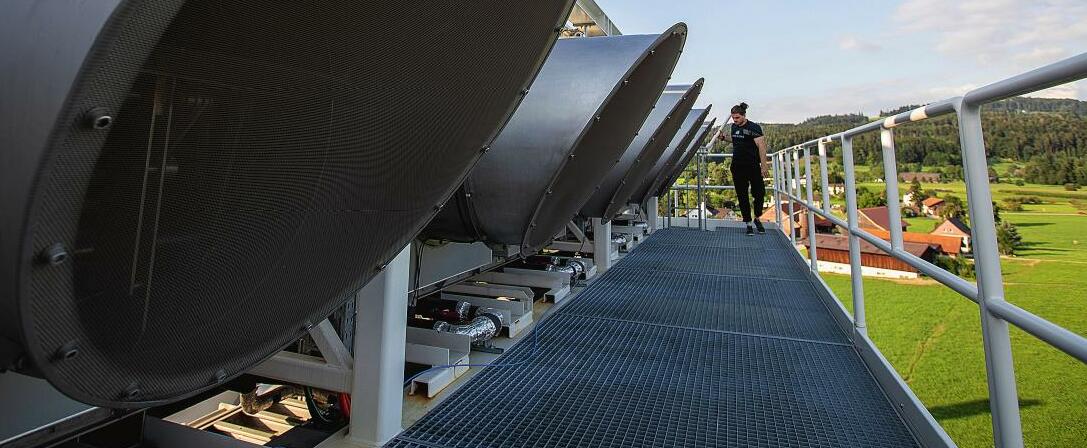
For some scientists, they are the inevitable next stage of staving off the existential threat of climate chaos. For others, they should not even be talked about.
Carbon dioxide removal (CDR) technologies, which provide a means of sucking carbon out of the atmosphere, are one of the hottest, and most controversial, areas of climate research.
The debate over whether and how to develop CDR has been ignited by the release in March of the final section of the comprehensive review of climate science by the Intergovernmental Panel on Climate Change (IPCC). The report found that ways of capturing and storing carbon dioxide, though expensive, may play a role in trying to keep global temperatures within safe bounds.
But scientists and policymakers are divided. Some say the technology must be the priority for research. Others urge caution, and warn against putting faith in untested technology before we have even fully deployed the reliable low-carbon technologies we already have, such as renewable energy.
John Kerry, the US special presidential envoy for climate, talked of his concerns. "Some scientists suggest it's possible there could be an overshoot [of global temperatures, beyond the limit of 1.5C above pre-industrial levels that governments are targeting] and you could clawback, so to speak; you have technologies and other things that allow you to come back. The danger with that... is that according to the science, and the best scientists in the world, we may be at or past several tipping points that they have been warning us about for some time."
The former UK government chief scientific adviser Sir David King strenuously disagrees. He believes CDR of many kinds will be needed, along with the means to "repair" the climate, such as by refreezing the ice caps, because the world is almost certain to overshoot the global target limit of 1.5C above pre-industrial levels.

Diese Geschichte stammt aus der May 05, 2023-Ausgabe von The Guardian Weekly.
Abonnieren Sie Magzter GOLD, um auf Tausende kuratierter Premium-Geschichten und über 9.000 Zeitschriften und Zeitungen zuzugreifen.
Sie sind bereits Abonnent? Anmelden
WEITERE GESCHICHTEN VON The Guardian Weekly

The Guardian Weekly
Movable feasts: expert tips on what to pack for a perfect picnic
What failsafe dishes can I take to a picnic? They’re so often disappointing.

2 mins
July 03, 2026

The Guardian Weekly
Democratic socialists on the rise by vowing to get stuff done
A trio of democratic socialist victories in mayoral contests in three of the largest cities in the US has unleashed a new wave of hope on the left of the party.
3 mins
July 03, 2026
The Guardian Weekly
After 35 years in the UK, I can still feel like a foreigner
The band I’m in is cruising to the end of its tour, with two nights at Victoria Hall in Settle, headlining a weekend festival.
2 mins
July 03, 2026

The Guardian Weekly
Why Kim is racing to expand his nuclear arsenal
At a ruling Workers’ party meeting that concluded last week, Kim Jong-un declared that steadily expanding North Korea’s nuclear forces was the “most correct and unique way” to cope with an increasingly unstable world, citing what he described as growing threats from the US and its allies.
2 mins
July 03, 2026

The Guardian Weekly
'It's a furnace' How the heat exposes brutal inequalities in French society
Living in a sweltering, seventh-floor flat on a concrete housing estate south of Paris, Samira said she was feeling desperate as France last week experienced its highest temperatures on record.
4 mins
July 03, 2026

The Guardian Weekly
A hot mess
Europe’s most severe heatwave ever has seen temperature records shattered in several countries. But after decades of climate warnings, why is the continent still so unprepared for rising heat?
5 mins
July 03, 2026

The Guardian Weekly
The stark wealth gap for ambassador and his party
With his million-dollar jewellery collection and his two Rolls-Royces, Mexico’s new ambassador to the UK will fit right in with the Mayfair crowd.
2 mins
July 03, 2026

The Guardian Weekly
‘Not for sale’ Tensions rise amid fury at Trump resort plans
Opposition to proposals for the ‘small paradise’ island of Sazan becomes a wave of dissent against establishment
4 mins
July 03, 2026

The Guardian Weekly
Gun diplomacy Opaque interim deal was never likely to sustain peace for long
The eruption of fresh hostilities in the Gulf this week - just days after Iran and the US signed a memorandum of understanding to end the conflict - threatened to put the countries back on the path to war.
2 mins
July 03, 2026

The Guardian Weekly
Facing up In search of Frida Kahlo
The artist's likeness, reproduced all around the world, has become a symbol of resilience and heroism – but the truth is more complicated
5 mins
July 03, 2026
Translate
Change font size