Versuchen GOLD - Frei
Our data privacy safeguards could also go against us
Mint Bangalore
|May 21, 2025
Keeping our personal data away from innovators may reduce the benefits we derive from AI
The first country to seriously address the issue of protecting digital personal data was the United States of America. In a report titled Records, Computers and the Rights of Citizens issued in 1973, it set out a list of data protection principles called the Fair Information Practice Principles (FIPPs).
FIPPs required organizations to provide notice before collecting personal data and seek consent before processing it. Only as much personal data as was necessary to achieve the specified purpose could be collected, and it could only be used for the purpose specified. Organizations had to keep personal data accurate, complete and up to date, and give individuals the ability to access and amend it as required.
If all this sounds familiar, it is because it is. These principles have been incorporated into all modern data protection laws—from Europe's General Data Protection Regulation to India's Digital Personal Data Protection Act. It is where concepts like notice and consent, purpose specification, use limitation, data minimization and retention restriction come from, and it is remarkable how 50 years after they were first conceptualized, they continue to be used to protect personal privacy.
Or do they? In the 1970s, our ability to process data was limited, constrained by computational power and storage capacity. As a result, very few organizations could afford to process personal information at a scale that would affect our privacy. Since companies had to be selective about what data they collected and used, it made sense to require them to constrain the uses to which they put the data and for how long they retained it.

Diese Geschichte stammt aus der May 21, 2025-Ausgabe von Mint Bangalore.
Abonnieren Sie Magzter GOLD, um auf Tausende kuratierter Premium-Geschichten und über 9.000 Zeitschriften und Zeitungen zuzugreifen.
Sie sind bereits Abonnent? Anmelden
WEITERE GESCHICHTEN VON Mint Bangalore

Mint Bangalore
A modern-day throwback to 'Malgudi Days'
Sita Bhaskar's latest novel revisits writer R.K. Narayan’s legacy to explore class, caste, and community in Mysuru

4 mins
December 13, 2025

Mint Bangalore
Come for the 'baithak', stay for the shopping
Fashion brands are hosting workshops, talks, music gigs and 'baithaks' to take a culture-first approach to customer loyalty
4 mins
December 13, 2025
Mint Bangalore
Novo Nordisk debuts Ozempic at ₹2,200 a week
Danish drugmaker Novo Nordisk on Friday launched its blockbuster diabetes drug Ozempic in India, with a starting price of ₹2,200 per week.
1 mins
December 13, 2025
Mint Bangalore
Tushar Adhav and politics of the dance floor
There's a 1983 song by English new wave band Re-Flex that keeps popping up in my mind every time I find myself on an Indian club floor.
4 mins
December 13, 2025

Mint Bangalore
English's place in history is not black and white
In 1784, two white men joined forces to establish an English school in Thanjavur, Tamil Nadu.
4 mins
December 13, 2025

Mint Bangalore
Rajasthan limits e-NAM 2.0 pilot amid snags; 1.0 to stay
The Centre restricted e-NAM 2.0 pilot to 10 mandis, including Tonk, Jodhpur and Sujangarh
3 mins
December 13, 2025

Mint Bangalore
GST cuts, easing inflation drive rural demand revival
India’s rural economy expanded and recovered strongly in late 2025, with consumption, incomes and investment improving after a key tax reform and as inflation eased, a survey showed.
2 mins
December 13, 2025
Mint Bangalore
Sebi weighs easier unified penalty rules for listed cos
Explores framework like the one for brokers that standardized and reduced fines
2 mins
December 13, 2025

Mint Bangalore
The loss of Srinagar as a cosmopolitan city
Sameer Hamdani's book brings alive the details that once defined life in one of South Asia's oldest cities but stops short of reflecting on the present
5 mins
December 13, 2025
Mint Bangalore
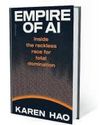
'We need 100 Earths to sustain generative Al'
Karen Hao, author of ‘Empire of AI’, explains how AI and tech companies are no less than extractive colonial empires
4 mins
December 13, 2025
Listen
Translate
Change font size