
Mit Magzter GOLD unbegrenztes Potenzial nutzen
Erhalten Sie unbegrenzten Zugriff auf über 9.000 Zeitschriften, Zeitungen und Premium-Artikel für nur
Policy and politics on the index
Business Standard
|January 02, 2026
Market returns are better under governments with clear and stable majorities and rise when major reforms are announced
The Sensex, the 30-share equity benchmark launched in 1986, has been a mirror of India’s economic landscape for 40 years. The index’s changing composition mirrors India’s transformation from a heavily regulated economy, dominated by a handful of industrial houses, to a liberalised market with genuine sectoral diversity. It also reflects the policy shifts during these decades and their impact, right from the turbulent 1990s, when P V Narasimha Rao and Manmohan Singh steered the economy out of a crisis and ushered in a new generation of reforms, to the Narendra Modi era, when increasing digitisation and the post-pandemic shift to equities triggered a sustained bull run in recent years.
Here is how the Sensex has fared under the tenure of various Prime Ministers.
(Nov 1990 —June 1991)
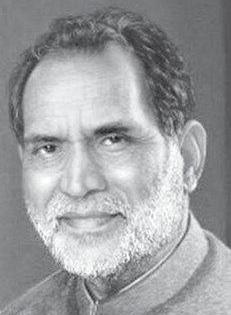
Chandra Shekhar’s was the second government of a 25-year phase — later described as the coalition era — when allies could bring down governments. Poor economic management in the preceding years and the Gulf War, which led to a spike in oil prices, pushed India into a severe balance-of-payments crisis. Depleted foreign-exchange reserves meant that India struggled to finance its essential imports. The government even had to pledge its gold reserves to secure a foreign-exchange loan.
Though the Chandra Shekhar government planned to usher in economic reforms, it could not do so as it lost the backing of the Congress party, which had supported it from outside, and failed to present the annual Budget. The Sensex declined by 2.2 per cent, the second-worst performance under any prime ministerial term.
(June 1991 May 1996)
The Sensex gained 181 per cent during Narasimha Rao’s term: The best performance under any Prime Minister. Rao oversaw economic reforms that rescued India from one of its worst fiscal and balance-of-payments crises and put the economy back on track.

Diese Geschichte stammt aus der January 02, 2026-Ausgabe von Business Standard.
Abonnieren Sie Magzter GOLD, um auf Tausende kuratierter Premium-Geschichten und über 9.000 Zeitschriften und Zeitungen zuzugreifen.
Sie sind bereits Abonnent? Anmelden
WEITERE GESCHICHTEN VON Business Standard
Business Standard
Avoid over-allocation and chasing recent performance
In calendar year (CY) 2025, sectoral funds tracking the Nifty PSU Bank (26 per cent), Nifty Auto (20 per cent) and Nifty Metal (24 per cent) emerged as top performers.

2 mins
January 02, 2026
Business Standard
Moving with the times and tides
From open outcry trading and paper share certificates to demat accounts, the BSE has come a long way
1 min
January 02, 2026
Business Standard
From herstoric win to space glory, all that shaped the India story
Rediffusion's 'Hits & Misses' survey on what dominated the country's landscape
2 mins
January 02, 2026
Business Standard
The secret sauce to superior equity returns
Driven by disciplined capital management and macro stability efforts, the Indian stock market has delivered stellar long-term returns, consistently ranking among the best global performers for 40 years
3 mins
January 02, 2026

Business Standard
'India is still at an early stage in passive investing compared with US'
The Sensex’s 40-year milestone comes at a time when passive investing is reshaping India’s capital markets, with indices increasingly forming the backbone of investment products.
2 mins
January 02, 2026

Business Standard
The changing script of India’s most honest storyteller
When the Sensex was first published in 1986, India was still a closed, slow-moving economy trying to find its footing.
3 mins
January 02, 2026

Business Standard
Excise duty on tobacco, health cess on pan masala from Feb 1
Tobacco products and pan masala will attract additional central excise duty and Health Security se National Security Cess, respectively, with effect from February 1, the Ministry of Finance said in a series of notifications issued late on Wednesday.
3 mins
January 02, 2026
Business Standard
Risk-weight rules for NBFC infra loans relaxed
The Reserve Bank of India (RBI) on Thursday eased its proposed risk-weight framework for infrastructure lending by non-banking financial companies (NBFCs) following industry feedback, as it retained key lender protection norms.
1 min
January 02, 2026

Business Standard
BSE Sensex tops other asset classes by a hefty margin in 40 years
It has beaten gold and traditional savings, delivering a consistent winning streak while creating significant wealth for ordinary people who held their investments through decades of economic growth
4 mins
January 02, 2026
Business Standard
Legacy companies make way for modern businesses on the index
Family-owned firms’ predominance in the Sensex is in relative decline over the life of the index.
5 mins
January 02, 2026
Listen
Translate
Change font size