
Mit Magzter GOLD unbegrenztes Potenzial nutzen
Erhalten Sie unbegrenzten Zugriff auf über 9.000 Zeitschriften, Zeitungen und Premium-Artikel für nur
Versuchen GOLD - Frei
Alcohol regulation and the revenue trap
Business Standard
|January 16, 2026
An optimal state policy must go beyond a revenue-hungry, punitive regulatory regime
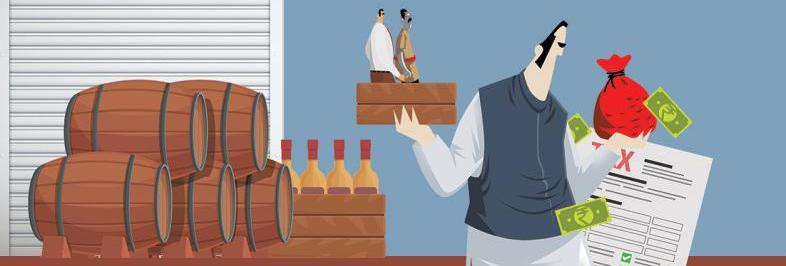
To usher in 2026, alcohol consumption remained a centre piece of festivities, with an estimated consumption of 12 to 15 million cases in India. In parallel, it took a near doubling of police deployment on the roads to bring about a 37 per cent drop in drunk-driving cases in Mumbai alone that night.
Governance of alcohol — its manufacture, distribution, sale, and taxation — remains one of the most fraught areas of public policy, sitting at the intersection of public health, social morality, and fiscal necessity. For an Indian state, the challenge is perpetual and profound: How does one responsibly manage a commodity that is simultaneously a major source of revenue and causes significant social harm?
The necessity for state intervention in the alcohol market begins with basic economics. Alcohol consumption is a classic case of negative externalities. The costs associated with consumption — public disorder, traffic accidents, domestic abuse, loss of productivity, and strain on public healthcare systems — are borne not just by the consumer, but by society at large. The price paid by the consumer in the market, therefore, does not reflect the true social cost of the good. Left entirely to the market, there will inevitably be over-consumption, leading to suboptimal social outcomes.
This foundational market failure calls for state intervention to internalise these social costs and mitigate the negative externalities. However, this imperative must be tempered by two considerations.
First, alcohol is not in the category of goods like heroin that call for complete prohibition. Its consumption, in moderation, is a matter of personal choice in most societies. Hence, the public policy goal should be not to ban, but to secure informed and responsible consumption.

Diese Geschichte stammt aus der January 16, 2026-Ausgabe von Business Standard.
Abonnieren Sie Magzter GOLD, um auf Tausende kuratierter Premium-Geschichten und über 9.000 Zeitschriften und Zeitungen zuzugreifen.
Sie sind bereits Abonnent? Anmelden
WEITERE GESCHICHTEN VON Business Standard
Business Standard
Govt may do away with exception for small cars in CAFE 3 norms
Formula tweak under discussion to set lenient targets for vehicles weighing less than 1,299kg

3 mins
January 22, 2026
Business Standard
US won't use force to take Greenland: Trump in Davos
US President Donald Trump on Wednesday said America will not use force to take Greenland and stressed that only America can protect the mineral-rich island, which is at the centre of escalating geopolitical tensions with Europe.
2 mins
January 22, 2026
Business Standard
Rise in land area transacted in '25 despite dip in transaction number
India witnessed an increase in the land area transacted in 2025, with real-estate developers closing a lesser number of deals but acquiring larger land parcels compared to the previous year, according to a report by Anarock.
1 min
January 22, 2026
Business Standard
Sensex EPS growth at its weakest in nearly 5 yrs
Accordingto analysts, thishad created a wedge between index underlying earnings, its valuation, and the index movement.
1 mins
January 22, 2026

Business Standard
Niti suggests ₹13K cr schemes for MSME decarbonisation
Proposes ₹6,000 crore for viability gap funding and 7,000 crore for anew PM-Suryaghar-like scheme
2 mins
January 22, 2026
Business Standard
Dr Reddy’s profit down 14% on low Lenalidomide US sales
Pharma major Dr Reddy’s Laboratories (DRL) reported a 14 per cent year-on-year (Yo-Y) drop in consolidated net profit to ₹1,210 crore in the December quarter of FY 2025-26 (Q3FY26) on low sales of cancer drug Lenalidomide in the North American market.
1 mins
January 22, 2026
Business Standard
Matter to unveil 2 new e-mobikes in 2 years
Electric motorcycle (e-mobike) maker Matter Motor Works plans to launch two new e-mobikes over the next two years, its Founder and Chief Executive Officer (CEO) Mohal Lalbhai said on Wednesday, adding that the company is also looking to invest around $150 million over the next two to three years.
1 min
January 22, 2026
Business Standard
India flags ‘huge mountain of debt’ in developed nations as matter of concern
INDIA AT DAVOS
2 mins
January 22, 2026
Business Standard
Water ‘bankruptcy' era has begun for billions, say scientists
A new era has begun of “global water bankruptcy,’ with humans depleting freshwater systems to the point they can’t recover, according to a new United Nations report.
2 mins
January 22, 2026
Business Standard
EU 'fully prepared' to hit back over Trump's Greenland tariffs, threats
The European Union (EU) is ready to strike back at US President Donald Trump over his tariff threats as he seeks to take Greenland, European Commission President Ursula von der Leyen said, toughening her rhetoric against the US president.
3 mins
January 22, 2026
Listen
Translate
Change font size