Versuchen GOLD - Frei
A new wave of reforms set to sweep banking
Business Standard
|November 03, 2025
At this juncture, allowing higher foreign stake in PSBs is the right call. It will help them increase capital and scale up business
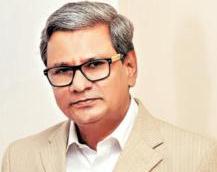
When it rains, it pours. Typically, this means when one bad thing happens, multiple bad things follow in quick succession — making a difficult situation worse. In the context of the Indian banking space, it is the opposite: ‘Too many good things are happening. ‘The sector is embracing reforms on multiple fronts.
The industry has been constantly in the news in the past decade. First, there was a massive cleanup drive by the Reserve Bank of India (RBI) through a unique tool called asset quality review. The regulator unearthed the hidden pile of bad assets and ensured that banks set money aside to address them and make their balance sheets healthy. At least three banks had 25 per cent or more gross nonperforming assets (NPAs) in different quarters of the 2018-2019 financial year (FY19) and, after provisioning, four had between 10 per cent and 19 percent net NPAs. (All figures are rounded off.)
The banks were also forced to strengthen their credit appraisal and risk management capabilities. Yes, I am talking about public sector banks (PSBs), majority owned by the government.
Next, as many as 11 PSBs were put under the prompt corrective action (PCA) framework, which barred them from giving fresh loans until they acquired the acumen to identify both the right sector and borrowers to lend the public money they collect in the form of deposits.
The next stage was consolidation. In 2017, the State Bank of India (SBI) merged five of its associate banks, along with the Bharatiya Mahila Bank, with itself. A series of mergers among PSBs followed in 2019 and 2020. As a result, the number of PSBs is down from 27 to 12.
Barring a few, which have not been part of the consolidation drive, most PSBs have acquired scale; they are well capitalised and have been making record profits.

Diese Geschichte stammt aus der November 03, 2025-Ausgabe von Business Standard.
Abonnieren Sie Magzter GOLD, um auf Tausende kuratierter Premium-Geschichten und über 9.000 Zeitschriften und Zeitungen zuzugreifen.
Sie sind bereits Abonnent? Anmelden
WEITERE GESCHICHTEN VON Business Standard

Business Standard
Govt moves to shield trade as Iran war chokes sea routes
As the Iran war intensified, disrupting Gulf shipping lanes and unsettling energy and equity markets, the Union government activated a multi-ministry war room to stabilise trade and ease port congestions. Alongside, India stepped up efforts to protect its people in West Asia. Among the steps, the civil aviation ministry announced 10 evacuation flights to be operated by IndiGo, from Jeddah

4 mins
March 03, 2026
Business Standard
Modi thanks top West Asian leaders for safety of Indians
MHA asks states to keep eye on pro-Iran preachers delivering inflammatory sermons
3 mins
March 03, 2026

Business Standard
Macron to boost nuclear arsenal as US commitments to Europe waver
Also calls upon US, Iran to resume talks along with leaders of UK and Germany
2 mins
March 03, 2026
Business Standard
Piled-up cargo, frozen orders hit textile industry
Textile industry on Mondaysaid that their exports tothe West Asia market are already stuck at Indian ports while major customers have already put the orders on holdtill the crisis in the region is over.
2 mins
March 03, 2026
Business Standard
Extended Iran conflict may hit order inflows of L&T
While investors would focus on the results and guidance for the third quarter of financial year 2025-26 (Q3FY26) in the normal course of business, the US-Israeli attack on Iran and the latter's retaliation at Gulf allies of the US has forced them to weigh the consequences of the event.
3 mins
March 03, 2026
Business Standard
Marketing the UMA way
Why do large multinationals struggle when they enter India? They often blame our red tape and procedural issues.
3 mins
March 03, 2026
Business Standard
TaMo, M&M, JSW MG oppose NITI report
Govt think-tank’s report on transport sector suggested CAFE norms must incentivise smaller entry-level vehicles
3 mins
March 03, 2026
Business Standard
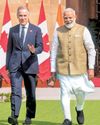
India, Canada seal FTA talk terms; eye $50 bn trade by '30
Canadian Prime Minister Mark Carney concluded his four-day visit to India on Monday after delegation-level talks with Prime Minister Narendra Modi, with the two sides taking the bilateral partnership from “normalisation to structured expansion” through the signing of eight agreements spanning advanced manufacturing, nuclear energy, trade, defence, education and critical minerals.
3 mins
March 03, 2026
Business Standard
Unifying the bond market
One of the most desirable financial sector reforms would be the “unification of the bond market”, i.e., unifying the regulatory regime for G-Secs (government securities) and corporate bonds.
3 mins
March 03, 2026

Business Standard
Amid Hormuz closure, refiners look at other crude sources
Indian refiners are considering alternative crude oil sourcing options that bypass the Strait of Hormuz, including supplies from West Africa, Oman and the US, as the crisis in West Asia deepens, three people aware of the development told Business Standard.
2 mins
March 03, 2026
Listen
Translate
Change font size