
Mit Magzter GOLD unbegrenztes Potenzial nutzen
Erhalten Sie unbegrenzten Zugriff auf über 9.000 Zeitschriften, Zeitungen und Premium-Artikel für nur
TO THE PRESSES: JOTIRAO PHULE AND THE HISTORY OF MARATHI PRINT CULTURE
The Caravan
|October 2022
THE FIRST FEW PAGES of Jotirao Phule's Gulamgiri or Slavery, published in 1873 and widely considered to be his most important text, opens with a dedication to "the good people of the United States as a token of admiration for their sublime disinterested and self sacrificing devotion in the cause of Negro Slavery" a reference to the abolition of slavery in the United States, in 1865, that sets the tone for the text's arguments. Phule goes on to quote Homer on slavery and two Western writers on the detrimental role of Brahmins in Indian society.
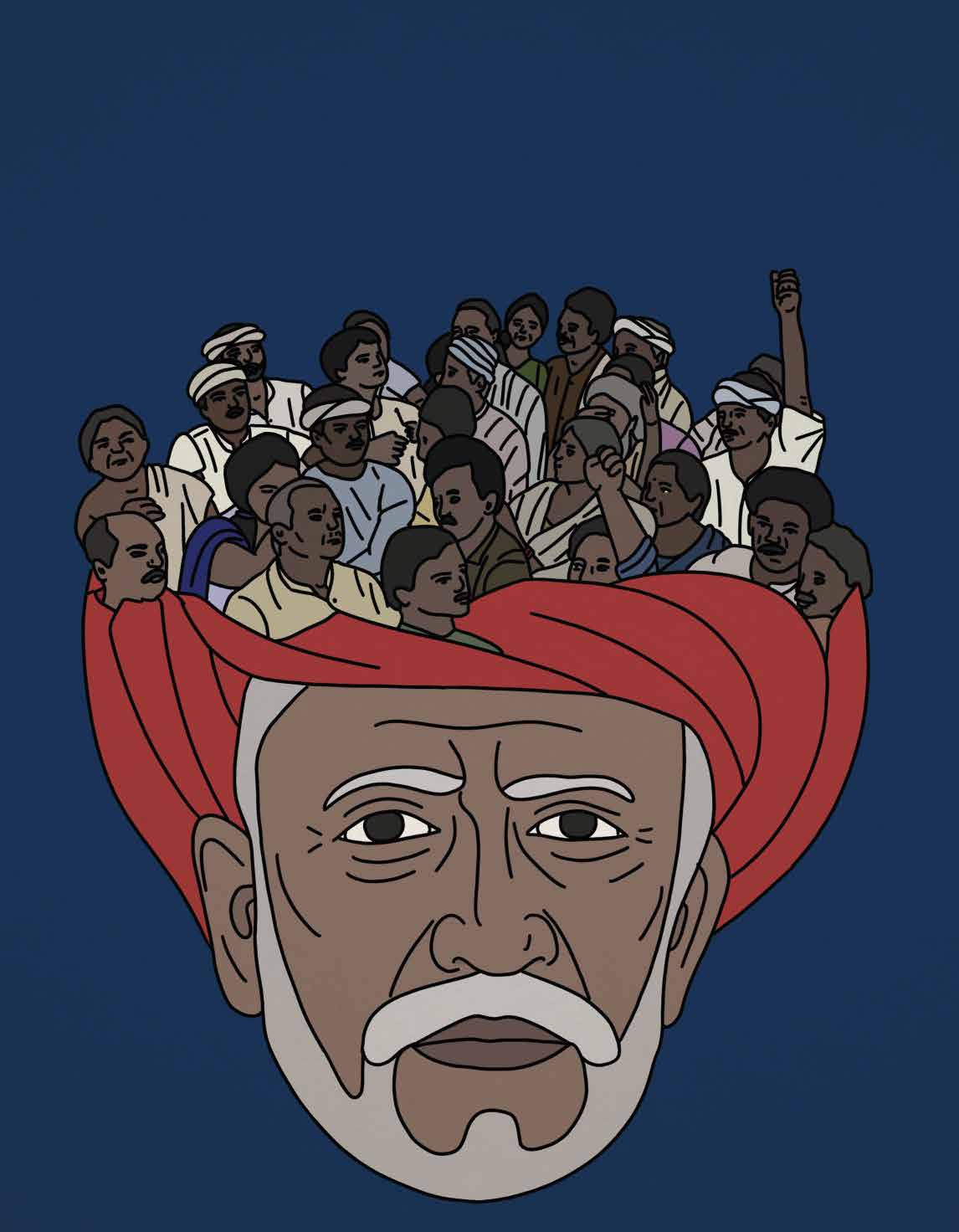
This is followed by a preface written in English, which was intended for the colonial authorities and written in the formal prose style already customary in English but not yet in Marathi. He gestures to the mythical lineage of the Brahmin community and the spiritual basis of their authority over non-Brahmins but interprets these myths in the context of new developments in history and anthropology, as well as early findings on Indo-European migration into India. He also describes this retelling of the traditional Puranic narrative as "the history of Brahmin domination in India." Then, quoting from the Manusmriti, he describes how Brahmins perpetuated caste by suppressing non-Brahmins and extracting their labour. The preface ends with a petition to the colonial authorities, who, Phule hopes, "will ere long see the error of their ways, trust less to writers or men who look through high class spectacles and take the glory into their own hands of emancipating my Sudra brethren from the trammels of bondage which the Brahmins have woven round them like the coils of a serpent."
A Marathi introduction follows this English preface. As the text switches between languages, it retains its prose form but now addresses a non-Brahmin Marathi readership instead. Continuing in the same vein as before, Phule writes of how Brahmins tricked non-Brahmins into serving them while retaining control over their resources in a spiritual and secular sense. He then writes of developments in the West, where slavery was abolished.

Diese Geschichte stammt aus der October 2022-Ausgabe von The Caravan.
Abonnieren Sie Magzter GOLD, um auf Tausende kuratierter Premium-Geschichten und über 9.000 Zeitschriften und Zeitungen zuzugreifen.
Sie sind bereits Abonnent? Anmelden
WEITERE GESCHICHTEN VON The Caravan
The Caravan
ANY RESEMBLANCE TO ACTUAL EVENTS IS NOT COINCIDENTAL
INTERFAITH ROMANCE FICTION IN THE ERA OF LOVE JIHAD

31 mins
December 2025
The Caravan
Manufacturing Legitimacy
How a Washington Post columnist laundered the Sangh's violent history
7 mins
December 2025

The Caravan
DEATH of REPORTAGE
THE DISMANTLING OF OUTLOOK'S LEGACY
32 mins
December 2025

The Caravan
FOG LIGHT
Samayantar's two-and-half-decade fight against the shrinking of Hindi's world
22 mins
December 2025

The Caravan
THE FINE PRINT
ON 19 MARCH 2005, thousands came out on the streets of Udupi, in coastal Karnataka, to protest a gruesome incident that had shaken the region a week earlier.
23 mins
December 2025

The Caravan
CHARACTER BUILDING
The enduring language of Indian streets
5 mins
December 2025

The Caravan
THE CONVENIENT EVASIONS OF RAJDEEP SARDESAI
DRESSED IN A turban and white kurta pyjama, Narendra Modi sat in the passenger seat of a van crossing the Patan district of Gujarat, in September 2012. Next to him sat Rajdeep Sardesai, the founder-editor of the news channel CNN-IBN.
63 mins
December 2025

The Caravan
Ahmed Kamal Junina: “Every class we hold is a defiant refusal to surrender”
A professor in Gaza on teaching during a genocide / Conflict
11 mins
December 2025

The Caravan
Bangla Pride, Urdu Prejudice
The language wars have primed West Bengal for the RSS
8 mins
November 2025

The Caravan
THE INTERVIEW
\"The people are naked before the government but the government is opaque to them\"
16 mins
November 2025
Translate
Change font size