
Mit Magzter GOLD unbegrenztes Potenzial nutzen
Erhalten Sie unbegrenzten Zugriff auf über 9.000 Zeitschriften, Zeitungen und Premium-Artikel für nur
Versuchen GOLD - Frei
WITNESS
The Atlantic
|July 2025
Sin and redemption in America's death chambers
Lately, I’ve been having dreams about my own execution. The nightmares mostly unfold in the same way: I am horrified to discover that I’ve committed a murder—the victim is never anyone I know but always has a face I've seen somewhere before. I cower in fear of detection, and wonder desperately if I should turn myself in to end the suspense. I am caught and convicted and sentenced to death. And then I’m inside an execution chamber like the ones I’ve seen many times, straining against the straps on a gurney, needles in both arms. I beg the executioner not to kill me. I tell him my children will be devastated—and somehow I know they're watching from behind a window that looks like a mirror. I feel the burn of poison in my veins. After that comes emptiness.
Maybe everyone dreams of dying, even if not in quite this way. I once had nightmares about being a victim of crime, but after I began witnessing executions, I came to imagine myself on some subconscious plane as the perpetrator instead. This is perhaps a result of overidentification with the men I've watched die—and my understanding of the Christian religion, in which we're all convicted sinners. I’m particularly interested in forgiveness and mercy, some of my faith’s most stringent dictates. If those forms of compassion are possible for murderers, then they're possible for everyone.
These questions, combined with a murder that tore into my own family, inspired me, several years ago, to volunteer to witness an execution—one of 13 carried out at the federal penitentiary in Terre Haute, Indiana, during the final six months of Donald Trump's first term. Most of the 23 states that still have an active death penalty allow a certain number of journalists to witness executions, as does the federal government. I sent an application to the appropriate federal office and, somewhat to my surprise, it was approved.
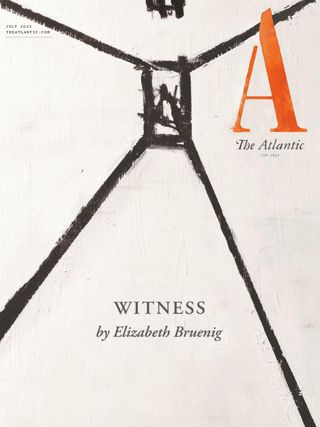

Diese Geschichte stammt aus der July 2025-Ausgabe von The Atlantic.
Abonnieren Sie Magzter GOLD, um auf Tausende kuratierter Premium-Geschichten und über 9.000 Zeitschriften und Zeitungen zuzugreifen.
Sie sind bereits Abonnent? Anmelden
WEITERE GESCHICHTEN VON The Atlantic
The Atlantic
Deadlier Than Gettysburg
How the cruelty of the Confederacy's prison camps gave rise to the rules of war

10 mins
March 2026

The Atlantic
THE MAN WHO BROKE PHYSICS
One of the pleasures of watching Ilia Malinin, apart from his indifference to gravity, is to witness him becoming.
16 mins
March 2026

The Atlantic
How Toni Morrison Saw History
In her novels, she located the missing story of Black America.
12 mins
March 2026

The Atlantic
The Madness of Lord Tennyson
The Victorian poet was startlingly modern.
5 mins
March 2026

The Atlantic
THE PLOT AGAINST THE HUMANITIES
What is the Andrew W. Mellon Foundation doing to higher education?
22 mins
March 2026

The Atlantic
Why Do Democrats Hate Winning?
Ken Martin has one of those resting dread faces, as if he's bracing for someone to dump a bucket of rocks on his head.
37 mins
March 2026

The Atlantic
ROD DREHER'S DEMONS
HE DERIDES THE ENLIGHTENMENT, SECULARISM, AND THE MODERN WORLD. CONSERVATIVES-INCLUDING THE VICE PRESIDENT-ARE JOINING HIM ON A MARCH BACK TO THE MIDDLE AGES.
20 mins
March 2026

The Atlantic
Every Nation for Itself
President Trump wants to return to the 19th century's international order. He will leave America less prosperous—and the whole world less secure.
19 mins
March 2026

The Atlantic
The Secrets of Indigenous Art
Major exhibits are upending the way people understand Native American and Aboriginal artists.
14 mins
March 2026

The Atlantic
The Novel as Extended Op-Ed
If anyone could write good fiction about immigration, it would probably be Lionel Shriver. Instead, her latest book goes off the rails.
10 mins
March 2026
Listen
Translate
Change font size