Versuchen GOLD - Frei
THE RISING
The Atlantic
|November 2025
The country needs a mass social movement— now—to save itself from autocracy.
Other peoples have risen. Other peoples have risen up to defend their rights, their dignity, and their democracies. In the past 50 years, they've done it in Poland, South Africa, Lebanon, South Korea, Ukraine, East Timor, Serbia, Madagascar, Nepal, and elsewhere.
In the early 1970s, for instance, the democratically elected leader of the Philippines, Ferdinand Marcos, tried to centralize power in his own hands. Students rose up: A clash between them and police left six protesters dead. Transit workers went on strike, followed by joint student-worker demonstrations. Marcos countered by declaring martial law. Led by Cardinal Jaime Sin, the archbishop of Manila, Catholics arose to resist.
In 1983, Marcos’s key opponent, Benigno Aquino, was assassinated. Marcos banned TV coverage of Aquino’s funeral. But 2 million mourners showed up for what turned into an 11-hour rally against the regime. The middle and professional classes then joined the protesters. The Manila business community held weekly demonstrations. The following year, there was a general workers’ strike. After Marcos stole the next election, members of the armed forces began to mutiny. Millions of ordinary citizens marched to defend them. The Reagan administration threatened to cut off aid to the regime. By early 1986, Marcos and his family had no choice: They fled the country. It had taken more than a decade, but the people had defeated the autocrat.
Such uprisings are not rare. For their 2011 book, Why Civil Resistance Works, the political scientists Erica Chenoweth and Maria Stephan looked at 323 resistance movements from 1900 to 2006, including more than 100 nonviolent resistance campaigns. What Chenoweth and Stephan showed is that citizens are not powerless; they have many ways to defend democracy.
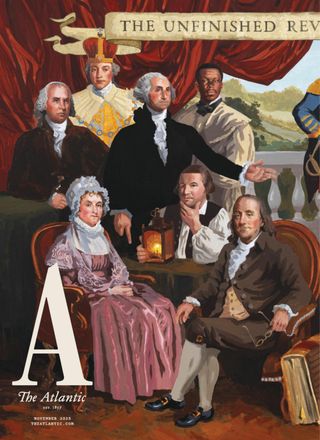

Diese Geschichte stammt aus der November 2025-Ausgabe von The Atlantic.
Abonnieren Sie Magzter GOLD, um auf Tausende kuratierter Premium-Geschichten und über 9.000 Zeitschriften und Zeitungen zuzugreifen.
Sie sind bereits Abonnent? Anmelden
WEITERE GESCHICHTEN VON The Atlantic

The Atlantic
What Dante Is Trying to Tell Us
A colloquial translation of Paradiso might make people actually read it.

10 mins
February 2026

The Atlantic
Sense of an Ending
Julian Barnes says goodbye to the novel
9 mins
February 2026

The Atlantic
IS THIS WHAT PATRIOTISM LOOKS LIKE?
Why an ex—police officer assaulted a fellow cop on January 6
37 mins
February 2026
The Atlantic
THE PURGED
DONALD TRUMP'S DESTRUCTION OF THE CIVIL SERVICE IS A TRAGEDY NOT JUST FOR THE ROUGHLY 300,000 WORKERS WHO HAVE BEEN DISCARDED, BUT FOR AN ENTIRE NATION.
8 mins
February 2026

The Atlantic
GROUNDED
THE SPACE PROGRAM ENNOBLED AMERICAN CULTURE AND ADVANCED AMERICAN SCIENCE. DONALD TRUMP HAS CHOSEN TO END THAT ERA OF AMBITION.
17 mins
February 2026
The Atlantic
The New History of Fighting Slavery
What we learn by tracing rebellions from Africa to the Americas
10 mins
February 2026

The Atlantic
MICAELA WHITE
By the beginning of 2025, there was a famine in Sudan, which meant that it was only a matter of time before the U.S.government dispatched Micaela White to the scene. She was America's fixer of choice.
2 mins
February 2026

The Atlantic
WHAT JEFFREY EPSTEIN DIDN'T UNDERSTAND ABOUT LOLITA
Everything.
5 mins
February 2026

The Atlantic
Who Gets to Be Indian- And Who Decides?
The very American story of Chief Buffalo Child Long Lance
22 mins
February 2026

The Atlantic
I'm Not From the Government but I'm Here to Help
The Trump administration is trying to eliminate federal services? Fine. I'll do everything myself.
24 mins
February 2026
Listen
Translate
Change font size