Versuchen GOLD - Frei
THE COUNTEROFFENSIVE
The Atlantic
|June 2023
The future of the democratic world will be determined by whether the Ukrainian military can break a stalemate with Russia and drive the country backward-sperhaps even out of Crimea for good

In March 1774, Prince Grigory Potemkin, the favorite general and sometime lover of Catherine the Great, took control of the anarchic southern frontier of her empire, a region previously ruled by the Mongol Khans, the Cossack hosts, and the Ottoman Turks, among others. As viceroy, Potemkin waged war and founded cities, among them Kherson, the first home of Russia’s Black Sea Fleet. In 1783, he annexed Crimea and became an avatar of imperial glory. To Vladimir Putin in particular, Potemkin is the Russian nationalist who subdued territory now impudently and illegitimately claimed by Ukraine, a nation that Putin believes does not exist.
The rest of the world remembers Potemkin differently, for something that we would now call a disinformation campaign. In 1787, Catherine paid a six-month visit to Crimea and the land then known as New Russia. The story goes that Potemkin built fake villages along her route, populated with fake villagers exuding fake prosperity. These villages probably never existed, but the story has endured for a reason: The sycophantic courtier, creating false images for the empress, is a figure we know from other times and other places. The tale also evokes something we recognize to be true, not just of imperial Russia but of Putin’s Russia, where mind-boggling efforts are made to please the leader—efforts that these days include telling him he is winning a war that he is most definitely not winning.
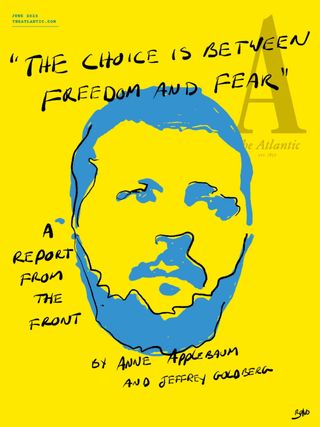

Diese Geschichte stammt aus der June 2023-Ausgabe von The Atlantic.
Abonnieren Sie Magzter GOLD, um auf Tausende kuratierter Premium-Geschichten und über 9.000 Zeitschriften und Zeitungen zuzugreifen.
Sie sind bereits Abonnent? Anmelden
WEITERE GESCHICHTEN VON The Atlantic
The Atlantic
You Had to Be There
An emerging field of history asks if we can ever really understand how our forebears experienced love, anger, fear, and sorrow.

23 mins
January 2026

The Atlantic
By the Horns
The week before the biggest bullfight of her career, in Cádiz, Spain, this past July, 24-year-old Miriam Cabas posted a carefully produced video on Instagram.
1 mins
January 2026

The Atlantic
The New German War Machine
After World War II, Germany embraced pacifism as a form of atonement. Now the country is arming itself again.
18 mins
January 2026
The Atlantic
The Eloquence
The prime minister was watching a disaster movie when we found him.
4 mins
January 2026

The Atlantic
What's for Dinner, Mom?
The women who want to change the way America eats
12 mins
January 2026

The Atlantic
How Terror Works
A 1947 German novel explores the sometimes corrosive, sometimes energizing nature of fear.
8 mins
January 2026

The Atlantic
Yesterday's Idea of a Modern Man
Sam Shepard, a self-made cowboy, was also a poet of masculine angst.
7 mins
January 2026

The Atlantic
ACCOMMODATION NATION
America's colleges have an extra-time-on-tests problem.
11 mins
January 2026

The Atlantic
Respect the Drummer
A new history of rock, told through its overlooked heroes
5 mins
January 2026

The Atlantic
THE MOST POWERFUL MAN IN SCIENCE
WHY IS ROBERT F. KENNEDY JR. SO CONVINCED HE'S RIGHT?
42 mins
January 2026
Translate
Change font size