Versuchen GOLD - Frei
WHAT THE COURT CAN'T DO
TIME Magazine
|July 24, 2023
While a legal blow, the Supreme Court's decision on affirmative action should not-and need not be the final word. Our legal and democratic responsibility to address the racial and ethnic inequalities that persist in the U.S. education system is as important as ever. Because what the court doesn't have the power to do is erase our civil rights laws, or the principles underlying them.
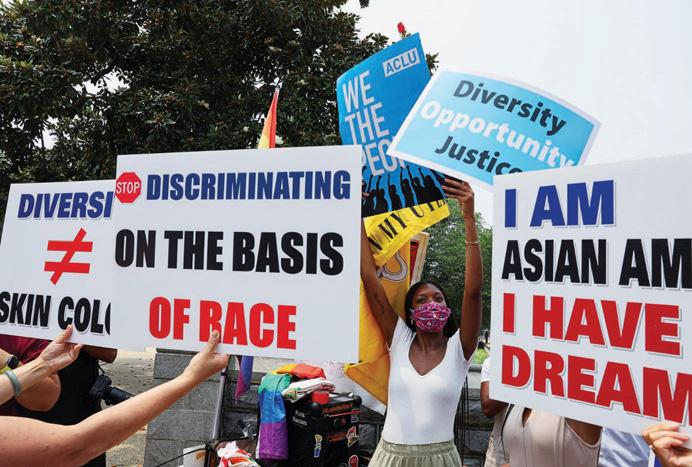
The U.S. Supreme Court just limited the ability of universities to consider an applicant's race and ethnicity in admissions. In its opinion, the court found that Harvard and the University of North Carolina's consideration of race and ethnicity in determining admission violated both the 14th Amendment of the U.S. Constitution and Title VI of the 1964 Civil Rights Act.
While Chief Justice Roberts' majority opinion exhibits concern with the "pernicious" effects of race-conscious affirmative-action programs to promote diversity, it ignores the core problem of unjust distribution of educational opportunity and access on the basis of race, ethnicity, and class. Black, Latino, and Vietnamese and Filipino American communities are among those who remain most underrepresented in higher education, including at selective flagship state institutions in states where they pay taxes. At highly selective public colleges and universities, "merit" scholarships, out-of-state recruitment practices, and legacy preferences all work to disadvantage underrepresented students of color in admissions, as well as low-income students.


Diese Geschichte stammt aus der July 24, 2023-Ausgabe von TIME Magazine.
Abonnieren Sie Magzter GOLD, um auf Tausende kuratierter Premium-Geschichten und über 9.000 Zeitschriften und Zeitungen zuzugreifen.
Sie sind bereits Abonnent? Anmelden
Translate
Change font size