
Mit Magzter GOLD unbegrenztes Potenzial nutzen
Erhalten Sie unbegrenzten Zugriff auf über 9.000 Zeitschriften, Zeitungen und Premium-Artikel für nur
Versuchen GOLD - Frei
MARCH OF THE MACHINES
TIME Magazine
|March 23, 2026
HOW HUMANOID ROBOTS COULD TRANSFORM MODERN WARFARE
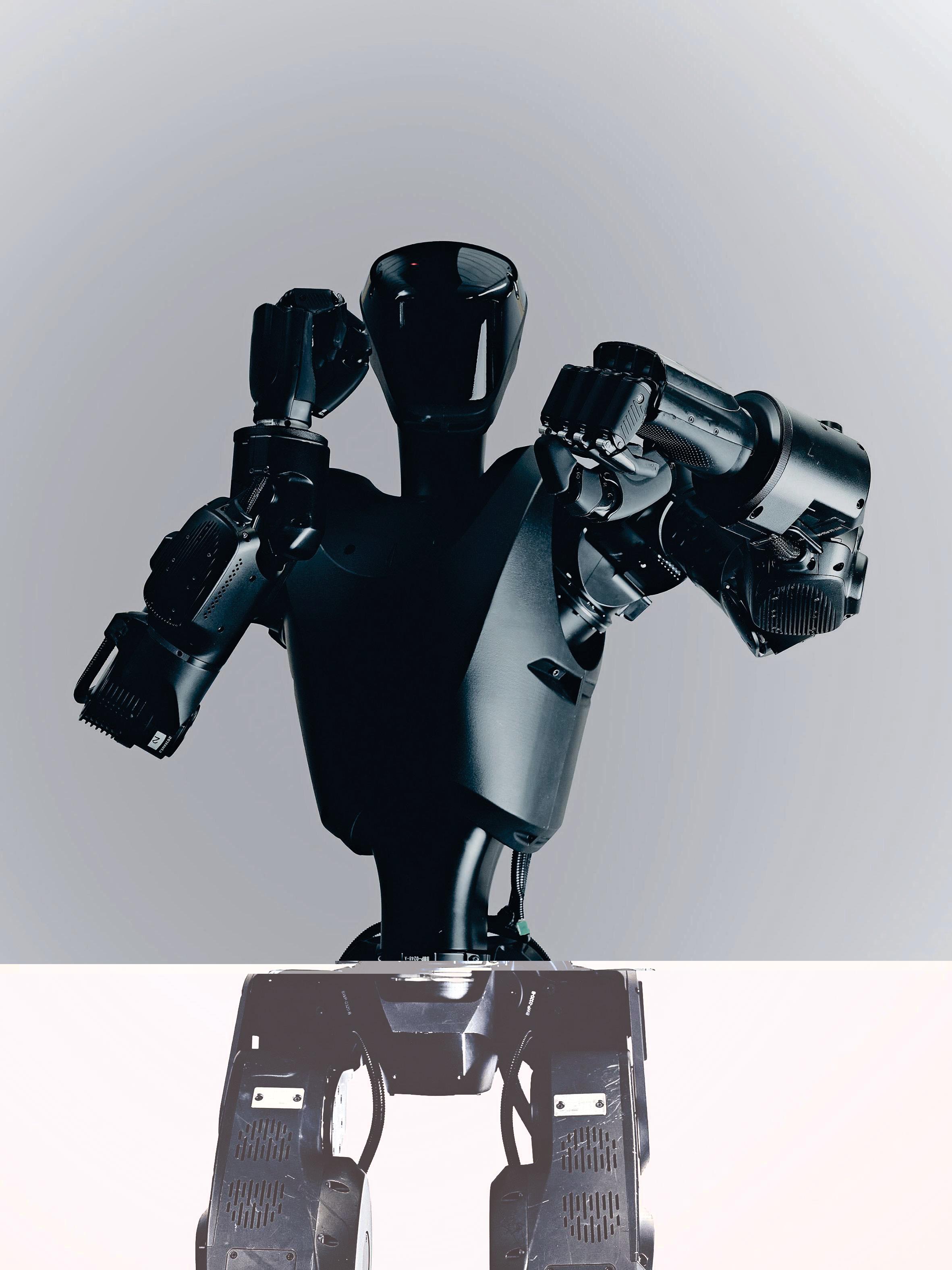
A Phantom MK-1 humanoid robot, produced by San Francisco-based Foundation, at the firm's headquarters on Feb. 25
THE PHANTOM MK-1 LOOKS THE PART OF AN AI soldier.
Encased in jet black steel with a tinted glass visor, it conjures a visceral dread far beyond what may be evoked by your typical humanoid robot. And on this late February morning, it brandishes assorted high-powered weaponry: a revolver, pistol, shotgun, and replica of an M-16 rifle.
“We think there’s a moral imperative to put these robots into war instead of soldiers,” says Mike LeBlanc, a 14-year Marine Corps veteran with multiple tours of Iraq and Afghanistan, who is a co-founder of Foundation, the company that makes Phantom. He says the aim is for the robot to wield “any kind of weapon that a human can.”
 Today, Phantom is being tested in factories and dockyards from Atlanta to Singapore. But its headline claim is to be the world’s first humanoid robot specifically developed for defense applications. Foundation already has research contracts worth a combined $24 million with the U.S. Army, Navy, and Air Force, including what’s known as an SBIR Phase 3, effectively making it an approved military vendor. It’s also due to begin tests with the Marine Corps “methods of entry” course, training Phantoms to put explosives on doors to help troops breach sites more safely.

Diese Geschichte stammt aus der March 23, 2026-Ausgabe von TIME Magazine.
Abonnieren Sie Magzter GOLD, um auf Tausende kuratierter Premium-Geschichten und über 9.000 Zeitschriften und Zeitungen zuzugreifen.
Sie sind bereits Abonnent? Anmelden
Listen
Translate
Change font size