
Mit Magzter GOLD unbegrenztes Potenzial nutzen
Erhalten Sie unbegrenzten Zugriff auf über 9.000 Zeitschriften, Zeitungen und Premium-Artikel für nur
PERIL IN PARADISE
THE WEEK India
|May 11, 2025
The tragedy has shattered Pahalgam's spirit, plunging the tourism industry into deep uncertainty
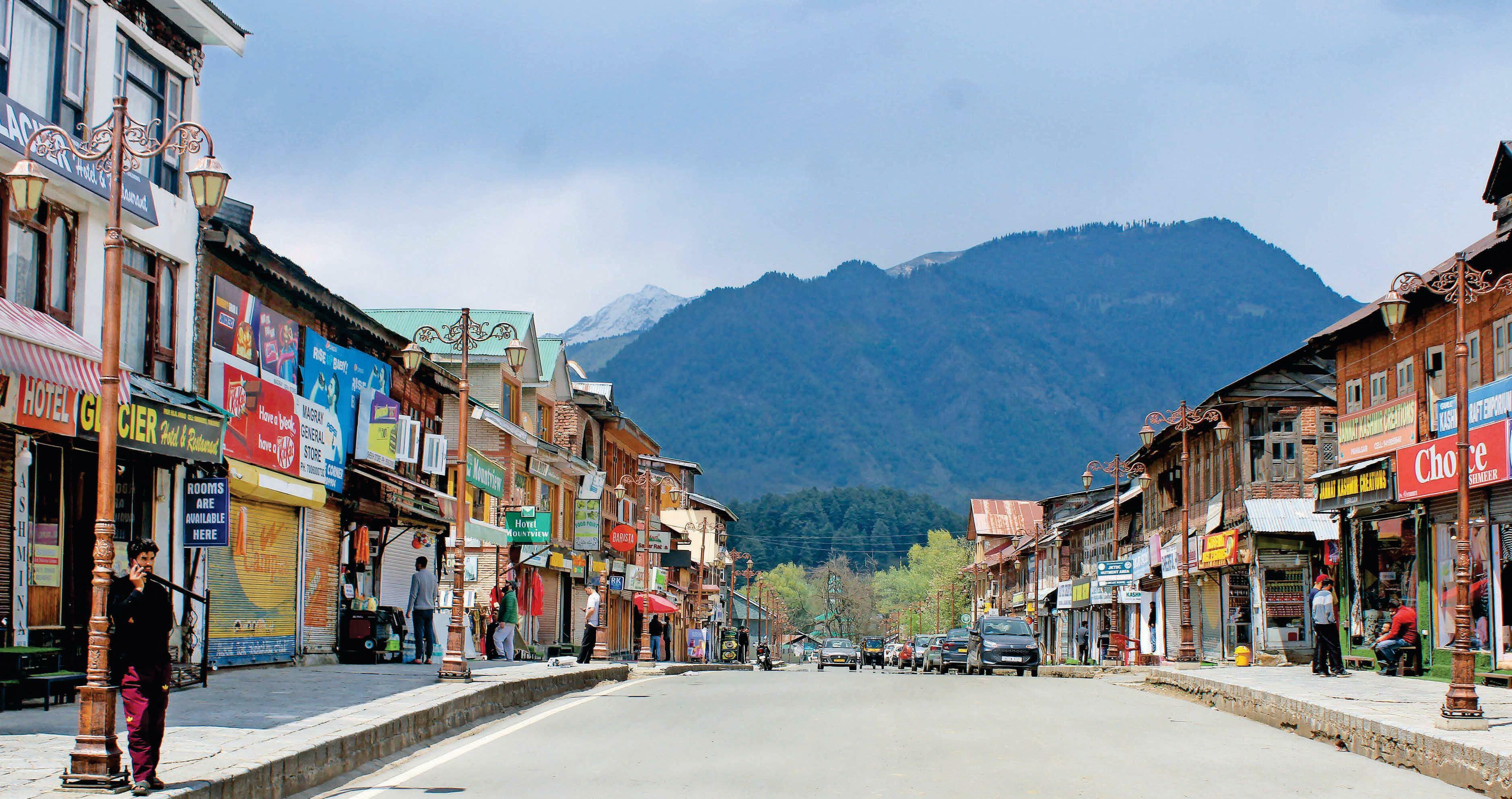
APRIL AND MAY are usually the busiest months in Pahalgam, with hotels fully booked and the town bustling with tourists. The icy waters of the Lidder river, snow-covered mountains, alpine forests and meadows leading to Matayan in Kargil and Sonmarg in Ganderbal attract thousands of visitors. This year, however, the atmosphere is markedly different as a pall of gloom hangs over Pahalgam. The roads are largely deserted, and the tourists are gone.
Before the April 22 assault, around 15,000 tourists visited Pahalgam daily, supporting hundreds of taxi drivers, ponywallahs, guides, photographers, hotel owners, shawl vendors and even non-locals selling bhel puri. But within hours of the attack, most tourists cut their trips short, leading to nearly 10,000 job losses in Pahalgam alone. Ghulam Nabi, president of a local transporters association, said even during the worst days of the 1990s, Pahalgam remained safe. “Targeting innocent tourists has scarred us forever. This stain won't wash away. If they had killed locals, we would have tolerated it, but killing tourists is unacceptable.”
Pahalgam is home to around 1,200 cab drivers who operate from two main taxi stands. Many people have invested their life savings or taken loans to buy vehicles. Following the attack, these drivers offered free rides to fleeing tourists, while hotels waived bills to support traumatised visitors.
Horse owners have also borne the brunt of the tragedy. Around 3,000 of them operate across nine villages in Pahalgam. “We used to earn about ₹1,000 a day,” said Abdul Rehman Raina from Laripora. Renting horses enabled Raina to support his family and educate his children. “Now, we don’t know what will happen,” he said. Although horses are insured by the animal husbandry department against health issues or injuries, it does not cover losses caused by terrorist attacks. “We are landless and have no education; tourism is our only hope,” Raina added.

Diese Geschichte stammt aus der May 11, 2025-Ausgabe von THE WEEK India.
Abonnieren Sie Magzter GOLD, um auf Tausende kuratierter Premium-Geschichten und über 9.000 Zeitschriften und Zeitungen zuzugreifen.
Sie sind bereits Abonnent? Anmelden
WEITERE GESCHICHTEN VON THE WEEK India
THE WEEK India
WHERE THE STORM NEVER REALLY PASSES
Guantánamo Bay, once a symbol of the ‘war on terror’, has emerged as a flashpoint in Donald Trump’s immigration battles, exposing deep tensions between America’s security, legality and moral commitments

10 mins
December 21, 2025

THE WEEK India
Moderation is the key
Most people do not believe me, but I am a moderate man.
3 mins
December 21, 2025

THE WEEK India
OCEAN THERAPY
The Modi-Putin summit unveils a cooperation strategy that will rewire sea trade routes and expand India's maritime connect to the Arctic
3 mins
December 21, 2025

THE WEEK India
Indian Army men fighting for the British against the Japanese were also patriots
Readers in India may be misled by the title of Gautam Hazarika's new book, The Forgotten Indian Prisoners of World War II: Surrender, Loyalty, Betrayal and Hell. It is not about the INA prisoners who were put on trial in the Red Fort by the British. This book is about those Indian soldiers who fought the Japanese in Singapore, Malaya and Burma alongside the British, and who had to surrender, were taken prisoner, put to torture and hard labour by the Japanese, refused to join the INA, and faced death or managed to escape. While recounting their stories, Hazarika also gives an insight into the INA movement. Edited excerpts from an interview with the author:
4 mins
December 21, 2025

THE WEEK India
CHAT WITH NEHRU, QUERY KALAM...
The Prime Ministers' Museum & Library showcases the life and contributions of prime ministers and nation-builders
3 mins
December 21, 2025

THE WEEK India
The art of shifting gears in investing
“Hope is not a strategy,” Hayes growls in one memorable scene, dismissing a teammate’s starry-eyed optimism.
3 mins
December 21, 2025
THE WEEK India
Trouble on the tarmac
It is not IndiGo but Indian aviation that has become too big to fail
4 mins
December 21, 2025

THE WEEK India
SHUX AND BLUE MARBLE
THE 18 DAYS IN SPACE MIGHT HAVE MADE HIM A HOUSEHOLD NAME, BUT GROUP CAPTAIN SHUBHANSHU SHUKLA IS AS GROUNDED AS EVER. AND BEFORE HE SUITS UP FOR HIS NEXT MISSION, THE WEEK'S MAN OF THE YEAR SHARES STORIES FROM HIS LIFE AND SPACE, INCLUDING HOW HE BECAME A 'WATER BENDER'
9 mins
December 21, 2025

THE WEEK India
The parietal lobe
If the frontal lobe is where we decide what to do, the parietal lobe is where we understand where we are. It is the brain's internal GPS, the quiet navigator that lets you put your hand exactly where your teacup is, find the edge of a staircase without staring at it, or scratch the correct side of your head when it itches. When it works well, we move through life gracefully. When it falters, life becomes slapstick comedy.
2 mins
December 21, 2025

THE WEEK India
Area of the globe? Pie is cubed
Floating in his private pool, China's helmsman Mao Zedong shared his strategic vision with visiting Soviet strongman Nikita Khrushchev in 1958: \"You look after Europe, and leave Asia to us.\" Obviously, he expected the US to withdraw into its prewar Monroe world of the Americas, thus making the world tripolar.
2 mins
December 21, 2025
Listen
Translate
Change font size