
Mit Magzter GOLD unbegrenztes Potenzial nutzen
Erhalten Sie unbegrenzten Zugriff auf über 9.000 Zeitschriften, Zeitungen und Premium-Artikel für nur
Versuchen GOLD - Frei
Branches of wisdom
THE WEEK India
|July 07, 2024
A symposium on traditional trees throws light on India's ancient knowledge
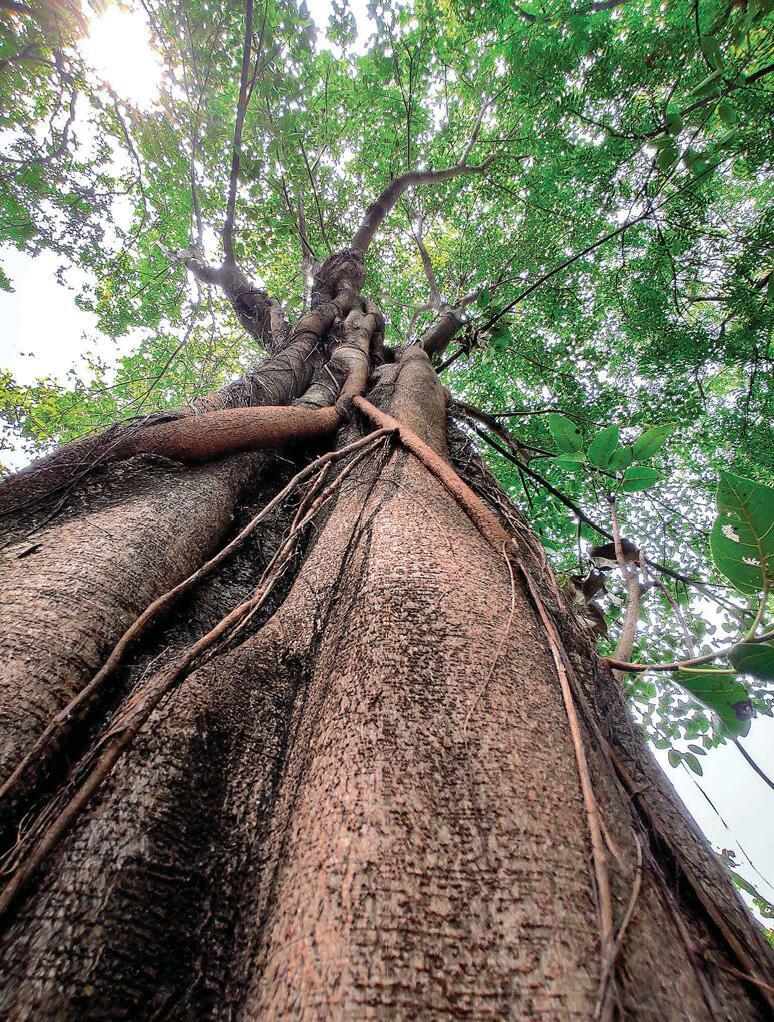
Goa Governor P. S. Sreedharan Pillai inaugurated a day-long symposium on the traditional trees of India, titled 'Vriksha Vygnanika Sadassu', at the Raj Bhavan on April 21. In attendance were experts from various fields who presented papers on traditional trees that have been worshipped over the years in India. “Trees shelter thousands of creatures of all kinds—algae, fungi, insects, squirrels, birds, snakes and other reptiles, animals and humans,” Pillai told THE WEEK. “Every single part of a tree is useful, either as food, medicine, fuel, timber, or as source material for building various things. We must understand and appreciate their indispensable and invaluable existence on the planet.”
In their research paper titled, 'Indian traditional trees and their scientific relevance', researchers Amit Kumar Tiwari, Indrajeet Chaudhary and Alok Kumar Pandey mentioned how bel (Aegle marmelos) and rudrak-sha (seed of Elaeocarpus) were associated with Shiva, peepal tree with Vishnu, mango (Mangifera indica) with Hanuman and Ashoka tree with Kamadeva.
With the vedic civilisation and the knowledge of ayurveda, they added, society came to worship tulsi (Ocimum tenuiflorum), peepal (Ficus religiosa), banyan (Ficus benghalensis) and neem (Azadirachta indica) for their medical importance.
Dr Pradip Sarmokadam, member secretary, Goa State Biodiversity Board, spoke about the “traditional application of sacred flora of India in

Diese Geschichte stammt aus der July 07, 2024-Ausgabe von THE WEEK India.
Abonnieren Sie Magzter GOLD, um auf Tausende kuratierter Premium-Geschichten und über 9.000 Zeitschriften und Zeitungen zuzugreifen.
Sie sind bereits Abonnent? Anmelden
WEITERE GESCHICHTEN VON THE WEEK India

THE WEEK India
Fire, smoke and soaring worries
The PSLV C-62 fiasco is a stress test of ISRO's technical systems, organisational processes and market credibility

7 mins
January 25, 2026

THE WEEK India
The dinosaur and the dictator
Dictators have a few things in common with T. rex, the king of dinosaurs. Both dominate their sphere of influence through brute force.
2 mins
January 25, 2026
THE WEEK India
We are developing master plans for tourism destinations
Across the world, the tourism development is more about providing seamless connection and basic infra like transportation, lodging and boarding.
2 mins
January 25, 2026

THE WEEK India
A TIGHTROPE WALK
As small-caps are yet to find valuation comfort, 2026 would be a challenging year for them
4 mins
January 25, 2026
THE WEEK India
ON THIN ICE
With the intensification of great-power rivalries in the region, Greenland's strategic and resource potential has become salient
5 mins
January 25, 2026

THE WEEK India
Elgin, Ephesus and Erdogan
Lord Elgin was wrong. Not the eighth earl whom we know as a viceroy of India, but his more famous father, the seventh who had carted away the Parthenon Marbles from Athens during 1802-1812. Elgin feared the Ottoman Turks, who had occupied Greece, might vandalise them.
2 mins
January 25, 2026
THE WEEK India
Art at the heart
The sixth edition of the Kochi-Muziris Biennale reclaims its legacy
6 mins
January 25, 2026

THE WEEK India
BENIGN PROSTATIC HYPERPLASIA (BPH): Understanding Symptoms, Diagnosis & Modern Treatment Options
Benign Prostatic Hyperplasia (BPH) is a very common medical condition affecting aging men, particularly those above 50 years.
2 mins
January 25, 2026

THE WEEK India
ERA OF THE NEW NORMAL
The confrontations with China and Pakistan have added another dimension to the ever-evolving nature of the Indian military
5 mins
January 25, 2026

THE WEEK India
Affordable CAR-T Therapy Brings New Hope for Blood Cancer Patients in India
For thousands of Indians battling blood cancers, a once-unimaginable dream is fast becoming reality. Cutting-edge CART cell therapy a breakthrough treatment that uses a patient's own immune system to fight cancer is now available in India at a fraction of global costs, offering renewed hope to patients with advanced disease.
1 mins
January 25, 2026
Listen
Translate
Change font size