
Mit Magzter GOLD unbegrenztes Potenzial nutzen
Erhalten Sie unbegrenzten Zugriff auf über 9.000 Zeitschriften, Zeitungen und Premium-Artikel für nur
Versuchen GOLD - Frei
The 'Silent Pandemic' Putting Kids at Risk
Newsweek US
|November 17, 2023
Bacterial infections that commonly affect children are becoming increasingly resistant to antibiotics, causing infant deaths to rise

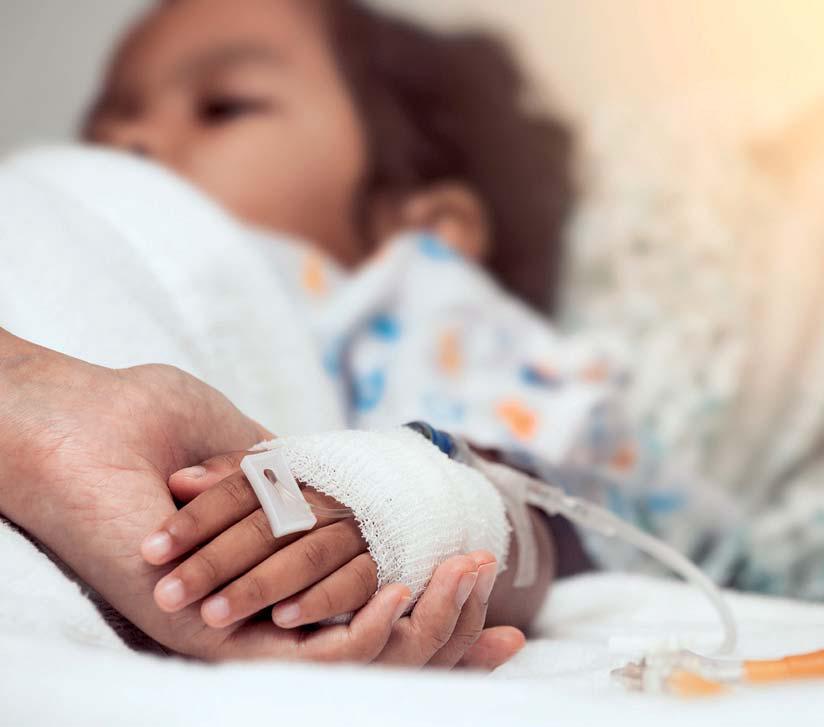
ANTIBIOTICS USED TO TREAT COMmon childhood ailments are becoming less and less effective, according to a new study.
Many of the antibiotics often used to treat infections like pneumonia, sepsis (bloodstream infections) and meningitis, which children often contract, are now less than 50 percent effective, the study published in the journal The Lancet Regional HealthSoutheast Asia says.
The regions most affected by this are Southeast Asia and the Pacific, including Indonesia and the Philippines. Antibiotics in the United States are also getting less effective.
"It is already affecting us in the U.S. This has been deemed a silent pandemic," André O. Hudson, a professor of biochemistry at Rochester Institute of Technology, tells Newsweek.
The Problem with Antibiotics
Antimicrobial resistance, or AMR, is one of the top 10 public health threats, according to the World Health Organization. Illnesses like sepsis kill over 500,000 newborns worldwide every year, with many of these being attributed to antibiotic resistance.
"The WHO, G7 and World Economic Forum all formally recognize antimicrobial resistance as a global threat to human health. We depend on antibiotics for so much of modern medicine, including all kinds of invasive surgeries (like hip and knee replacements, tumor removal), protecting those who are immunocompromised such as cancer patients or premature babies the list is long," Lori L. Burrows, a professor of biochemistry and biomedical sciences at the MDG Institute for Infectious Disease Research, McMaster University, says.

Diese Geschichte stammt aus der November 17, 2023-Ausgabe von Newsweek US.
Abonnieren Sie Magzter GOLD, um auf Tausende kuratierter Premium-Geschichten und über 9.000 Zeitschriften und Zeitungen zuzugreifen.
Sie sind bereits Abonnent? Anmelden
WEITERE GESCHICHTEN VON Newsweek US

Newsweek US
JACK WHITEHALL
COMEDIAN JACK WHITEHALL IS TRADING PUNCHLINES FOR THE “GOOD TYPE OF NERVES” in the new series 'The Burbs. In this latest role, the British comedian navigates the “uncomfortable territories” of neighborhood life, a setting he finds surprisingly familiar.

1 mins
February 27 - March 6, 2026

Newsweek US
Out of This World
Elon Musk has made orbital computing—operating data centers in space—central to the future of artificial intelligence, arguing that the next phase of AI will move large amounts of computing infrastructure off Earth.
1 min
February 27 - March 6, 2026

Newsweek US
A WAR OF INCHES
The conflict between Kyiv and Moscow has become one of attrition, analysts say, with both sides paying a high price for small gains
7 mins
February 27 - March 6, 2026

Newsweek US
NEXT-DOOR ENABLER
How Beijing's carefully calibrated support has helped sustain Moscow as it fights Ukraine—without crossing key red lines
4 mins
February 27 - March 6, 2026

Newsweek US
Can Ken Martin Save the Democrats From Themselves?
The party may be winning special elections and polling strongly, yet members remain anxious. A year into his reign, the DNC chair is betting on organizing and infrastructure—not insiders—to turn momentum into power
16 mins
February 27 - March 6, 2026

Newsweek US
WHO WILL STRIKE GOLD AT THE ACADEMY AWARDS?
If you're looking to win your friends' pool, here are our favorites to take home the trophies
3 mins
February 27 - March 6, 2026

Newsweek US
ONE OPINION AFTER ANOTHER
Two-time Oscar winner Sean Penn has always worn his politics on his sleeve. After gaining a sixth Academy Award nomination for One Battle After Another, the actor tells Newsweek about giving his statuette to Volodymyr Zelensky, how Nicolás Maduro should be in prison and why Donald Trump won in 2024
12 mins
February 27 - March 6, 2026

Newsweek US
Out of This World
Elon Musk has made orbital computing—operating data centers in space—central to the future of artificial intelligence, arguing that the next phase of AI will move large amounts of computing infrastructure off Earth. That logic underpinned the merger of SpaceX and xAI in a $1.25 trillion deal, aligning rocket launch capacity with the future needs of AI computing.
1 min
February 27 - March 6, 2026

Newsweek US
OSCARS EMBRACE THE DARK SIDE
With record-breaking nods for Sinners, 2026 marks a shift toward horror. The Academy Awards may have finally gotten over its fear of the macabre
4 mins
February 27 - March 6, 2026

Newsweek US
LOVE IN THE LINE OF FIRE
In Ukraine's front-line city of Kramatorsk, couples separated by war risk brief reunions as Russian forces close in
8 mins
February 27 - March 6, 2026
Translate
Change font size