
Mit Magzter GOLD unbegrenztes Potenzial nutzen
Erhalten Sie unbegrenzten Zugriff auf über 9.000 Zeitschriften, Zeitungen und Premium-Artikel für nur
ABLE-BODIED
Mother Jones
|November/December 2025
The deceptive phrase behind Trump's Medicaid purge
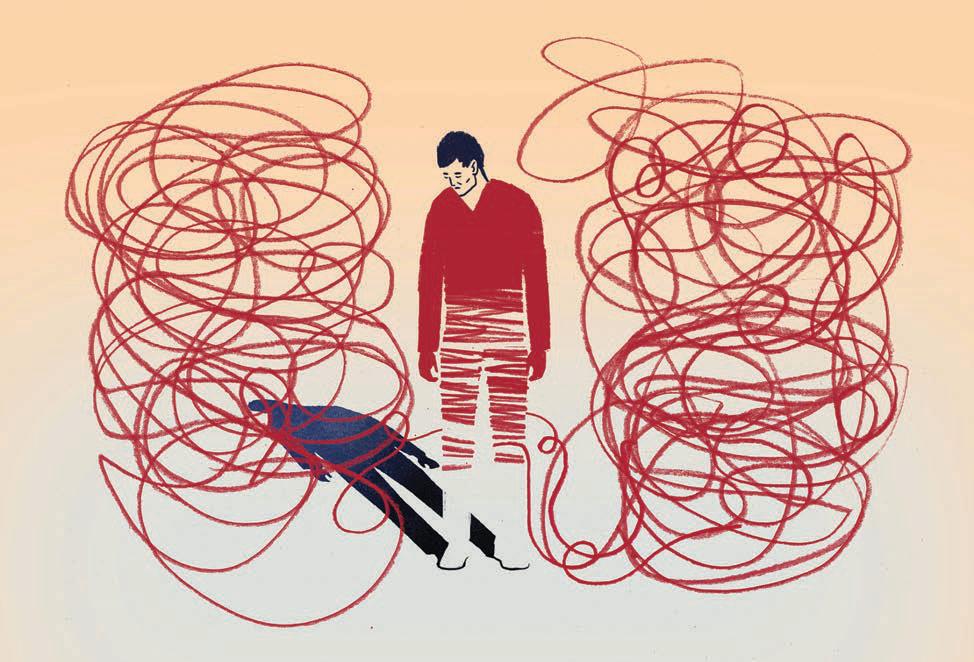
A FEW DAYS before the passage of Trump's One Big Beautiful Bill, the White House released a “Myth vs. Fact” document to counter criticism of the inclusion of work requirements for Medicaid eligibility. The proposed new rules need not cause worry among Americans, the document implied, because only “able-bodied adults” would have to show proof of employment. In return, the administration claimed, the needy would gain something beyond mere federal health coverage: dignity.
For decades, Republicans (and austere liberals) have deployed the “able-bodied” trope to sell the public on employment as a condition of government assistance. In this context, the expression brings to mind capable workers glued to their sofas—“couch potatoes,” as the former Florida Rep. Matt Gaetz once put it—eating junk food and playing video games while living on the government dole.
Putting aside the fact that nobody gets rich from the ability to see a doctor, the rhetoric is confounding. What does “able-bodied” mean?
It isn’t a term typically used by medical professionals. And the phrase is not, in fact, indicative of a vast slouching class—lots of disabled people have jobs. The vast majority of adult Medicaid recipients who can work already do; KFF reports that nearly two-thirds of those not enrolled in the Social Security disability programs are working full or part time. Most nonworking recipients have legitimate excuses, including retirement, caregiving, school, or an illness.
“Able-bodied” may sound like a medical determination but, as activist Imani Barbarin told me, it’s really just a vague way “to signal this idea that disability can be seen.” Under this rubric, people with invisible disabilities that can make work extremely challenging—including psychiatric disabilities like bipolar disorder or chronic illnesses such as lupus—can be cast as lazy.


Diese Geschichte stammt aus der November/December 2025-Ausgabe von Mother Jones.
Abonnieren Sie Magzter GOLD, um auf Tausende kuratierter Premium-Geschichten und über 9.000 Zeitschriften und Zeitungen zuzugreifen.
Sie sind bereits Abonnent? Anmelden
WEITERE GESCHICHTEN VON Mother Jones

Mother Jones
THE WELL WATCHERS
THERE ARE MILLIONS OF ABANDONED OIL WELLS ACROSS THE UNITED STATES. AN UNLIKELY GROUP OF ACTIVISTS IN TEXAS IS MAKING SURE NO ONE FORGETS THEY NEED TO BE CLEANED UP.

21 mins
January/February 2026

Mother Jones
RAGE AGAINST THE MACHINES
\"Empire of Al\" author Karen Hao on the reckless arrogance of our Silicon Valley overlords
3 mins
January/February 2026

Mother Jones
ALL TOO HUMAN
Why are we so susceptible to trusting AI chatbots?
3 mins
January/February 2026

Mother Jones
"GENDER IDEOLOGY"
How trans people came to embody the right's biggest fears
4 mins
January/February 2026

Mother Jones
HELL NO, IT'S NOT OVER
We still have rights. Time to use them.
4 mins
January/February 2026

Mother Jones
THIS IS ALL JOHN ROBERTS' FAULT
Trump owes his corrupt and abusive reign to one man.
10 mins
January/February 2026
Mother Jones
DEPARTMENT OF GETTING SHIT DONE
Scott Wiener has revolutionized California housing law. Can he bring that same energy to Congress?
21 mins
January/February 2026

Mother Jones
THE MAKING OF RILEY GAINES
How a fifth-place tie with a trans woman propelled a young swimmer to right-wing stardom
26 mins
January/February 2026

Mother Jones
DREAM TEAM
Soccer Without Borders is two decades old, but its players have never faced a rival like Trump.
6 mins
January/February 2026
Mother Jones
THE CRUELTY IS THE POST
The government memes designed to mainstream sadopopulism
7 mins
January/February 2026
Listen
Translate
Change font size