Versuchen GOLD - Frei
SEEING RED
Guitar World
|February 2026
In a special, expanded edition of our Lost Classics series, King Crimson guitar icon Robert Fripp - his personal diary open for the first time in 50 years - looks back on the making of 1974's Red, the album that pushed the UK prog-rock greats to their (first) breaking point

BY THE SUMMER of 1974, King Crimson had reached critical mass.
Albums like In the Court of the Crimson King (1969), Larks' Tongues in Aspic (1973) and Starless and Bible Black (early 1974) had seen the venerable British band reach the apex of proto-metal-meets-fusion-meets-prog. But tensions within Crimson's ranks were escalating, leading to drummer Bill Bruford, vocalist and bassist John Wetton and guitarist and mastermind Robert Fripp entering the sessions for the heavier-than-heavy album, late 1974's Red, on the precipice of spontaneous combustion.
Lineup shifting, specifically the expulsion of violinist David Cross, had left Fripp feeling uneasy. This, along with the increasing sensation of needing to break away, manifested in Red's ultra-heavy, yet still intellectually complex atmosphere.
“The music is in the body,” Fripp tells Guitar World. “From there we might say, ‘Well, look, what's going on here? How is the music speaking to us?’ And then we engage the head and express it formally, analyze it and so on. But the strength of Red is that the power is in the music.”
Songs like the hyper-urgent “Red,” the catchy yet chaotic “One More Red Nightmare” and the sprawlingly beautiful “Starless” illustrate what Fripp refers to as his entry into the liminal zone.
“It was very, very open,” Fripp says. “But it's a very difficult and uncomfortable place to be. If someone comes in with a pretty well-written piece of music and says, ‘Let's play this,’ then it's relatively safe and straightforward. But the problem is, when you know what you're doing, if you know where you're going, you might get there, and that's not an interesting place to be. Where you wish to arrive is where you could never possibly know you might be going. But that is a very difficult tension to hold together.”
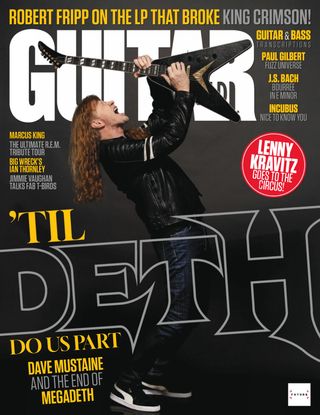

Diese Geschichte stammt aus der February 2026-Ausgabe von Guitar World.
Abonnieren Sie Magzter GOLD, um auf Tausende kuratierter Premium-Geschichten und über 9.000 Zeitschriften und Zeitungen zuzugreifen.
Sie sind bereits Abonnent? Anmelden
WEITERE GESCHICHTEN VON Guitar World

Guitar World
Speed Skips
Downpicking fast string-skips in \"Jaded\"

2 mins
April 2026

Guitar World
HOW TO PLAY THIS MONTH'S SONGS
This fusion-tinged instrumental showcases Billy's sophistication...
4 mins
April 2026

Guitar World
TOYS IN THE ATTIC
From a Blade Runner to a B.C. Rich to a nearly forgotten Black Burst, Aerosmith's Joe Perry reveals the stories behind nine standouts from his impressive guitar collection - and nominates the coolest pointy ax of all time
23 mins
April 2026
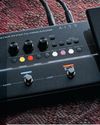
Guitar World
Boss GX-1
A multi-effects unit with pro-level features on a bedroom budget
3 mins
April 2026

Guitar World
Love Is Blues
Celebrating B.B. King's late- Eighties collaboration with U2
2 mins
April 2026
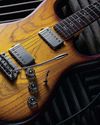
Guitar World
PRS Fiore HH Satin
PRS's under-the-radar Fiore, the signature guitar of Mark Lettieri, gets a dual-humbucking makeover and packs serious punch
3 mins
April 2026
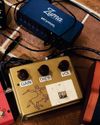
Guitar World
TOYS IN THE ATTIC
Joe Perry walks us through his at-home pedalboard - and his pedalboard methodology
4 mins
April 2026
Guitar World
TOYS IN THE ATTIC
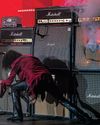
A decade-by-decade guide to Joe Perry's amps – and exactly where he stands on modeling
6 mins
April 2026
Guitar World
Haim Time
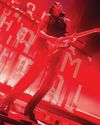
Haim's Danielle Haim on 2025's I Quit, the value of classic rock covers and who she considers an outright genius
3 mins
April 2026
Guitar World
Diezel VH4
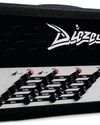
FOR FANS OF high-gain amps, 1992 was a breakthrough year unlike any other (previously or since).
2 mins
April 2026
Listen
Translate
Change font size