
Mit Magzter GOLD unbegrenztes Potenzial nutzen
Erhalten Sie unbegrenzten Zugriff auf über 9.000 Zeitschriften, Zeitungen und Premium-Artikel für nur
Wagner the revolutionary flees Dresden to avoid arrest
BBC Music Magazine
|May 2025
The Royal Kapellmeister Richard Wagner is wanted for examination on account of his active participation in the recent rising here, but as yet he has not been found'.

Thus ran a warrant published in a Dresden newspaper on 19 May 1849, empowering the local police force to hunt down and capture the fugitive composer. Wagner was 120 miles away from Dresden at the time, staying with his friend Franz Liszt in Weimar. 'Wagner is of middle height, has brown hair, and wears glasses,' the warrant continued. 'Well, that applies to a lot of people!', the German composer reputedly retorted.
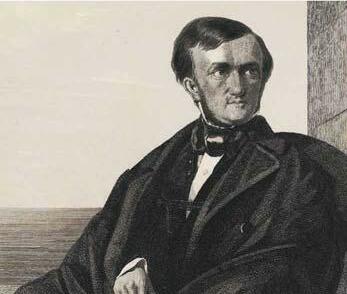 Joking aside, his situation was undoubtedly serious. Wagner had indeed been extensively involved in the May Uprising in Dresden, one of the last in a wave of violent insurrections sweeping Europe in the 1848-9 period. Sympathetic to the left-wing revolutionaries aiming to unite the 39 separate German states into a single constitutional democracy, he wrote articles inciting citizens to revolt, distributed hand grenades and monitored the action from the tower of the Dresden Kreuzkirche. While there, he (typically) engaged in an 'earnest philosophical discussion' with a schoolmaster and sent a note to his wife Minna requesting 'some necessary provisions'. Elsewhere, eyewitnesses reported seeing Wagner manning barricades, handling a gun and mingling with his fellow revolutionaries as the street-fighting against Saxon and Prussian troops unfolded.

Diese Geschichte stammt aus der May 2025-Ausgabe von BBC Music Magazine.
Abonnieren Sie Magzter GOLD, um auf Tausende kuratierter Premium-Geschichten und über 9.000 Zeitschriften und Zeitungen zuzugreifen.
Sie sind bereits Abonnent? Anmelden
WEITERE GESCHICHTEN VON BBC Music Magazine

BBC Music Magazine
Hiss and make-up
From boos to vegetables, opera stars have had to put up with all sorts being aimed in their direction over the centuries

8 mins
Christmas 2025

BBC Music Magazine
A vivid and intimate portrait of Mahler
Anna Lucia Richter brings striking depth and expressive insight to the composer's song-settings
2 mins
Christmas 2025

BBC Music Magazine
It's all in the genes
Is it a bonus or a burden to be the musical child of musical parents?
7 mins
Christmas 2025

BBC Music Magazine
Banff Canada
Spectacular views and equally stunning string quartet performances are on Jeremy Pound's agenda as he heads to the Canadian Rockies
3 mins
Christmas 2025

BBC Music Magazine
Morten Lauridsen
Terry Blain explores the life of a self-imposed recluse whose magical O Magnum Mysterium beguiles millions of listeners each Christmas
6 mins
Christmas 2025

BBC Music Magazine
In good faith
Composer Roxanna Panufnik and writer Jessica Duchen tell Amanda Holloway how they have joined forces for a new choral work that looks well beyond Christmas for its festive celebrations
8 mins
Christmas 2025

BBC Music Magazine
Westward Ho!
Composer Alex Ho is part of a growing community of musicians combining their British and Chinese heritage in fascinating ways
7 mins
Christmas 2025

BBC Music Magazine
Music & mercy
explores Venice's Ospedale della Pietà, the girls' orphanage where Vivaldi taught and composed
7 mins
Christmas 2025

BBC Music Magazine
Jingle hell!
As the Christmas season approaches, the BBC Music Magazine team share the festive tunes that make our hearts sink
9 mins
Christmas 2025

BBC Music Magazine
Bach's recycled choral music brings festive cheer to Leipzig
Shout, exult, arise, praise these days! Glorify what the Almighty today has done!' Early on the morning of 25 December 1734, these words resounded from the choir stalls of the Thomaskirche, Leipzig, to a jubilant accompaniment of festive timpani, pealing trumpets and scampering violins. Seated at a keyboard, the church's director of music Johann Sebastian Bach marshalled the musicians in a performance of the cantata Jauchzet, frohlocket! Auf, preiset die Tage, which preceded the sermon in the morning service.
3 mins
Christmas 2025
Listen
Translate
Change font size