
Mit Magzter GOLD unbegrenztes Potenzial nutzen
Erhalten Sie unbegrenzten Zugriff auf über 9.000 Zeitschriften, Zeitungen und Premium-Artikel für nur
Franz Schubert
BBC Music Magazine
|December 2025
From angst to acceptance, Schubert's ability to switch seamlessly between states of mind was a unique part of his genius, says Stephen Johnson
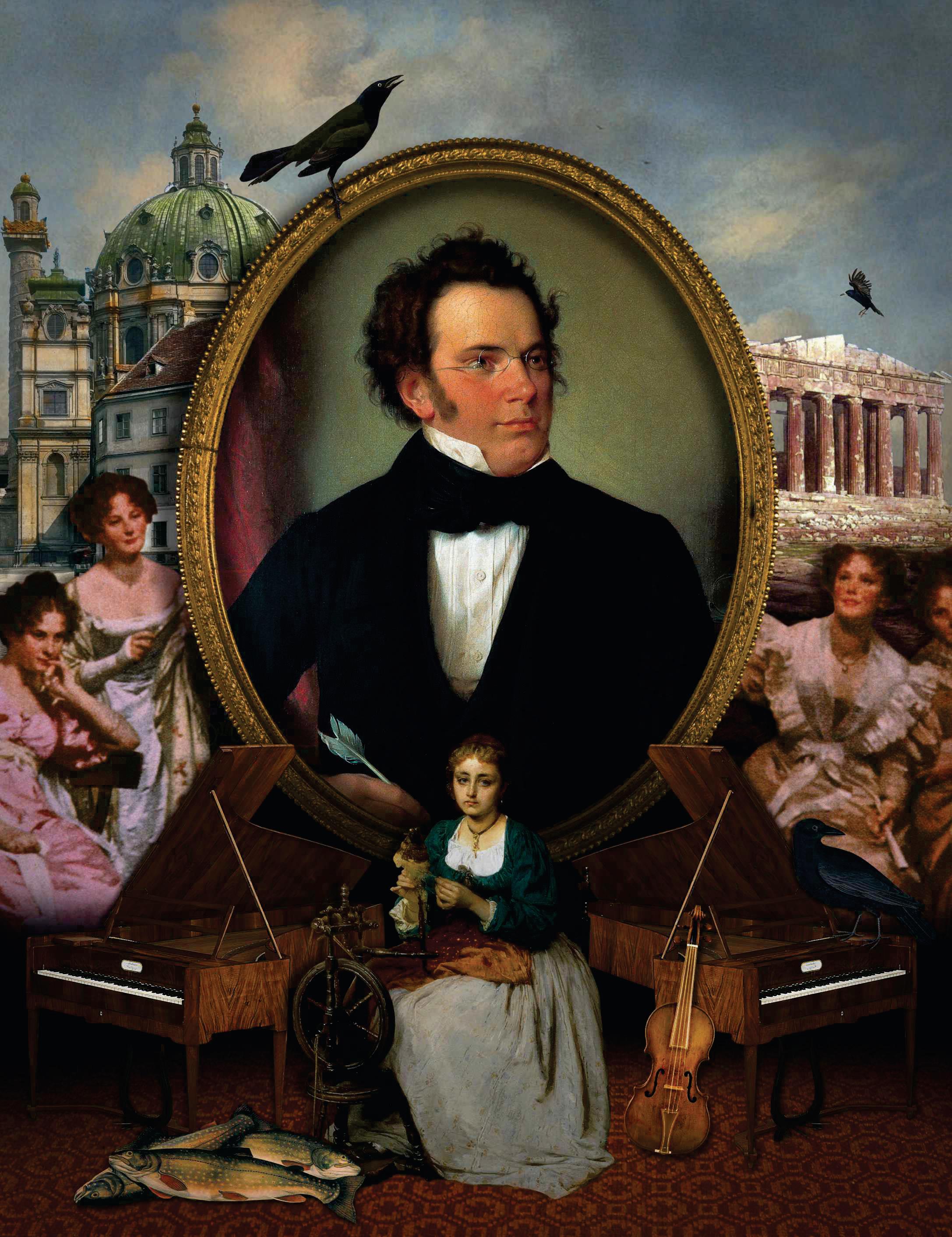
On one level he seems so direct, so simple, so uncomplicatedly appealing. Schubert could turn on heart-lifting melody with the same ease that most of us would turn on a tap. Often he seems happy just to bask in his own lyrical ferility, rather than go in for the kind of ingenious, viscerally compelling development taken to such heights by Beethoven. And that's the idea of Schubert that prevailed until well into the 20th century. He was an innocent, an exquisite charmer who composed in a kind of ecstatic trance - a sleepwalker, but not one of music's challenging thinkers. George Bernard Shaw even called him 'brainless'.
It was Schubert himself who undid all this in the end, simply because more and more of his vast and hugely varied output came to light. His first surviving effort at composition dates from his eleventh year; 20 years later he was dead. Over this period he finished or partly completed over 20 piano sonatas, 13 symphonies, 20 stage works, 15 string quartets and over 630 songs, not to mention numerous sacred and secular choral pieces, and a staggering amount of this is of outstanding quality. But at his death, only a minute fraction of this had been heard, still less published. His poignant original epitaph, 'Music has buried here a treasure, but even fairer hope', turned out to be badly mistaken. But you can't blame its author, Franz Grillparzer. Like most of Schubert's friends, he'd seen only the tip of an enormous iceberg.

Diese Geschichte stammt aus der December 2025-Ausgabe von BBC Music Magazine.
Abonnieren Sie Magzter GOLD, um auf Tausende kuratierter Premium-Geschichten und über 9.000 Zeitschriften und Zeitungen zuzugreifen.
Sie sind bereits Abonnent? Anmelden
WEITERE GESCHICHTEN VON BBC Music Magazine
BBC Music Magazine
Hiss and make-up
From boos to vegetables, opera stars have had to put up with all sorts being aimed in their direction over the centuries

8 mins
Christmas 2025

BBC Music Magazine
A vivid and intimate portrait of Mahler
Anna Lucia Richter brings striking depth and expressive insight to the composer's song-settings
2 mins
Christmas 2025

BBC Music Magazine
It's all in the genes
Is it a bonus or a burden to be the musical child of musical parents?
7 mins
Christmas 2025

BBC Music Magazine
Banff Canada
Spectacular views and equally stunning string quartet performances are on Jeremy Pound's agenda as he heads to the Canadian Rockies
3 mins
Christmas 2025

BBC Music Magazine
Morten Lauridsen
Terry Blain explores the life of a self-imposed recluse whose magical O Magnum Mysterium beguiles millions of listeners each Christmas
6 mins
Christmas 2025

BBC Music Magazine
In good faith
Composer Roxanna Panufnik and writer Jessica Duchen tell Amanda Holloway how they have joined forces for a new choral work that looks well beyond Christmas for its festive celebrations
8 mins
Christmas 2025

BBC Music Magazine
Westward Ho!
Composer Alex Ho is part of a growing community of musicians combining their British and Chinese heritage in fascinating ways
7 mins
Christmas 2025

BBC Music Magazine
Music & mercy
explores Venice's Ospedale della Pietà, the girls' orphanage where Vivaldi taught and composed
7 mins
Christmas 2025

BBC Music Magazine
Jingle hell!
As the Christmas season approaches, the BBC Music Magazine team share the festive tunes that make our hearts sink
9 mins
Christmas 2025
BBC Music Magazine
Bach's recycled choral music brings festive cheer to Leipzig
Shout, exult, arise, praise these days! Glorify what the Almighty today has done!' Early on the morning of 25 December 1734, these words resounded from the choir stalls of the Thomaskirche, Leipzig, to a jubilant accompaniment of festive timpani, pealing trumpets and scampering violins. Seated at a keyboard, the church's director of music Johann Sebastian Bach marshalled the musicians in a performance of the cantata Jauchzet, frohlocket! Auf, preiset die Tage, which preceded the sermon in the morning service.
3 mins
Christmas 2025
Listen
Translate
Change font size