
Mit Magzter GOLD unbegrenztes Potenzial nutzen
Erhalten Sie unbegrenzten Zugriff auf über 9.000 Zeitschriften, Zeitungen und Premium-Artikel für nur
Versuchen GOLD - Frei
Plato versus Literature
Philosophy Now
|April / May 2024
Daniel Toré asks, can literature save us?
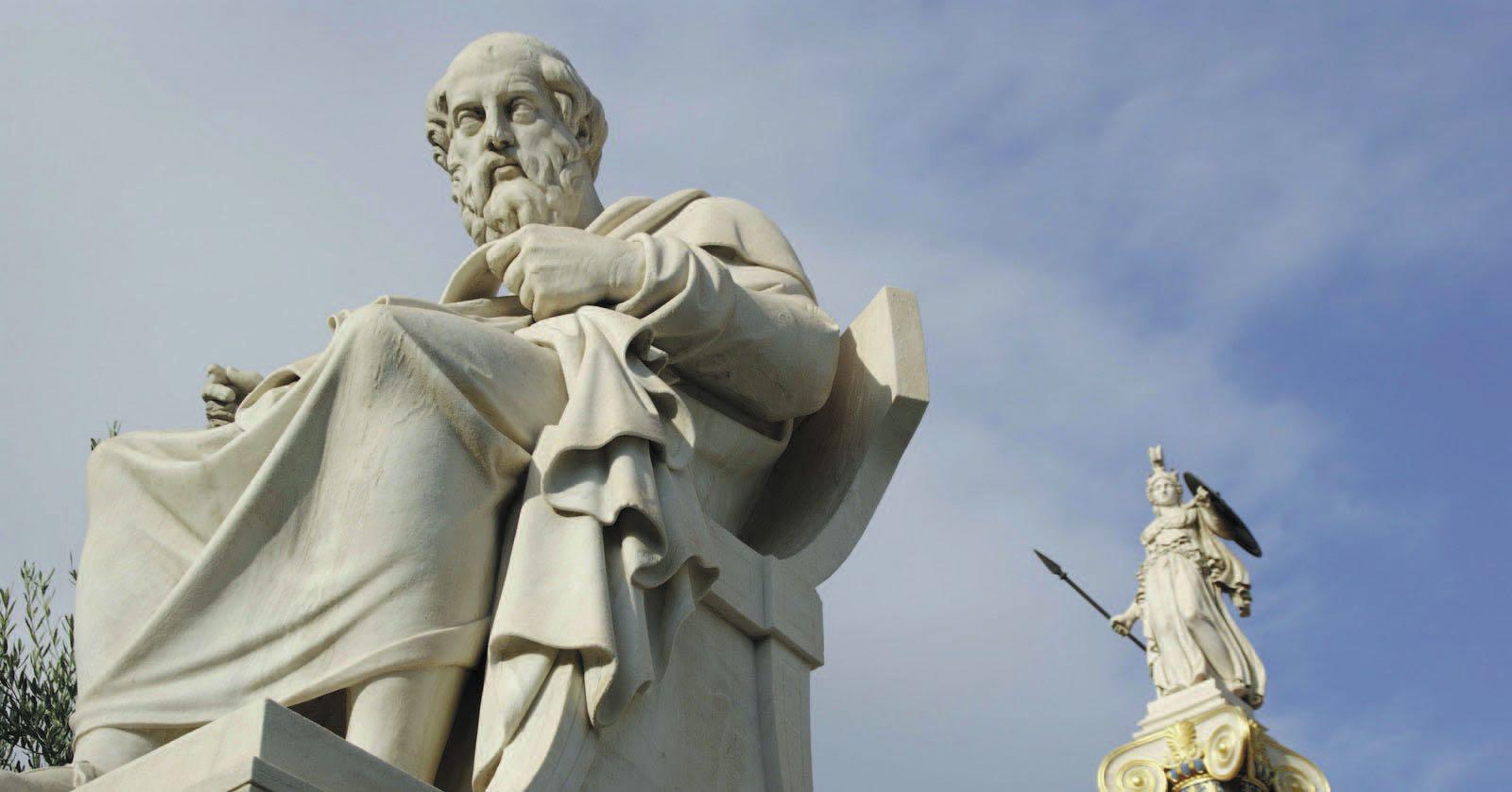
Take a second to sincerely ask yourself: has literature improved my life? There’s often an immediate pinprick reaction to defend our most beloved stories, as if our safety blanket is being snatched away from us. But letting go of nostalgia and its associated emotions will help us to think critically. Are all these drawn-out evenings staring at paper really worth it, and if so, how?
For the first seventeen years of my life I read only what school demanded of me, and felt sincerely that it would be more enjoyable to eat a book than to open one. Then, one day, a browned and dogeared copy of Ian McEwan’s Enduring Love (1997) caught my eye, in the same way that something you pass every day can inexplicably gain new life and you see it as if for the very first time. I read it cover to cover almost in one sitting, and it ignited in me a burning passion for literature that has never dimmed.
I’ve always considered this a personally pivotal moment, in which I crossed a bridge out of childhood, exchanging juice boxes for coffee, Velcro for laces, and Saturday cartoons for stock market speculation. But was it because of the book itself, or was it just the timing? Could it be that I had suddenly matured, or rather, that I found doing something typically adult novel (no pun intended)? Or was it because I simply enjoyed the sittinginside-on-a-rainy-day feeling, which just so happened to have involved a book? Regardless, I liked it, and parallel to this, I somehow matured from a child to a mostly functioning adult. My question is, then: did literature save me? Can it save us?
To be clear, I don’t mean, can literature save us from drowning? No, it can’t. Instead, I mean to ask: can literature save us in the sense of enlightening us?
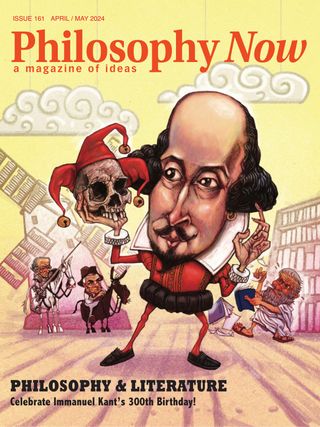

Diese Geschichte stammt aus der April / May 2024-Ausgabe von Philosophy Now.
Abonnieren Sie Magzter GOLD, um auf Tausende kuratierter Premium-Geschichten und über 9.000 Zeitschriften und Zeitungen zuzugreifen.
Sie sind bereits Abonnent? Anmelden
WEITERE GESCHICHTEN VON Philosophy Now

Philosophy Now
The Possibility- Bearing Animal
Raymond Tallis explores a twilight zone.

7 mins
February/March 2026

Philosophy Now
Amazing Times at the Pub Agora
John Douglas Mullen is a philosophical bar fly on the wall.
8 mins
February/March 2026

Philosophy Now
Friedrich Nietzsche (1844-1900)
Hilarius Bogbinder considers the all too human life of the notorious iconoclast.
11 mins
February/March 2026

Philosophy Now
Heisenberg's Philosophy of Quantum Mechanics
Kanan Purkayastha explains how Werner Heisenberg's 1925 paper turned the quantum theory of the early 1900s into the quantum mechanics of today.
10 mins
February/March 2026

Philosophy Now
Cicero & the Ideal of Virtue
Abdullah Shaikh explores Cicero's ideas about the core Roman principle of virtus.
13 mins
February/March 2026

Philosophy Now
ROPE
Les Jones has a Nietzschean take on a Hitchcock thriller.
6 mins
February/March 2026
Philosophy Now
What Have the Romans Ever Done For Us?
Salve! This issue's theme is Roman Philosophy. But as the rebels in Monty Python's Life of Brian asked, what have the Romans ever done for us? The question seems relevant here; we are philosophers, not archaeologists.
2 mins
February/March 2026

Philosophy Now
Paul Guyer
Paul Guyer is an American philosopher and a leading scholar of both Immanuel Kant and aesthetics. AmirAli Maleki interviews him about Kant's political and moral vision.
9 mins
February/March 2026
Philosophy Now
Identity in the Age of Connectivity
Sara Asran explores the dynamics of identity online.
6 mins
February/March 2026

Philosophy Now
A Very Short History of Critical Thinking
Luc de Brabandere summarises a long history through key figures of thought.
7 mins
February/March 2026
Listen
Translate
Change font size