Versuchen GOLD - Frei
Empathy & Sympathy
Philosophy Now
|April/May 2025
James R. Robinson asks, how do they relate, and how do they differ?
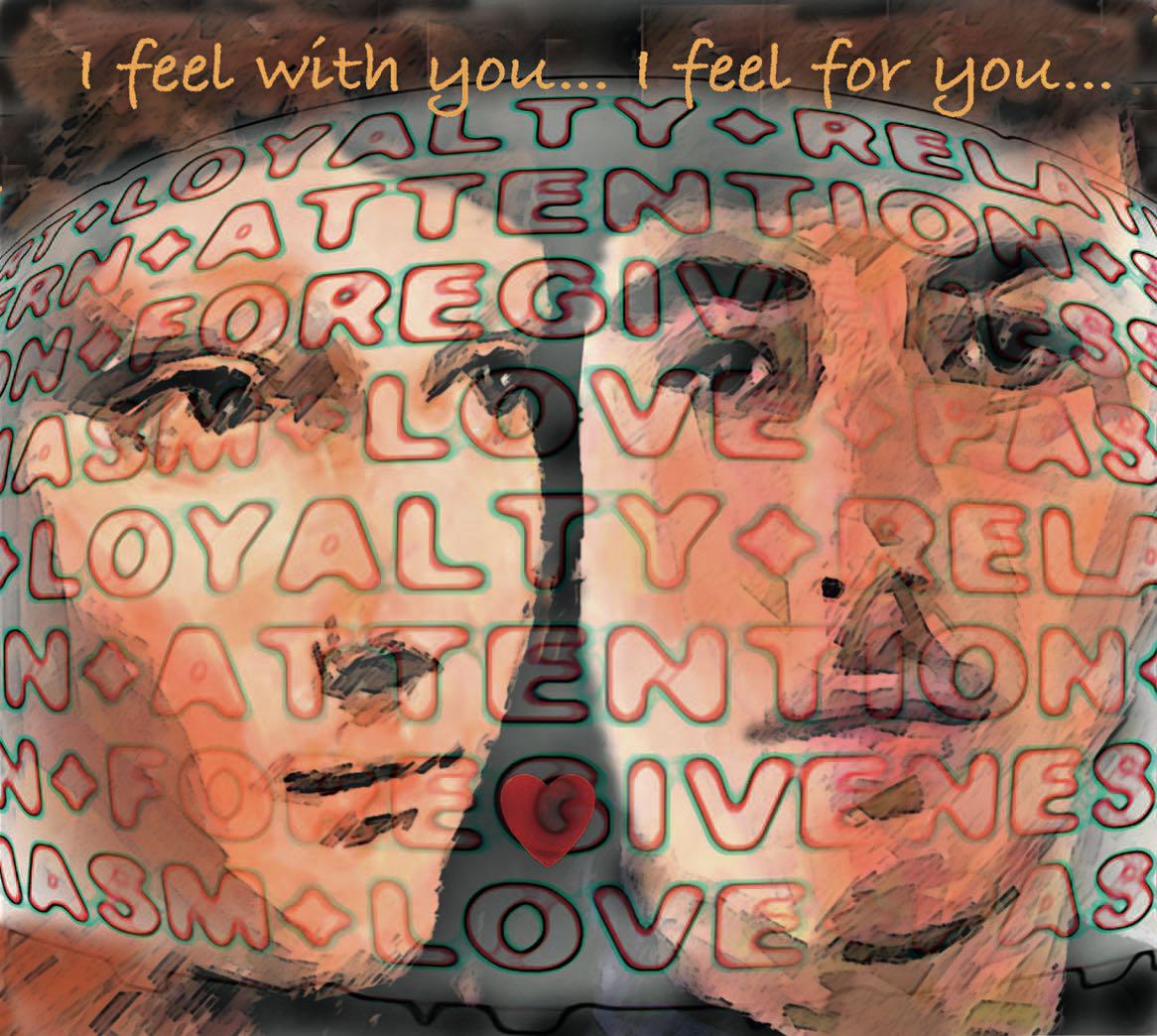
Empathy' and 'sympathy' are often used interchangeably, because they are related terms. However, they differ in some important ways, which I hope to make clear. Affections are the star of the show in this article, because my explanation of empathy and sympathy as emotional mechanisms rests upon them being different ways of relating to affections. So I will first attempt to explain what affections are, then why affections are important for understanding empathy and sympathy, before then explaining how empathy and sympathy relate, and how they are different.
Contrasting Affections to Passions
Affections are, simply put, the mental expression of emotions. Five examples are enthusiasm, resentment, forgiveness, attention, and love. I'll get into the details of some of these examples later. For now, I think one of the most efficient ways to explain affections is to contrast them with passions.
On the definition I’m using, a passion is an involuntary feeling arising in the body. Passions are responses to adrenaline surges or directly to physical causes. My (unusual) example is the passion of a pain felt whilst cooking: specifically, the sensation felt in response to touching a very hot pan on the stove. This feeling is clearly involuntary - we do not choose to feel the sensation of being burnt. (This does not rule out having control over our passions in certain senses: anger is a passion but it can be controlled or even channelled.) Moreover, this feeling is also undoubtedly physical, as it manifests itself within the part of the hand exposed to the heat. There will also likely be visible evidence of blistering on the skin, or worse.

Diese Geschichte stammt aus der April/May 2025-Ausgabe von Philosophy Now.
Abonnieren Sie Magzter GOLD, um auf Tausende kuratierter Premium-Geschichten und über 9.000 Zeitschriften und Zeitungen zuzugreifen.
Sie sind bereits Abonnent? Anmelden
WEITERE GESCHICHTEN VON Philosophy Now

Philosophy Now
Bilbo Theorizes About Wellbeing
Eric Comerford overhears Bilbo and Gandalf discussing happiness.

9 mins
December 2025 / January 2026

Philosophy Now
What Women?
Marcia Yudkin remembers almost choking at Cornell
11 mins
December 2025 / January 2026

Philosophy Now
Islamic Philosophers On Tyranny
Amir Ali Maleki looks at tyranny from an Islamic perspective.
4 mins
December 2025 / January 2026

Philosophy Now
Peter Singer
The controversial Australian philosopher defends the right to choose to die on utilitarian grounds
5 mins
December 2025 / January 2026

Philosophy Now
Another Conversation with Martin Heidegger?
Raymond Tallis talks about communication problems.
7 mins
December 2025 / January 2026

Philosophy Now
Letters
When inspiration strikes, don't bottle it up. Email me at rick.lewis@philosophynow.org Keep them short and keep them coming!
17 mins
December 2025 / January 2026

Philosophy Now
The Philosophy of William Blake
Mark Vernon looks at the imaginative thinking of an imaginative artist.
9 mins
December 2025 / January 2026

Philosophy Now
Philosophical Haiku
Peering through life’s lens God in nature is deduced: The joy of being.
1 mins
December 2025 / January 2026

Philosophy Now
Philosophy Shorts
More songs about Buildings and Food' was the title of a 1978 album by the rock band Talking Heads. It was about all the things rock stars normally don't sing about. Pop songs are usually about variations on the theme of love; tracks like Rose Royce's 1976 hit 'Car Wash' are the exception. Philosophers, likewise, tend to have a narrow focus on epistemology, metaphysics and trifles like the meaning of life. But occasionally great minds stray from their turf and write about other matters, for example buildings (Martin Heidegger), food (Hobbes), tomato juice (Robert Nozick), and the weather (Lucretius and Aristotle). This series of Shorts is about these unfamiliar themes; about the things philosophers also write about.
2 mins
December 2025 / January 2026

Philosophy Now
Hedonic Treadmills in the Vale of Tears
Michael Gracey looks at how philosophers have pursued happiness.
8 mins
December 2025 / January 2026
Listen
Translate
Change font size