
Mit Magzter GOLD unbegrenztes Potenzial nutzen
Erhalten Sie unbegrenzten Zugriff auf über 9.000 Zeitschriften, Zeitungen und Premium-Artikel für nur
Versuchen GOLD - Frei
The sinner who painted saints
Country Life UK
|April 10, 2024
Although named after an angel, Caravaggio needed no stronger reason to brawl than having his artichokes dressed with butter instead of olive oil. Maev Kennedy delves into his short and brutal life

I N the claustrophobic gloom of Caravaggio’s 1610 The Martyrdom of Saint Ursula, a dark, burly man is shoving his way into the centre of the frame. His expression, mouth open, is enigmatic: is he coming to cheer on the executioner, whose bow has just fired the fatal shot or to rescue the saint looking down with calm acceptance at the quivering arrow piercing her breast? Is he merely excited at the drama? He certainly looks, as described by a contemporary, ‘a stocky young man… with thick eyebrows and black eyes’. It is unquestionably a self-portrait of the artist and, whatever his intention, he is acting exactly as he did throughout his short, turbulent life—barging his way towards, rather than away from, trouble.
The painting is coming on loan to the National Gallery in London from the Banca Intesa Sanpaolo, undoubtedly the greatest work in the institution’s collection of 35,000 works of art. In the narrow, windowless gallery specially designed to showcase it in Naples, the city where it was painted, it has an eerie effect. A slot cut through a thick wall gives visitors a chilling glimpse before they enter the gallery. In reproductions, the effect is less evident, but in the flesh the contrast is brutal between the ruddy skin tone of the executioner—a king of the Huns whom the virgin saint has refused to marry— and the almost phosphorescent pallor of Ursula and Caravaggio, as if both are already dead.
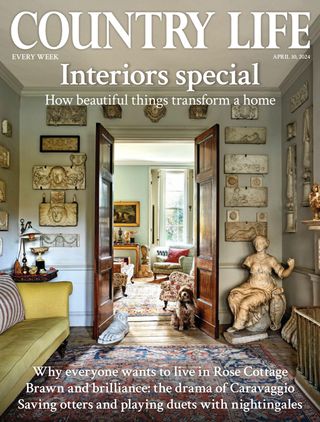

Diese Geschichte stammt aus der April 10, 2024-Ausgabe von Country Life UK.
Abonnieren Sie Magzter GOLD, um auf Tausende kuratierter Premium-Geschichten und über 9.000 Zeitschriften und Zeitungen zuzugreifen.
Sie sind bereits Abonnent? Anmelden
WEITERE GESCHICHTEN VON Country Life UK
Country Life UK
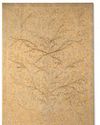
Opposites can attract
As a big bookcase designed by Peter Waals proves large pieces of furniture can do well, a notable collection shows harmony can be born from difference

3 mins
June 03, 2026
Country Life UK
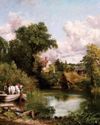
His green and pleasant land
Few artists travelled as little as John Constable, but his deep knowledge of the parts of England he loved gave him insights that others missed. Susan Owens explores the places that delighted him
6 mins
June 03, 2026
Country Life UK
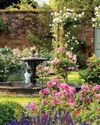
Dreaming of roses
A thousand English roses now bloom in the restored walled garden that forms the heart of this 27-acre estate, writes Charles Quest-Ritson
4 mins
June 03, 2026
Country Life UK
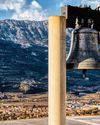
Ring for peace
A COPIOUS quantity of apple strudel became the unintended consequence of a winter walking holiday in the Austrian Tyrol.
2 mins
June 03, 2026
Country Life UK
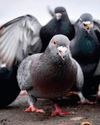
Best of the pests
Pity the feral pigeon: long campaigned against as an urban nuisance, it is the descendant of birds lured into human service, some of which distinguished themselves in wartime
3 mins
June 03, 2026
Country Life UK
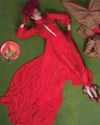
Red alert
The time is ripe for tomatoes in every form. We are days into British Tomato Fortnight (June 1–14) and weeks from Royal Ascot (June 16–20), where Bright Tomato has been declared the inaugural Colour of the Year by Ascot creative director Daniel Fletcher.
1 mins
June 03, 2026
Country Life UK
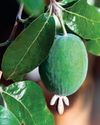
Totally tropical
I FIRST grew pineapple guava, also called feijoa (Acca or Feijoa sellowiana) almost a quarter of a century ago, when there were few nurseries stocking them.
3 mins
June 03, 2026
Country Life UK
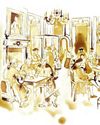
Brewed awakening: where London learnt to talk
Rupert Clague explores how caffeine-fuelled conversation in Hanoverian London’s ‘penny universities’ helped shape the modern world—and where that same spirit still lingers today
5 mins
June 03, 2026
Country Life UK
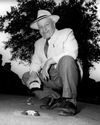
The legacy Percy Shaw and cat's eyes
BEHIND the retina in a cat’s eyes lurks the tapetum lucidum, a layer of tissue that acts as a mirror, or a retroreflector, and allows the animal to see in the dark.
1 mins
June 03, 2026
Country Life UK
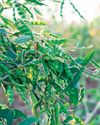
Britain is told to spill the beans
HOME-GROWN legumes have a vital role to play in strengthening national food security and reducing the UK's increasing reliance on imported food, the audience heard at last month's UK Legume Research Community Conference, held at the James Hutton Institute in Invergowrie, Perthshire.
2 mins
June 03, 2026
Listen
Translate
Change font size