
Mit Magzter GOLD unbegrenztes Potenzial nutzen
Erhalten Sie unbegrenzten Zugriff auf über 9.000 Zeitschriften, Zeitungen und Premium-Artikel für nur
Versuchen GOLD - Frei
Cut and come again
Country Life UK
|February 08, 2023
Easily identified by their gnarled silhouettes, pollarded trees can be found all over the country. Charles Quest-Ritson looks into the history and origins of this ancient method of tree management

POLLARDING is an ancient skill. It involves removing much of the upper part of a tree. The purpose is to make it safe, keep it at a pre-determined height or induce it to grow in a more useful way. Most frequently, the practice means cutting the tree severely back to a stump, typically 5ft or 6ft from the ground. It responds with thick new growth of leaves and branches. Once you start to notice pollarded trees, you find that they are many more than you supposed.
British planning authorities use the word 'pollarding' to describe the high pruning of established trees. The limbs of a beech in danger of dropping its branches may, therefore, be cut back at as high as 40ft to lighten the tree's load and reduce its vulnerability to wind. The correct word for this method of thinning the canopy is 'lopping'.
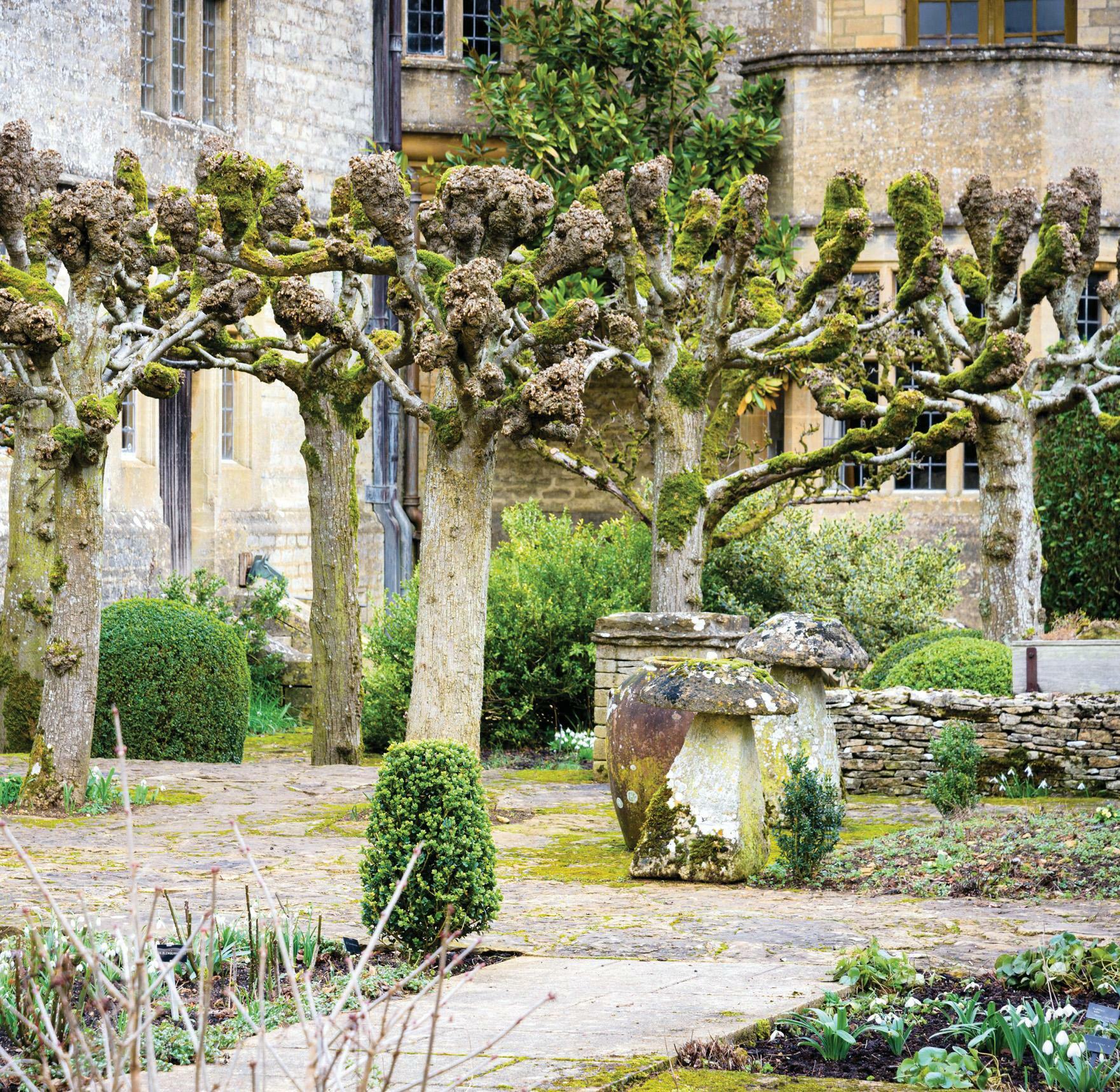
Pollarding is not the same as coppicing, which requires a tree to be cut back to ground level. Hazels, for example, may be coppiced to renew their growth and ensure that their nuts can easily be gathered. Until recently, the hard-pruned stems were used for wattle-and-daub construction work. Pollarding is a similar technique, but the cuts are made higher up the trunk, so animals such as deer and cattle cannot eat the fresh young growths.
In traditional societies, those fresh young growths are the main purpose of pollarding -the leafy, soft stems are cut to feed domestic animals. It is still an integral part of stock-raising in much of Africa and Asia, especially in such arid areas as the southern edges of the Sahara. Anthropologists tell us that some two-thirds of all African tree species-6,000 of them-may be pollarded to feed livestock.


Diese Geschichte stammt aus der February 08, 2023-Ausgabe von Country Life UK.
Abonnieren Sie Magzter GOLD, um auf Tausende kuratierter Premium-Geschichten und über 9.000 Zeitschriften und Zeitungen zuzugreifen.
Sie sind bereits Abonnent? Anmelden
WEITERE GESCHICHTEN VON Country Life UK

Country Life UK
Earth's Eden
Chris Cotonou journeys to New Zealand, where dramatic landscapes conspire to slow time and stir the soul

7 mins
April 15, 2026

Country Life UK
Roasted cod with Jersey Royals and peas-and-lettuce pesto cream
Kitchen garden cook Jersey Royals
1 mins
April 15, 2026
Country Life UK
Of cabbages and kings
I DON'T usually think about sealing wax when I go aboard a ship, so I'm not sure why I began thinking about kings as I was pricking out my cabbages.
2 mins
April 15, 2026

Country Life UK
Let's raise a glass
Homes with wine cellars offer discerning buyers climate-controlled conditions that let collections age gracefully, so that every gathering becomes a toast-worthy triumph. Cheers!
3 mins
April 15, 2026

Country Life UK
The best things come in threes
The National has a trio of excellent new productions, including a star-studded Les Liaisons Dangereuses, and a new star is born playing a 20-year-old van Gogh
4 mins
April 15, 2026

Country Life UK
Braking with tradition
How many seamen does it take to move a Rolls-Royce and Land Rover from a royal yacht? Jeremy Taylor gets behind the wheel of the fleet that lived in a bespoke garage aboard RY Britannia
5 mins
April 15, 2026

Country Life UK
Rocket men
The Rothschilds rose from a gloomy German ghetto to the top of the world in one generation. A new display at Waddesdon Manor charts their extraordinary history
8 mins
April 15, 2026

Country Life UK
Drawn to the page
The Paris drawing fairs delivered an exciting array of artists old and new, but a wide selection of art references of all kinds comes in the guise of the Russell Taylor library, now for sale online
4 mins
April 15, 2026
Country Life UK
Growing gains
I STILL cannot use my thumbs when potting up a rooted cutting or potting on a plant. I use my fingers. They are better at gauging the pressure needed to firm the compost, be it peat-free (lightness of touch is important) or soil-based (a little firmer). It is not something I learned from a book.
3 mins
April 15, 2026

Country Life UK
Where dinosaurs dare to tread
Lost until a chance discovery in 2009, this Victorian fernery has not only been restored, but now houses two National Collections. Charles Quest-Ritson visits
5 mins
April 15, 2026
Translate
Change font size