
Mit Magzter GOLD unbegrenztes Potenzial nutzen
Erhalten Sie unbegrenzten Zugriff auf über 9.000 Zeitschriften, Zeitungen und Premium-Artikel für nur
Versuchen GOLD - Frei
KEEP THE COLD OUT
The Home Handyman
|Jul/Aug'25
Did you know that homes in South Africa are either insulated to a poor standard, compared to European nations, or have no form of insulation at all. In 2011 our National Building Regulations made it compulsory to fit thermal insulation in new buildings and additions to building structures.

Even though the regulation does not extend to homes built before 2011, the benefit of having your ceilings, roofs, pipes and geysers insulated is undeniable, especially with escalating electricity tariffs. Chairperson at Thermal Insulation Products and Systems Association of SA (TIPSASA), Des Schnetler says home insulation has the potential to save money on energy costs and supports a sustainable environment.
He says that finances are always a major deterrent when considering home insulation. “While life cycle costing shows that using insulation pays for itself, many homeowners, building-owners and builders are more interested in reducing initial cost than minimising total costs, which includes operating costs, both heating and cooling.”
Des says that a home built more than 10 years ago can usually have insulation retrofitted to improve efficiency. “Of utmost importance is selecting a product best suited for the application and specific climatic zone.”
How thermal insulation works
Insulating a home basically means having it wrapped in a ‘protective blanket’ to reduce the transfer of heat into and out of the building. In winter it reduces the rate at which heat is lost from inside, and in summer it reduces the rate of heat entry into the building.
For example, on a hot day, an uninsulated home will conduct heat easily through the roof, windows and walls from the outside. This raises the temperature of the home on the inside.
Isoboard’s Mark Russell says that the range of human comfort inside a home is usually between 20° and 27° Celsius. “This comfort range varies in different climatic regions, as well between summer and winter, and even between how males and females perceive being comfortable. Your perception of comfort is also influenced by how acclimatised you are to your environment, how appropriately you are dressed, air flow, as well as other factors.”


Diese Geschichte stammt aus der Jul/Aug'25-Ausgabe von The Home Handyman.
Abonnieren Sie Magzter GOLD, um auf Tausende kuratierter Premium-Geschichten und über 9.000 Zeitschriften und Zeitungen zuzugreifen.
Sie sind bereits Abonnent? Anmelden
WEITERE GESCHICHTEN VON The Home Handyman

The Home Handyman
LIGHT UP YOUR PATH
A well-lit pathway isn't just about aesthetics, it's about safety, security, and welcoming guests to your home.

2 mins
January/February 2026

The Home Handyman
ROUTINE CARE FOR AIR CONDITIONERS
During the summer, the ideal room temperature is between 22 and 26°C.
4 mins
January/February 2026

The Home Handyman
HOW TO ARC WELD
A step-by-step guide (for beginners).
3 mins
January/February 2026

The Home Handyman
HOMEOWNERS URGED TO BUILD SMART
Home renovations, solar installations, and water-saving projects are on the rise. However, the MBAWC warns that homeowners who enter building agreements without fully understanding both their and the appointed contractor's rights, responsibilities, or the importance of clear contracts and insurance, risk costly disputes. Highlighting the scale of the problem, Sihle Zikalala, Deputy Minister of Public Works and Infrastructure, noted at the 2025 International Construction Law Association Conference that South Africa is spending considerable amounts of money due to disputes within the construction sector.
4 mins
January/February 2026

The Home Handyman
HEAVY-DUTY SECURITY GATE
By now, your gate posts are solidly set in concrete, and your rectangular frame is cut, tacked, and checked for alignment.
5 mins
January/February 2026

The Home Handyman
UNDERSTANDING CORDLESS DRILL TORQUE SETTINGS
Acordless drill is one of the most versatile tools in any DIYer's toolbox. It drills holes, drives screws, mixes paint, stirs mortar, tightens bolts and even sands with the right attachment. But many homeowners still feel confused by one particular feature: torque settings.
5 mins
January/February 2026
The Home Handyman
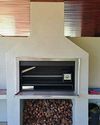
HOW TO CHOOSE THE PERFECT BUILT-IN BRAAI
A builtin braai is more than just a cooking appliance, it's a lifestyle statement. Whether you're hosting a Saturday rugby braai, a relaxed Sunday potjie, or a festive family gathering, the right builtin braai becomes the heart of your entertainment area. With so many options available in South Africa, choosing the right one can feel overwhelming, but with a little guidance you can confidently select a braai that suits your home, your cooking style, and the local climate.
3 mins
January/February 2026

The Home Handyman
YOUR SUMMER-TO-AUTUMN GARDEN GUIDE
The first three months of the year bring long days, warm evenings and a rhythm of rain, humidity and occasional heatwaves. It is a rewarding time for gardeners: vegetables grow fast, flowers burst with colour and there is still plenty of time to enjoy the outdoors before the crispness of autumn arrives.
3 mins
January/February 2026

The Home Handyman
THE PERFECT BRAAI AREA
Few things in life bring South Africans together quite like a braai. Whether it's a quick weekday chop, a Saturday rugby get-together, or a full weekend kuier, the braai area is where stories are shared, meals are made and memories live.
3 mins
January/February 2026

The Home Handyman
CHECK YOUR VEHICLE'S BRAKE PADS AND PARKING BRAKE
Your vehicle's brakes are some of the most hardworking safety components on the road. They operate every time you stop at a traffic light, slow down at an intersection or descend a steep hill. Yet many drivers only think about their brakes when something goes wrong. Regularly checking your brake pads and parking brake doesn't just keep you safe, it can save you money by catching wear before it becomes a major repair.
4 mins
January/February 2026
Listen
Translate
Change font size