
Mit Magzter GOLD unbegrenztes Potenzial nutzen
Erhalten Sie unbegrenzten Zugriff auf über 9.000 Zeitschriften, Zeitungen und Premium-Artikel für nur
Versuchen GOLD - Frei
Internal walls
Ideal Home UK
|November 2025
REMOVING INTERNAL WALLS CAN OPEN UP A FLOORPLAN, AS WELL AS ALLOWING LIGHT TO FLOW THROUGHOUT A PROPERTY. BUT WHAT'S INVOLVED? AND IS IT A DIY JOB? OUR EXPERTS EXPLAIN ALL...
-
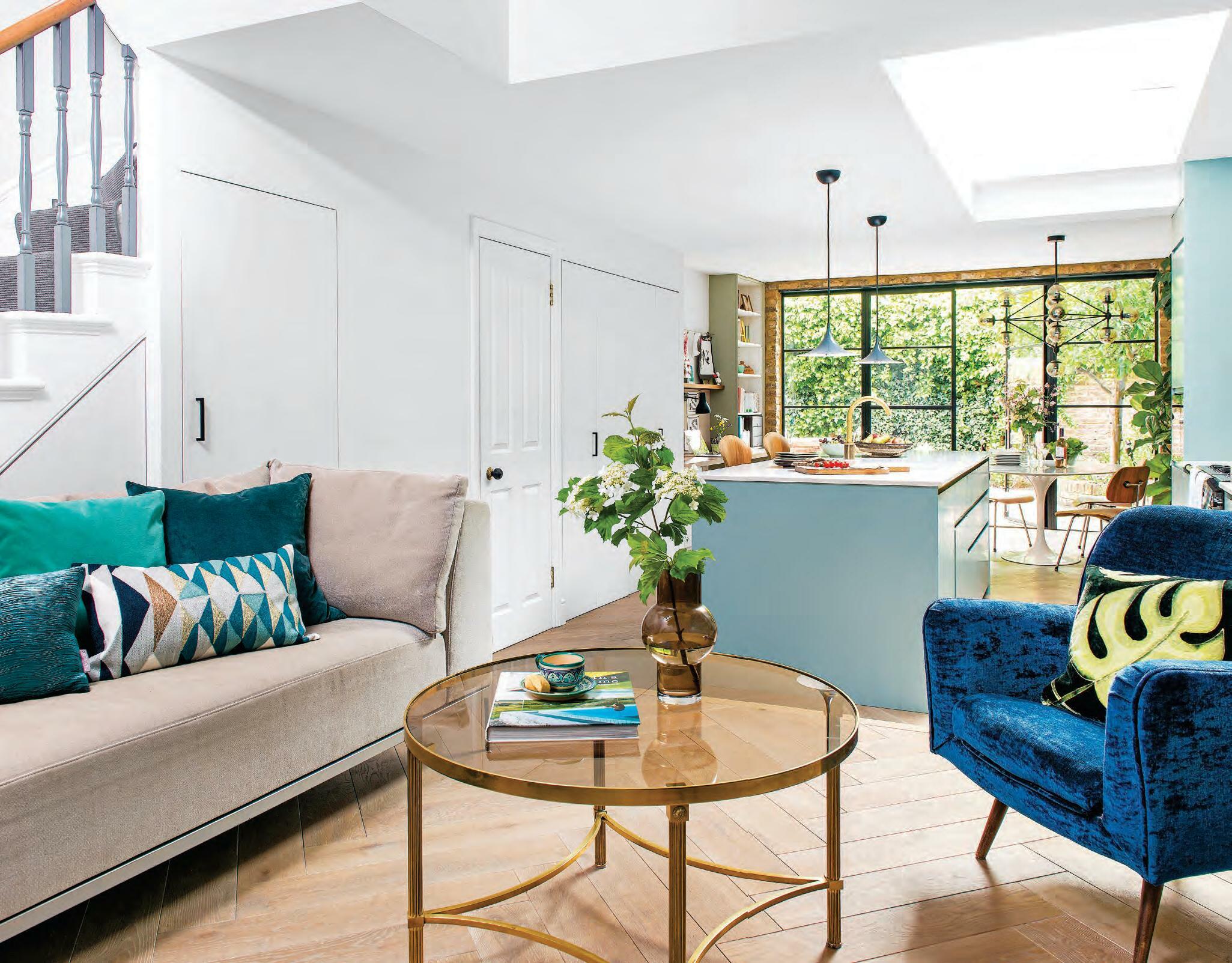
We've all seen the videos and reels of people armed with a sledgehammer and a smile, about to remove an internal wall in their home in order to transform two poky rooms into one super-spacious one. But if you don't know what you're doing, you can do some serious damage to the stability of your property taking down a wall yourself.
Removing internal walls can really open up a space, as well as allowing light to flow into once dark areas. However, it might not be as simple as you think. 'There can be multiple factors to consider and although the job may appear to be straightforward, DIY wall removal can have catastrophic consequences if professional advice isn't sought,' warns architect Tina Patel, director at Architect Your Home. However, 'if the wall doesn't have a load-bearing responsibility, a talented DIYer should be able to safely remove it,' says Farook Member, director at QS Supplies. 'But remember, you still have to exercise caution.'
HOW TO CHECK IF THE WALL IS LOAD-BEARING OR NOT
'First, you must determine whether the wall is structural (that is, load-bearing or non-load-bearing) and check for hidden services, such as plumbing or electrical wiring,' says Farook. 'You can do this either by using a cable detector or by opening up a little inspection hole.'
'Often people think it is just a case of knocking on the wall and checking if it is solid, or looking to see if there is a wall directly above - this is not always enough,' explains Tina. 'Even if there is no wall directly overhead, the wall you want to remove could be supporting floor joists, so ill-considered removal could have serious implications.'
There are two types of internal wall: load-bearing and non-load-bearing. Determining which type of wall you are working with is the most important step you can take before knocking it down.


Diese Geschichte stammt aus der November 2025-Ausgabe von Ideal Home UK.
Abonnieren Sie Magzter GOLD, um auf Tausende kuratierter Premium-Geschichten und über 9.000 Zeitschriften und Zeitungen zuzugreifen.
Sie sind bereits Abonnent? Anmelden
WEITERE GESCHICHTEN VON Ideal Home UK
Ideal Home UK
BIG KITCHEN VS A SEPARATE UTILITY
CAN'T DECIDE BETWEEN THE TWO? CHECK OUT THE PROS AND CONS BELOW TO HELP YOU PICK THE BEST FOR YOU

2 mins
February 2026

Ideal Home UK
hometruths
SARAH PARISH GETS UP CLOSE AND PERSONAL WITH HER HOME
2 mins
February 2026

Ideal Home UK
WATERLOGGED LAWNS
IF YOUR LAWN IS LOOKING MORE BOGGY THAN VERDANT, HERE'S HOW TO RESCUE IT
2 mins
February 2026

Ideal Home UK
IT NOW HAS timeless interest
PHIL RESCUED A NEGLECTED 18TH-CENTURY CORNISH COTTAGE AND FILLED IT WITH COLOUR AND TEXTURED WOOD TO BREATHE LIFE INTO THE BUILDING ONCE MORE
2 mins
February 2026

Ideal Home UK
Clear VISION
AN ORIEL WINDOW SEAT AND PIVOTING GLASS DOORS MAXIMISE THE FEELING OF SPACE IN NATALIE AND ANTHONY'S LIGHT-FILLED HOME
2 mins
February 2026

Ideal Home UK
Mood boosting decor
LOOKING TO LIFT YOUR HOME'S MOOD? WE ASKED THE EXPERTS FOR THEIR TIPS ON CREATING A FEEL-GOOD SPACE
3 mins
February 2026

Ideal Home UK
Best of both worlds
CLEVER PLANNING AND BOLD USE OF COLOUR MEANS MEL AND SLEV'S NEW KITCHEN IS BOTH PRACTICAL AND EYE-CATCHING
2 mins
February 2026

Ideal Home UK
The 10 minute declutter
DITCH THE TIME-CONSUMING DECLUTTERING SESSION AND DISCOVER THE TEN THINGS THAT YOU CAN TIDY UP IN A MERE TEN MINUTES
5 mins
February 2026

Ideal Home UK
Highland fling
Cosy up this month with one of these comforting dishes inspired by life in the Scottish highlands
4 mins
February 2026

Ideal Home UK
Hygge living rooms
WARM UP YOUR HOME WITH THIS DANISH CONCEPT AND COSY AESTHETIC
3 mins
February 2026
Listen
Translate
Change font size