
Mit Magzter GOLD unbegrenztes Potenzial nutzen
Erhalten Sie unbegrenzten Zugriff auf über 9.000 Zeitschriften, Zeitungen und Premium-Artikel für nur
The Hope Diamond Cursed... OR NOT?
Rock&Gem Magazine
|October 2023
Diamonds are known traditionally as symbols of wealth, beauty and love, with one notable exception-a large, unusually colored stone that is widely believed to be cursed. Many of those who have owned or simply touched this stone have met tragedy by going insane, suffering serious illnesses, committing suicide, or losing their fortunes-even being executed by guillotine.

This stone, paradoxically celebrated for its beauty yet feared for its curse, is the Hope Diamond. The size of a walnut and deep blue in color, it is the world's best-known diamond. Over its 370-year-long, often murky history, it has become immersed in legend, stolen at least twice and cut four times. Its owners have included sultans, kings, bankers, jewelers, thieves, a popular stage performer and a fabulously wealthy heiress.
Since 1958, the Hope Diamond has been a major attraction at the National Museum of Natural History (Smithsonian Institution) in Washington D.C., where it has been viewed by more than 100 million visitors and is currently valued at over $250 million.

PLUCKED FROM THE EYE OF AN IDOL
The Hope Diamond's strange story began in 1653 when French gem merchant Jean-Baptiste Tavernier visited India's Golconda Sultanate. There he purchased a crudely cut, triangular, flat, blue diamond of extraordinary size-115 carats. According to legend, this diamond, now known as the "Tavernier Diamond," had been cursed since it previously had been plucked from the eye of a statue of a Hindu idol.
After returning to Europe in 1668, Tavernier sold the diamond to King Louis XIV of France, who ordered the stone recut. Tavernier wrote extensively about the gem before his death in Moscow the following year-when he was reportedly dismembered by a pack of wild dogs.
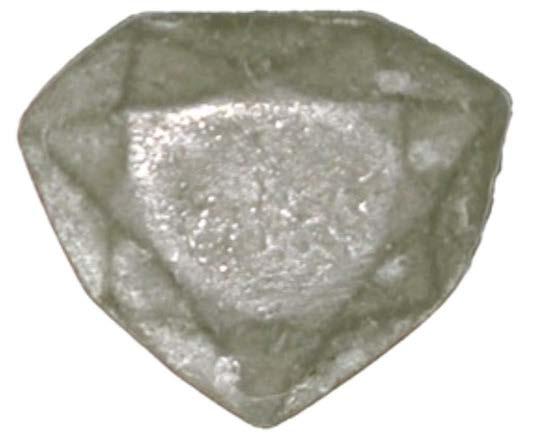
THE "FRENCH BLUE" AND THE GUILLOTINE

Diese Geschichte stammt aus der October 2023-Ausgabe von Rock&Gem Magazine.
Abonnieren Sie Magzter GOLD, um auf Tausende kuratierter Premium-Geschichten und über 9.000 Zeitschriften und Zeitungen zuzugreifen.
Sie sind bereits Abonnent? Anmelden
WEITERE GESCHICHTEN VON Rock&Gem Magazine
Rock&Gem Magazine
A New Amber Locality Fills a Gap
A sandstone quarry in central Ecuador has yielded the first significant deposit of Mesozoic amber from South America.

1 min
January / February 2026

Rock&Gem Magazine
Did "Left-Handed" Fish Leave Water Earlier than Thought?
Fossil evidence suggests that fish (or \"fishapods\") dragged themselves onto land during the middle Devonian Period.
1 min
January / February 2026

Rock&Gem Magazine
"Lab Quakes” Produce Surprising Results
When faults let loose and earthquakes result, the main effect we mortals experience is the violent shaking.
1 min
January / February 2026
Rock&Gem Magazine
This Egg is No Spring Chicken
How to date a dino egg
1 min
January / February 2026

Rock&Gem Magazine
Have we Already Mined the Critical Minerals We Need
Then why are we throwing them away?!
1 min
January / February 2026
Rock&Gem Magazine
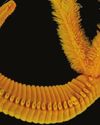
One Toxic Worm
A critter that creates & tolerates orpiment!
1 min
January / February 2026
Rock&Gem Magazine
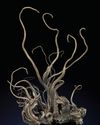
ROCK & GEM FIELD GUIDE: Silver
Silver (Ag) is a native element and one of Earth's most prized precious metals.
2 mins
January / February 2026
Rock&Gem Magazine
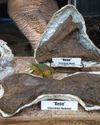
DINOSAURS OF THE HELL CREEK MUSEUM
In the Badlands of South Dakota, just outside the small town of Belle Fourche—pronounced “Bell Foosh”—a new attraction has taken shape that every dinosaur enthusiast should see. The Dinosaurs of the Hell Creek Museum is part hands-on exhibit, part science center and part active research lab.
3 mins
January / February 2026
Rock&Gem Magazine
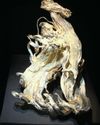
The Lost Twins of Kongsberg
A Silver Story Resurfaced
3 mins
January / February 2026

Rock&Gem Magazine
Switzerland's ICE PALACE
Walk Inside a Glacier at The Top of Europe
7 mins
January / February 2026
Translate
Change font size