
Mit Magzter GOLD unbegrenztes Potenzial nutzen
Erhalten Sie unbegrenzten Zugriff auf über 9.000 Zeitschriften, Zeitungen und Premium-Artikel für nur
Versuchen GOLD - Frei
The Hope Diamond Cursed... OR NOT?
Rock&Gem Magazine
|October 2023
Diamonds are known traditionally as symbols of wealth, beauty and love, with one notable exception-a large, unusually colored stone that is widely believed to be cursed. Many of those who have owned or simply touched this stone have met tragedy by going insane, suffering serious illnesses, committing suicide, or losing their fortunes-even being executed by guillotine.

This stone, paradoxically celebrated for its beauty yet feared for its curse, is the Hope Diamond. The size of a walnut and deep blue in color, it is the world's best-known diamond. Over its 370-year-long, often murky history, it has become immersed in legend, stolen at least twice and cut four times. Its owners have included sultans, kings, bankers, jewelers, thieves, a popular stage performer and a fabulously wealthy heiress.
Since 1958, the Hope Diamond has been a major attraction at the National Museum of Natural History (Smithsonian Institution) in Washington D.C., where it has been viewed by more than 100 million visitors and is currently valued at over $250 million.

PLUCKED FROM THE EYE OF AN IDOL
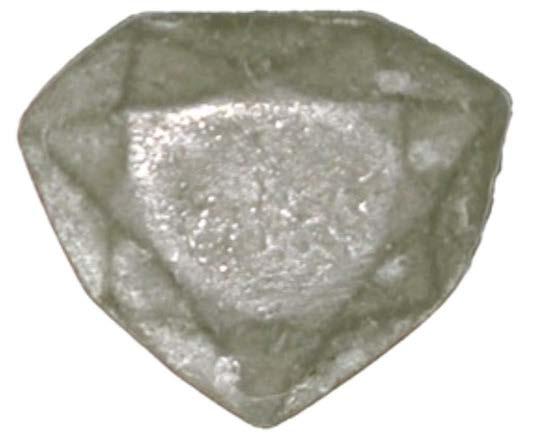
The Hope Diamond's strange story began in 1653 when French gem merchant Jean-Baptiste Tavernier visited India's Golconda Sultanate. There he purchased a crudely cut, triangular, flat, blue diamond of extraordinary size-115 carats. According to legend, this diamond, now known as the "Tavernier Diamond," had been cursed since it previously had been plucked from the eye of a statue of a Hindu idol.
After returning to Europe in 1668, Tavernier sold the diamond to King Louis XIV of France, who ordered the stone recut. Tavernier wrote extensively about the gem before his death in Moscow the following year-when he was reportedly dismembered by a pack of wild dogs.
THE "FRENCH BLUE" AND THE GUILLOTINE

Diese Geschichte stammt aus der October 2023-Ausgabe von Rock&Gem Magazine.
Abonnieren Sie Magzter GOLD, um auf Tausende kuratierter Premium-Geschichten und über 9.000 Zeitschriften und Zeitungen zuzugreifen.
Sie sind bereits Abonnent? Anmelden
WEITERE GESCHICHTEN VON Rock&Gem Magazine

Rock&Gem Magazine
THIS SUMMER, PICK STONY FLOWERS
Several rock and mineral formations look for all the world like flowers frozen in stone: chrysanthemum stones, flower agate, desert roses and poppy jasper.

6 mins
June 2026
Rock&Gem Magazine
An Ocean's Worth of Water in Earth's Deep Mantle
Water is key to life as we know it. When seeking life beyond our planet, Earth and planetary scientists always seek out planets and moons suspected to harbor liquid water either on the surface or beneath icy crusts.
1 min
June 2026
Rock&Gem Magazine
Hexagonal Diamonds?
Only available from the lab!
1 min
June 2026

Rock&Gem Magazine
While the World Drowns, Greenland Rises
With a mile-thick ice sheet covering 80% of its surface, Greenland accounts for a fifth of current sea level rise as that ice melts on an increasingly warm Earth.
1 min
June 2026
Rock&Gem Magazine
Argyle Diamonds
When the Argyle mine in Western Australia closed in 2020, it marked the end of one of the most remarkable chapters in modern mineral history.
2 mins
June 2026

Rock&Gem Magazine
CHANGING MINERAL MARKETS
As Rock & Gem celebrates its 55th anniversary—no small feat for a print magazine in the digital age—the hottest commodities on today’s mineral markets are lithium, the rare-earth elements and gold.
3 mins
June 2026
Rock&Gem Magazine
Grandpa's Agate Diggings
Finding Moss Agate on the Grande Ronde River
7 mins
June 2026

Rock&Gem Magazine
Does This Fossil Reveal a Whole New Kingdom of Life?
They would have looked strange in the so-called Rhynie chert landscape of the ancient Scottish Highlands 407 million years ago.
1 min
June 2026

Rock&Gem Magazine
From Maps to Satellites: Rockhounding's Tech Evolution
Rock and mineral collecting has come a long way, but the biggest changes have really occurred in just the past few decades.
5 mins
June 2026

Rock&Gem Magazine
BELLY of the DRAGON
A Rockhound's Guide
4 mins
June 2026
Translate
Change font size