Versuchen GOLD - Frei
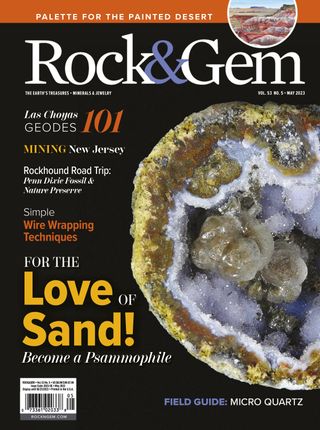
PALETTE FOR THE PAINTED DESERT
Rock&Gem Magazine
|May 2023
A geologist once described the Painted Desert as a "sedimentary circus."

The brilliant colors and bizarre patterns found throughout this 140-mile-long tract of badland topography in northeastern Arizona are somewhat reminiscent of colorful circus costumes.
Geologically, the Painted Desert is an expanse of heavily eroded, sedimentary formations with exposed, colorful strata of siltstone, mudstone, and shale interspersed with thin layers of limestone and volcanic material. Sparsely vegetated and arid, this region would have attracted little attention had it not been for its remarkable colors.
Visual artists have long been drawn to, and intrigued by, the Painted Desert's surreal colors and patterns. But while artists work from palettes with a wide array of oil, acrylic, and watercolor paints in every conceivable hue, the mineralogical palette that created the Painted Desert's natural colors has only a handful of minerals.
"COLORFUL AND STRANGE SCENERY"
When Spanish explorer Francisco Vázquez de Coronado ventured into the American Southwest in 1540, members of his scouting party became the first Europeans to see the Grand Canyon. To reach the canyon, they traversed an expanse of flat-topped mesas, sculpted buttes, and deeply eroded gullies. Awed by its kaleidoscopic colors, they named the region El Desierto Pintado-the Painted Desert.
In 1858, John Strong Newberry, a geologist with a U. S. Army exploratory expedition, made the first documented use of the English term "Painted Desert" when he described in detail the region's "colorful and strange scenery."
It was initially thought a different mineral caused each of the Painted Desert's colors-blacks, grays, and off-whites to reds, pinks, yellows, greens, blues, purples, and browns. By the late 1800s, geologists had learned that the myriad colors of these 210-million-year-old Triassic sediments were created by only a few minerals.

Diese Geschichte stammt aus der May 2023-Ausgabe von Rock&Gem Magazine.
Abonnieren Sie Magzter GOLD, um auf Tausende kuratierter Premium-Geschichten und über 9.000 Zeitschriften und Zeitungen zuzugreifen.
Sie sind bereits Abonnent? Anmelden
WEITERE GESCHICHTEN VON Rock&Gem Magazine
Rock&Gem Magazine
A New Amber Locality Fills a Gap
A sandstone quarry in central Ecuador has yielded the first significant deposit of Mesozoic amber from South America.

1 min
January / February 2026
Rock&Gem Magazine
Did "Left-Handed" Fish Leave Water Earlier than Thought?
Fossil evidence suggests that fish (or \"fishapods\") dragged themselves onto land during the middle Devonian Period.
1 min
January / February 2026

Rock&Gem Magazine
"Lab Quakes” Produce Surprising Results
When faults let loose and earthquakes result, the main effect we mortals experience is the violent shaking.
1 min
January / February 2026
Rock&Gem Magazine
This Egg is No Spring Chicken
How to date a dino egg
1 min
January / February 2026
Rock&Gem Magazine
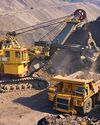
Have we Already Mined the Critical Minerals We Need
Then why are we throwing them away?!
1 min
January / February 2026
Rock&Gem Magazine
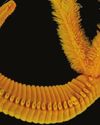
One Toxic Worm
A critter that creates & tolerates orpiment!
1 min
January / February 2026
Rock&Gem Magazine
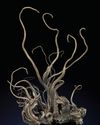
ROCK & GEM FIELD GUIDE: Silver
Silver (Ag) is a native element and one of Earth's most prized precious metals.
2 mins
January / February 2026
Rock&Gem Magazine
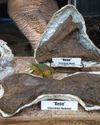
DINOSAURS OF THE HELL CREEK MUSEUM
In the Badlands of South Dakota, just outside the small town of Belle Fourche—pronounced “Bell Foosh”—a new attraction has taken shape that every dinosaur enthusiast should see. The Dinosaurs of the Hell Creek Museum is part hands-on exhibit, part science center and part active research lab.
3 mins
January / February 2026
Rock&Gem Magazine
The Lost Twins of Kongsberg
A Silver Story Resurfaced
3 mins
January / February 2026
Rock&Gem Magazine
Switzerland's ICE PALACE
Walk Inside a Glacier at The Top of Europe
7 mins
January / February 2026
Translate
Change font size