Versuchen GOLD - Frei
Cleaning & Cracking Géodes, Great and Small
Rock&Gem Magazine
|March - April 2025
Geodes. From their Latin and Greek origins meaning ‘earth-like,’ the cracking and cleaning of these popular stone eggs is no yolk: those unassuming exteriors can belie wonderful clusters of crystals or banded layers of agate within!
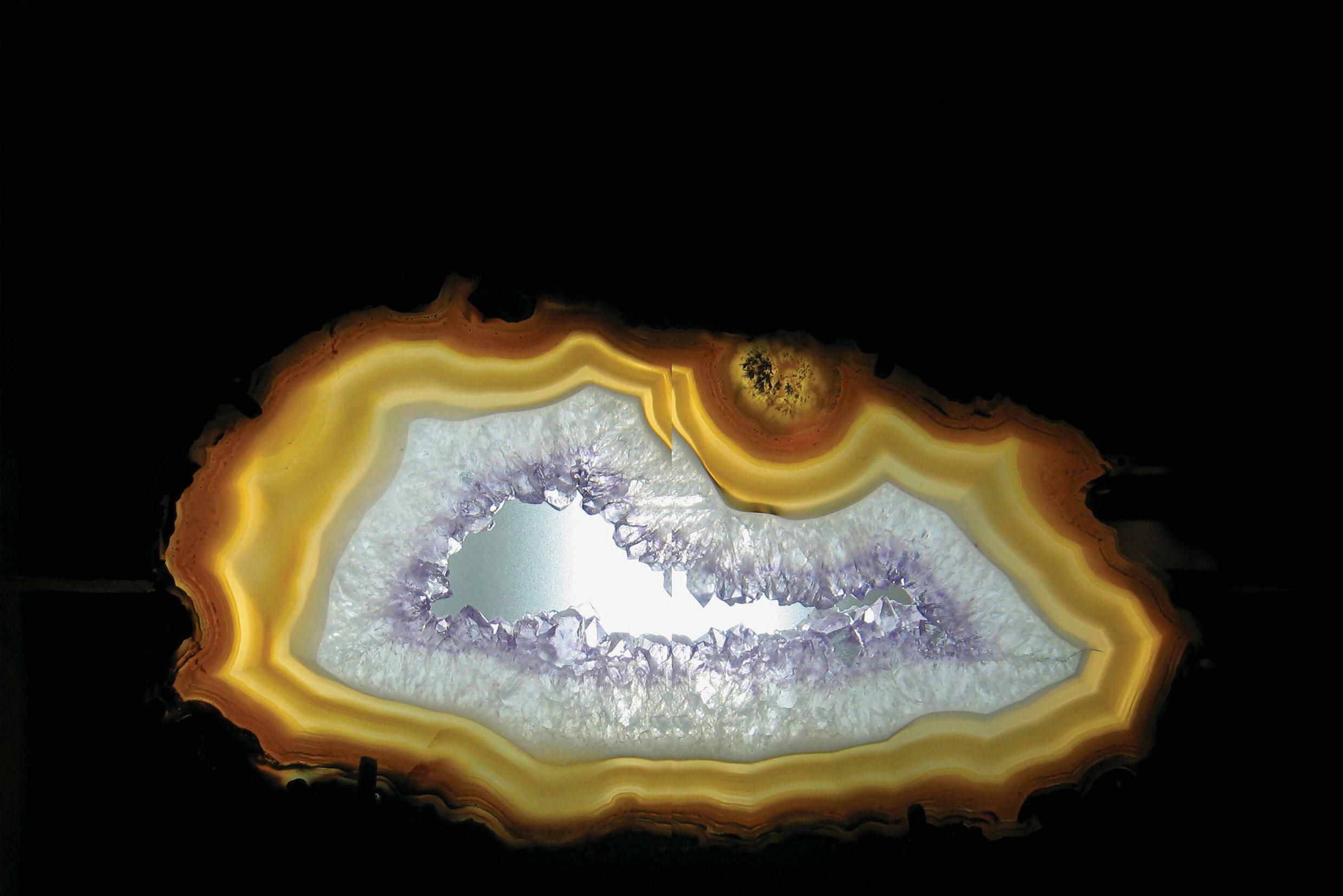
Agate and quartz lining a geode (Cleveland Museum of Natural History, Ohio).
Creative Commons/Wikipedia
That prize-winning feeling from cracking open a geode to reveal the treasures within segues into a fun and educational introduction to geology. Plus, geode cracking has an enthusiastic following on social media, where the satisfying “Pop!” sound that comes from opening a geode is described as stimulating a relaxing and enjoyable ASMR (Autonomous Sensory Meridian Response).
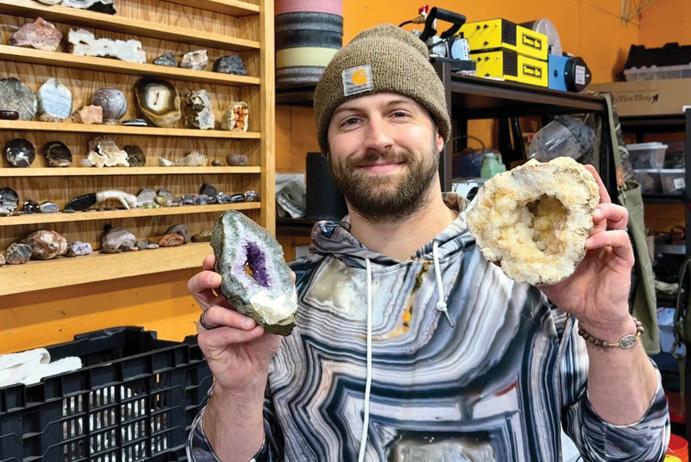
“The first geodes I cracked open were sent by a subscriber to my YouTube channel, which turned into a good friendship, big thanks @GeodeCrackerCollector,” says a Minnesota geode collector (Taylor) who goes by @AgateDad. “I'm late to the cracking game. I was in my late twenties when I cracked those. Geodes are my second favorite mineral. Agates are first.” He has 188,000 subscribers happy to watch him open everything from Oregon thunder eggs to agatized corals.
GEODE VS. AGATE?
What’s the difference between a geode and an agate? In short, a geode is a hollow rock, with a crystal-lined cavity inside, found mostly in basaltic lavas or limestone. Agates are solid, usually banded, stones formed from accumulated layers of silica inside volcanic or sedimentary rock cavities. Agate (or opal) also composes the solid, often star-shaped core of another popular collectible, geodal thunder eggs.
 POP GOES THE GEODE
Agate Dad, Taylor with geodes in his workroom.

Diese Geschichte stammt aus der March - April 2025-Ausgabe von Rock&Gem Magazine.
Abonnieren Sie Magzter GOLD, um auf Tausende kuratierter Premium-Geschichten und über 9.000 Zeitschriften und Zeitungen zuzugreifen.
Sie sind bereits Abonnent? Anmelden
WEITERE GESCHICHTEN VON Rock&Gem Magazine
Rock&Gem Magazine
A New Amber Locality Fills a Gap
A sandstone quarry in central Ecuador has yielded the first significant deposit of Mesozoic amber from South America.

1 min
January / February 2026
Rock&Gem Magazine
Did "Left-Handed" Fish Leave Water Earlier than Thought?
Fossil evidence suggests that fish (or \"fishapods\") dragged themselves onto land during the middle Devonian Period.
1 min
January / February 2026

Rock&Gem Magazine
"Lab Quakes” Produce Surprising Results
When faults let loose and earthquakes result, the main effect we mortals experience is the violent shaking.
1 min
January / February 2026
Rock&Gem Magazine
This Egg is No Spring Chicken
How to date a dino egg
1 min
January / February 2026
Rock&Gem Magazine
Have we Already Mined the Critical Minerals We Need
Then why are we throwing them away?!
1 min
January / February 2026
Rock&Gem Magazine
One Toxic Worm
A critter that creates & tolerates orpiment!
1 min
January / February 2026
Rock&Gem Magazine
ROCK & GEM FIELD GUIDE: Silver
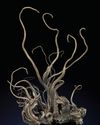
Silver (Ag) is a native element and one of Earth's most prized precious metals.
2 mins
January / February 2026
Rock&Gem Magazine
DINOSAURS OF THE HELL CREEK MUSEUM
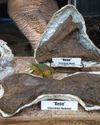
In the Badlands of South Dakota, just outside the small town of Belle Fourche—pronounced “Bell Foosh”—a new attraction has taken shape that every dinosaur enthusiast should see. The Dinosaurs of the Hell Creek Museum is part hands-on exhibit, part science center and part active research lab.
3 mins
January / February 2026
Rock&Gem Magazine
The Lost Twins of Kongsberg
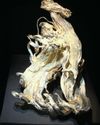
A Silver Story Resurfaced
3 mins
January / February 2026
Rock&Gem Magazine
Switzerland's ICE PALACE
Walk Inside a Glacier at The Top of Europe
7 mins
January / February 2026
Listen
Translate
Change font size