
Mit Magzter GOLD unbegrenztes Potenzial nutzen
Erhalten Sie unbegrenzten Zugriff auf über 9.000 Zeitschriften, Zeitungen und Premium-Artikel für nur
When you're smiling
WellBeing
|Issue 208
Smiling is deeply etched into our DNA, probably beginning 30 million years ago among our primate ancestors. While there are many variations of the smile, not all of them pleasant, you can use a smile to your own benefit.

Picture this scenario if you will: I am walking towards you and when I see you my eyes crinkle a little at the sides, the corners of my mouth expose my teeth to you. How do you interpret this? Do you cross the road to avoid me because I am clearly contemplating eating you? Of course, you don't, because you have recognised my facial contortions as a "smile", and smiles are good. At least, we have come to accept that a smile connotes amiable feelings, but how did we come to be smilers and are we the only species to do it? An examination of the human smile reveals just how much we are creatures not only of our evolution but also our society, and it might encourage you to do a little more smiling yourself.
Smile origins
We can't know exactly when the smile originated, but we can make a guess, and our best guess is that smiling began about 30 million years ago. Those in the know will realise that this predates humans by at least 20 million years, depending on where you want to draw the line in the evolutionary sand. It means therefore that species other than humans must also smile.
The 30 million years figure comes from researchers who found that both human and chimpanzee infants will show facial movements that resemble smiles when they are asleep. These facial expressions are known as "spontaneous smiles" and are considered the evolutionary origin of real smiles and laughter. It might not be too surprising that chimps smile, because we know they are relatively close to us on the evolutionary tree. However, these researchers also found that these spontaneous smiles also exist in Japanese macaques, a much more distant relative.
These spontaneous smiles in infants are probably designed to enhance their appeal to their parents, but in our world the types and meaning behind smiles is much more nuanced.
Smile types
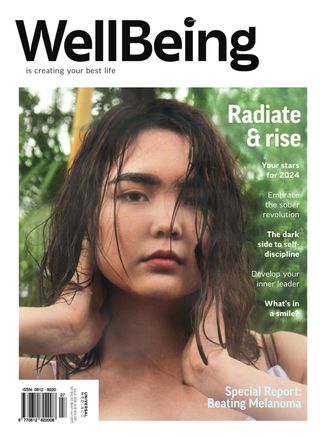

Diese Geschichte stammt aus der Issue 208-Ausgabe von WellBeing.
Abonnieren Sie Magzter GOLD, um auf Tausende kuratierter Premium-Geschichten und über 9.000 Zeitschriften und Zeitungen zuzugreifen.
Sie sind bereits Abonnent? Anmelden
WEITERE GESCHICHTEN VON WellBeing

WellBeing
In Season
These are the fruit and vegetables that are currently in season and so will be the freshest.

1 min
Issue 218

WellBeing
Navigating complementary medicines
For practitioners, quality and evidence matter more than ever. SFI Health is raising the bar with gold-standard formulations that don't compromise on clinical integrity.
5 mins
Issue 218
WellBeing
Too much of a good thing
Even well- intentioned health choices can sometimes contribute to unexpected problems.
3 mins
Issue 218

WellBeing
What we've been up to
WellBeing's editor Dana has been soaking up slow moments of warmth this winter.
1 min
Issue 218
WellBeing
Could creatine have a dark side?
Creatine is a multitalented wonder potion we all need to protect us against the ravages of ageing.
3 mins
Issue 218

WellBeing
ACS Distance Education
The secret to a successful career.
3 mins
Issue 218

WellBeing
Yoga for Energy Vampires
In yoga, prana is our life force and acts as a bridge between universal consciousness and matter.
8 mins
Issue 218

WellBeing
Chinese medicine dietary therapy
Food therapy may augment TCM herbal therapy or sustain improvements after herbal treatments have ceased. It may also be used in prevention, to nourish health and prolong life.
3 mins
Issue 218
WellBeing
AcuEnergetics®
AcuEnergetics received widespread attention in the media when founder Kevin Niv Farrow treated the captain of the NSW State of Origin team Boyd Cordner for a calf injury. Since then, the unique treatment modality has continued to capture the attention of other high-profile sports stars.
1 mins
Issue 218
WellBeing
Honouring a legacy in aromatherapy
Our oils are extracted with precision and care to ensure the active plant compounds remain intact, preserving the therapeutic benefits from field to bottle.
3 mins
Issue 218
Translate
Change font size