Versuchen GOLD - Frei
Surviving Winter
Hobby Farms
|November - December 2022
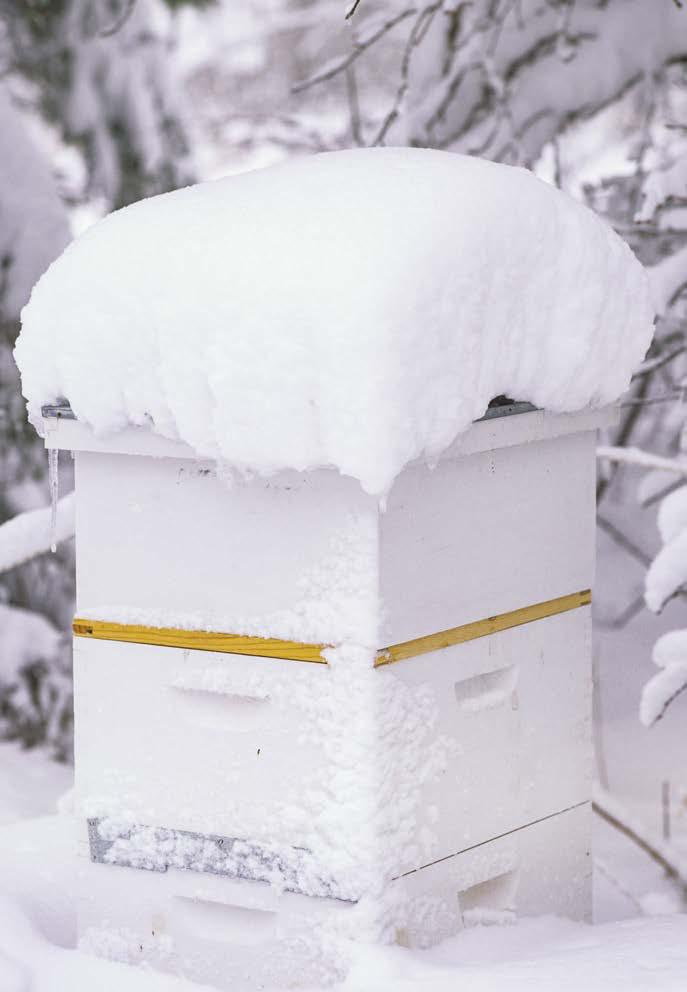
Winter is often a real nail-biter for beekeepers. We may think our honeybees have plenty of stores to get through the cold winter months, but then we sustain colony losses anyway. Fortunately, from sugar syrup and fondant to candy boards and beyond, you can offer some important extras to help your most vulnerable colonies make it through.

Based in South Carolina, Charlotte Anderson is a master beekeeper and the owner of Carolina Honeybees. For Anderson, simply leaving honeybees to fend for themselves is a nonstarter. "Some people feel that you shouldn't feed bees at all period," she says. "You know, 'Let them survive on their own or not."
But, she maintains that's simply poor animal husbandry. "I have miniature donkeys," Anderson says. "If we have drought and there's not much grass in the pasture, I'm going to buy hay. I'm not going to just let my donkeys die because of weather conditions. And, when we keep honeybees - honestly, no matter how we try to keep them as naturally as possible - it's not a natural environment."
Not only do we install bee packages in manmade hives, but we often cluster multiple hives close to one another something you'd be hard-pressed to find in nature. With such increased competition for limited forage, it falls to beekeepers to ensure that their bees have enough to eat.
Whether you're just thinking about getting started or you're a long-time beekeeper, we have you covered in our new beekeeping column. We'll connect with leading entomologists, geneticists and other experts to provide you with the latest in beekeeping best practices, honeybee health and nutrition, and much more. - Susan M. Brackney
Of course, that's not to say you should have to feed each of your hives every year in perpetuity. "The beekeeper should only have to step in when, for some reason, the bees are short of resources," Anderson says.
Varied Needs

Diese Geschichte stammt aus der November - December 2022-Ausgabe von Hobby Farms.
Abonnieren Sie Magzter GOLD, um auf Tausende kuratierter Premium-Geschichten und über 9.000 Zeitschriften und Zeitungen zuzugreifen.
Sie sind bereits Abonnent? Anmelden
WEITERE GESCHICHTEN VON Hobby Farms
Hobby Farms
AN HERB TO AVOID IN WINTER
While many culinary herbs are beneficial in winter, some members of the mint family are best to avoid when temperatures dip below 40 degrees Fahrenheit.

1 min
Healthy Hens 2026
Hobby Farms
Golden Girls
Discover some of the most overlooked health issues in aging hens.
6 mins
Healthy Hens 2026
Hobby Farms
Winter Tea Supplement
Several years ago, I noticed that while my healthy hens were robust during the growing season, their health declined a little during winter when they weren’t regularly consuming herbs or other greens.
2 mins
Healthy Hens 2026
Hobby Farms
Cool CHOOKS
Most chicken breeds are pretty hardy, but you can still make them more comfortable by offering them some escape from the summer heat.
7 mins
Healthy Hens 2026
Hobby Farms
Feeding Fowl
What you feed, how you supplement and when you treat will make all the difference for your chickens.
10 mins
Healthy Hens 2026
Hobby Farms
Egg-Eating Hens
Egg-eating hens can be a frustrating and costly problem for backyard chicken-keepers.
6 mins
Healthy Hens 2026
Hobby Farms
Potent PREDATORS
Take precautions, as these 15 marauders can wipe out an entire flock.
12 mins
Healthy Hens 2026
Hobby Farms
15 TOXIC PLANTS
Don't let your chickens eat these common plants.
6 mins
Healthy Hens 2026
Hobby Farms
BUG Off!
Bugs, who needs 'em? Certainly not chicken-keepers, who sometimes struggle to keep pesky flies and poultry parasites at bay.
7 mins
Healthy Hens 2026
Hobby Farms
ALPHA Hens
With or without a flock rooster, one lady always steps up to be the queen.
7 mins
Healthy Hens 2026
Translate
Change font size