Versuchen GOLD - Frei
Groundbreaking Fertilizer
Hobby Farms
|November - December 2024
Raise compost worms and harvest their waste, which is a natural and powerful plant fertilizer.

Sourcing fertilizer is one of the biggest concerns for farmers or homesteaders. Soil must be replenished and maintained yearly with fertilizers that are preferably chemical-free. While livestock manure often does the trick, not everyone wants the responsibility that comes along with raising big animals, especially if you live in an urban area.
Kyle and Jen Strickland, farmers and owners of Midwest Worms, believe that compost worms provide a way for urbanite and rural homesteaders to source a natural and powerful plant fertilizer right in their own home.
COMPOST WORM FERTILIZER BENEFITS
The main benefit compost worms provide is their fertilizer, which comes in the form of worm castings or what some people refer to as a gardener’s “black gold.” In simple terms, worm castings are worm manure. But unlike other manures, it does more than just fertilize your garden.
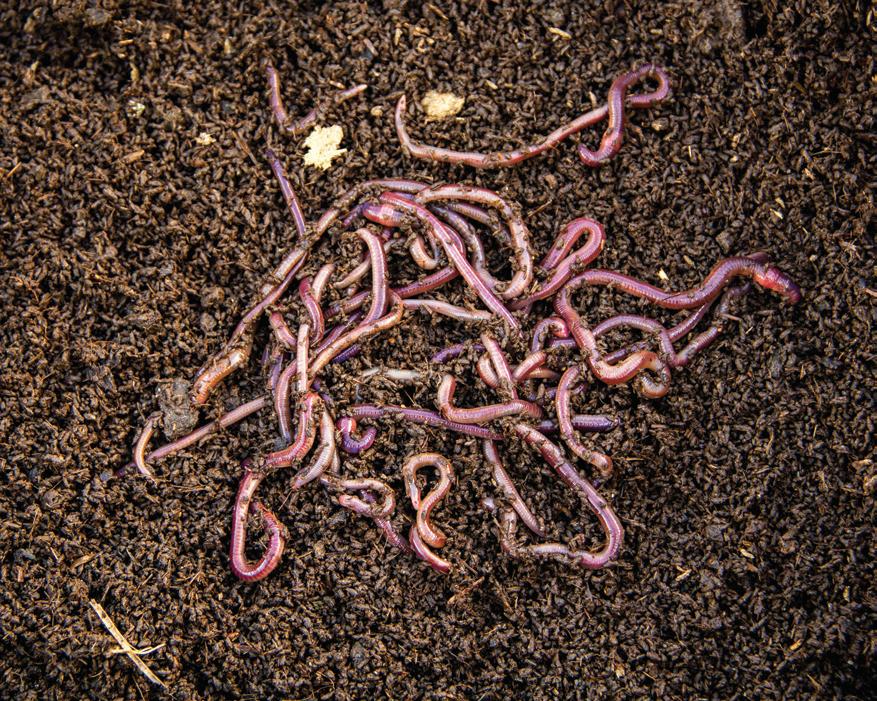 “Worm castings have an ability to retain higher quantities of moisture than soil, so when you add worm castings into your soil, your soil will naturally retain more water,” Kyle Strickland says. “Also, worm castings are good for the environment, which means it’s good for gardening. It’s better than any fertilizer you can buy. It’s 100% organic and natural.”
 In his research, Strickland found that compost worm castings give plants a spectacular nutrient and immunity boost. “Basically, when a worm eats something and secretes it, the compost and worm castings have a high quantity of microorganisms and lots of nutrients and micronutrients for plants in it,” Strickland says. “[Compost worms] produce hormones that are scientifically proven to increase plants’ resistance to disease and increase their natural resistance to pests. It creates something in the plant that causes pests to be less attracted to the plants.”
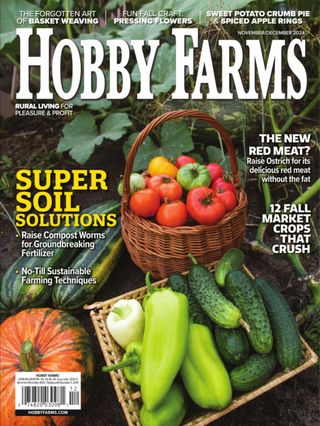

Diese Geschichte stammt aus der November - December 2024-Ausgabe von Hobby Farms.
Abonnieren Sie Magzter GOLD, um auf Tausende kuratierter Premium-Geschichten und über 9.000 Zeitschriften und Zeitungen zuzugreifen.
Sie sind bereits Abonnent? Anmelden
WEITERE GESCHICHTEN VON Hobby Farms

Hobby Farms
NEW YEAR, NEW CROPS
As you make your garden plans for this season, consider these picks from growers across the country.

6 mins
January / February 2026

Hobby Farms
Garden-Scale Crop Rotation
You don't have to be a big-time farmer to benefit from rotating crops.
4 mins
January / February 2026

Hobby Farms
BELTED GALLOWAY CATTLE
The unique appearance of Belted Galloway cattle inspires many questions about their origins.
1 min
January / February 2026

Hobby Farms
Goat Parasites
Grazing on an overly soiled pasture can sometimes lead parasites in your goat herd.
3 mins
January / February 2026

Hobby Farms
Rediscover Ancient Grains
Explore these nutritious and adaptable grains, known by many cultures over thousands of years.
8 mins
January / February 2026

Hobby Farms
HIGHLAND CATTLE
Highland cattle are an old heritage breed known to have grazed the rugged Scottish landscape since the 6th century.
1 mins
January / February 2026

Hobby Farms
SAY CHEESE
KEEP 'EM COMING
1 min
January / February 2026

Hobby Farms
DIY Essential Oils
Steam-distill your own essential oils at home.
6 mins
January / February 2026
Hobby Farms
Kubota Goes Grand
Kubota Tractor Corp. has unveiled its latest innovation for small-scale farmers and landowners: the Grand L70 Series. Designed with residential and commercial users in mind, this series blends power, comfort and cutting-edge technology into one versatile machine. With three configurations available — premium, deluxe and cold weather — the Grand L70 Series is built to meet the diverse needs of today’s small farms and rural properties.
1 min
January / February 2026

Hobby Farms
Raising a Bottle Calf
Being raised on a dairy farm, I don't remember a time when I wasn't well-versed in the raising of bottle calves.
9 mins
January / February 2026
Listen
Translate
Change font size