
Mit Magzter GOLD unbegrenztes Potenzial nutzen
Erhalten Sie unbegrenzten Zugriff auf über 9.000 Zeitschriften, Zeitungen und Premium-Artikel für nur
This week... Rudbeckia hirta
Amateur Gardening
|August 13, 2022
Tips on growing plants also known as yellow coneflowers or black-eyed Susans

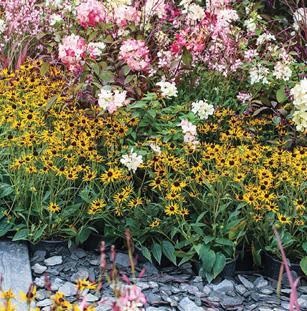
THE name coneflower gives it away. Each flower is like a large upward-facing daisy with a ring of narrow petals surrounding a striking cone-shaped eye that can be very dark, giving it the common name of black-eyed Susan, or honey-coloured or gold. Individual flowering stems carry one, or perhaps a few, flowers and are held upright emerging through mounds of rough dark-green leaves.
Perennials and annuals
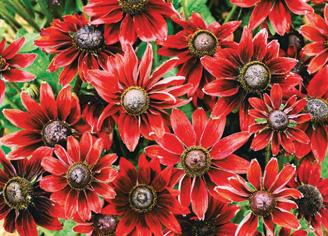
Coneflowers come in hardy perennial types and they also come as annuals (sometimes known as gloriosa daisies). These summer and autumn-blooming flowers are usually yellow, although redflowered varieties are now available along with a variety of mahogany, chestnut and russet shades. Some have fully double flowers made up of a large number of petals that hide the cone.
These are all, scientifically speaking, rudbeckia. But there is also another group of hardy perennial flowers that are also known as coneflowers, although these are, scientifically speaking, echinacea and come mostly in purplish, red and pink shades. Here, I'm discussing rudbeckias.

Two kinds of conefloweer
THERE are two kinds of coneflower: hardy perennial coneflowers and annual coneflowers.
Perennial coneflowers, or black-eyed Susans, are exceptionally frost-hardy plants that reach anything from 16in (40cm) to 8ft (2.4m) in height, depending on the variety, but most come at the more manageable end of the range.


Diese Geschichte stammt aus der August 13, 2022-Ausgabe von Amateur Gardening.
Abonnieren Sie Magzter GOLD, um auf Tausende kuratierter Premium-Geschichten und über 9.000 Zeitschriften und Zeitungen zuzugreifen.
Sie sind bereits Abonnent? Anmelden
WEITERE GESCHICHTEN VON Amateur Gardening
Amateur Gardening
To dig or not to dig?
Should we be carrying out a full dig on plots now? Bob considers the pros and cons of the 'autumn dig' debate

1 mins
October 07, 2023

Amateur Gardening
The box ball blues
As if his beleaguered box hadn't already taken a beating, Toby now has to deal with some hungry box caterpillars
2 mins
October 07, 2023

Amateur Gardening
Save your own seeds
Masterclass on: seed saving
2 mins
October 07, 2023
Amateur Gardening
Strange sightings
Three unusual insects turn up in Val's garden in one day
3 mins
October 07, 2023

Amateur Gardening
A bolt from the blue!
Cornflowers are perfect for garden and vase
1 min
October 07, 2023
Amateur Gardening
Winter moth prevention
Ruth shows you how to avoid maggoty tree fruits
1 mins
October 07, 2023

Amateur Gardening
Create a winter container
There are as many options as in summer
1 mins
October 07, 2023
Amateur Gardening
Lightweight gardening tools
AS well as being good for our mental health, gardening is also great exercise.
2 mins
October 07, 2023

Amateur Gardening
Autumn price round-up
AG finds better bargains in lesser-known brands
3 mins
October 07, 2023

Amateur Gardening
Rudbeckias
Rudbeckias are ideal for sunny summer patios and borders, with some able to survive our coldest winters
4 mins
October 07, 2023
Translate
Change font size