
Mit Magzter GOLD unbegrenztes Potenzial nutzen
Erhalten Sie unbegrenzten Zugriff auf über 9.000 Zeitschriften, Zeitungen und Premium-Artikel für nur
CORN IS LIFE
The Local Palate
|The Local Palate Spring 2025
Chef Julio Hernandez has created his own version of authenticity at his Nashville restaurant

Anything grown in soil tells the story of that place, whether it's grapes grown in the hot sun and cool fog of California, tomatoes grown in the rich soil of Tennessee, or a peach plucked from a tree in South Carolina. Similarly, chefs pick up the flavors and influences of the places where they grow. For Julio Hernandez, chef-owner of Maíz de la Vida, his story is peppered with influences from the Bronx, New York, to Tlaxcala, Mexico, and back, and now from his current home in Nashville. Each place left its mark on a young chef who was eager to learn-but it was in Nashville where Hernandez finally learned to cook Mexican food, and where he began to tell the story of his life through corn.
The loud hum of the molino, a stone-fitted grinding mill, mingles with laughter and the sound of Dangerdoom playing over the restaurant sound system one early morning at Maíz de la Vida, the restaurant that's opened a portal to Mexico in Nashville. It's a masa-making day in the kitchen, which means executive sous chef Obed Vallejo is in the kitchen before the sun is up, milling corn into the dough that will become part of almost every dish in the restaurant, from tortillas to tamales. This process, called nixtamalization, is a time-consuming method in which kernels are cooked and soaked in an alkaline solution of water and "cal" (short for calcium hydroxide) until they are soft and malleable. It's then ground into masa, the dough that forms the basis of Mexican cuisine. Corn, and therefore masa, is the lifeblood of Maíz de la Vida, whose name directly translates to corn of life.
And in Mexico, corn is life, a sentiment that is deeply entrenched in Mexican identity. It's believed to have originated in Central America about 9,000 years ago, cultivated by Indigenous peoples who eventually spread it into North and South America. According to the Mayan creation story, gods created humans out of a dough of yellow and white corn.
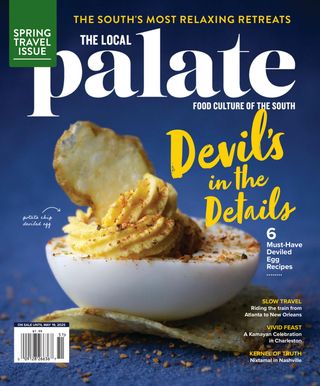

Diese Geschichte stammt aus der The Local Palate Spring 2025-Ausgabe von The Local Palate.
Abonnieren Sie Magzter GOLD, um auf Tausende kuratierter Premium-Geschichten und über 9.000 Zeitschriften und Zeitungen zuzugreifen.
Sie sind bereits Abonnent? Anmelden
WEITERE GESCHICHTEN VON The Local Palate
The Local Palate
Pit Stop for Pizza
This Western North Carolina pizzeria with creative pies will hit the spot this winter

2 mins
The Local Palate Winter 2025-26
The Local Palate
Taking Flight
Chef Bill Briand returns to the kitchen, delivering his mother's legacy on the plate
2 mins
The Local Palate Winter 2025-26

The Local Palate
SOUTHERN MAKERS Firing On All Cylinders
An Asheville ceramist pulls from his Japanese heritage
3 mins
The Local Palate Winter 2025-26

The Local Palate
Stalk Talk
It's time to give celery its due
3 mins
The Local Palate Winter 2025-26

The Local Palate
Le Meridien Madison Washington, DC
Guests checking into Le Meridien Madison in downtown DC will step into a gleaming lobby that harks back to the Golden Age of travel and the hotel's own rich history.
1 mins
The Local Palate Winter 2025-26
The Local Palate
Clever Cassoulet
Cajun flavors and local ingredients return this European dish to its peasant food roots
1 min
The Local Palate Winter 2025-26

The Local Palate
Handbags and Alligator Nuggets
From Louisiana to Italy, the exotic skin trade is a journey of conservation and controversy
4 mins
The Local Palate Winter 2025-26

The Local Palate
The Nickel Hotel
Charleston, South Carolina
1 mins
The Local Palate Winter 2025-26
The Local Palate
Taking Flight
Chef Bill Briand returns to the kitchen, delivering his mother's legacy on the plate
2 mins
The Local Palate Winter 2025-26

The Local Palate
The Delicious History of the Kolache
How a traditional Czech pastry became an iconic Texan treat
5 mins
The Local Palate Winter 2025-26
Listen
Translate
Change font size