Versuchen GOLD - Frei
Get Into a Jam
Food & Wine
|June 2025
The secret to making fruit preserves that truly sing
-
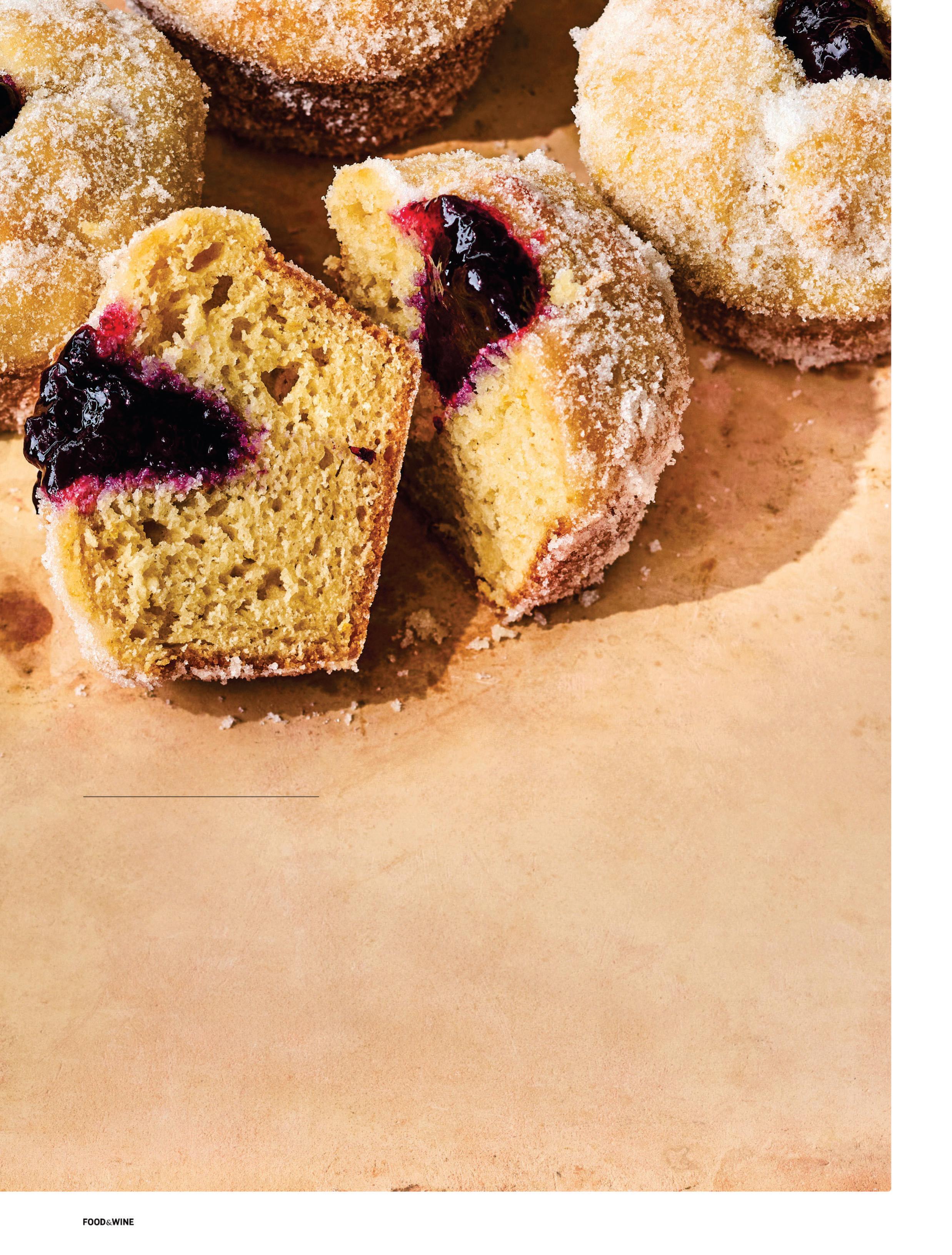
HOMEMADE JAM
TRANSFORMING FRUIT INTO JARS of homemade jam can feel like a magic trick, and there is a kind of magic in the age-old craft. Rather than using a box of processed pectin, the finest jams rely on evaporation and the fruits’ natural pectin to achieve a luscious, spoonable texture. The difference between mediocre jam and one that truly sings lies in a few key elements: impeccable fruit, a good balance of flavors, and proper technique.
This may come as a surprise, but perfectly ripe fresh fruit for eating is not ideal for jam-making. That’s because as fruit ripens, its pectin levels decrease. For the best jam, choose fruit that is ripe but still slightly firm. Frozen fruit, which is usually picked somewhat firm, also works well for making jam.
To jump-start the process, first macerate the fruit with sugar and lemon juice—this precooking step draws out the fruit’s juices and results in shorter cooking times. (If working with frozen fruit, cover it with sugar before defrosting to help maintain its shape and structure.) The lemon juice boosts pectin, helping the jam to achieve a perfect gel, while also adding acidity, which prevents it from veering too sweet.
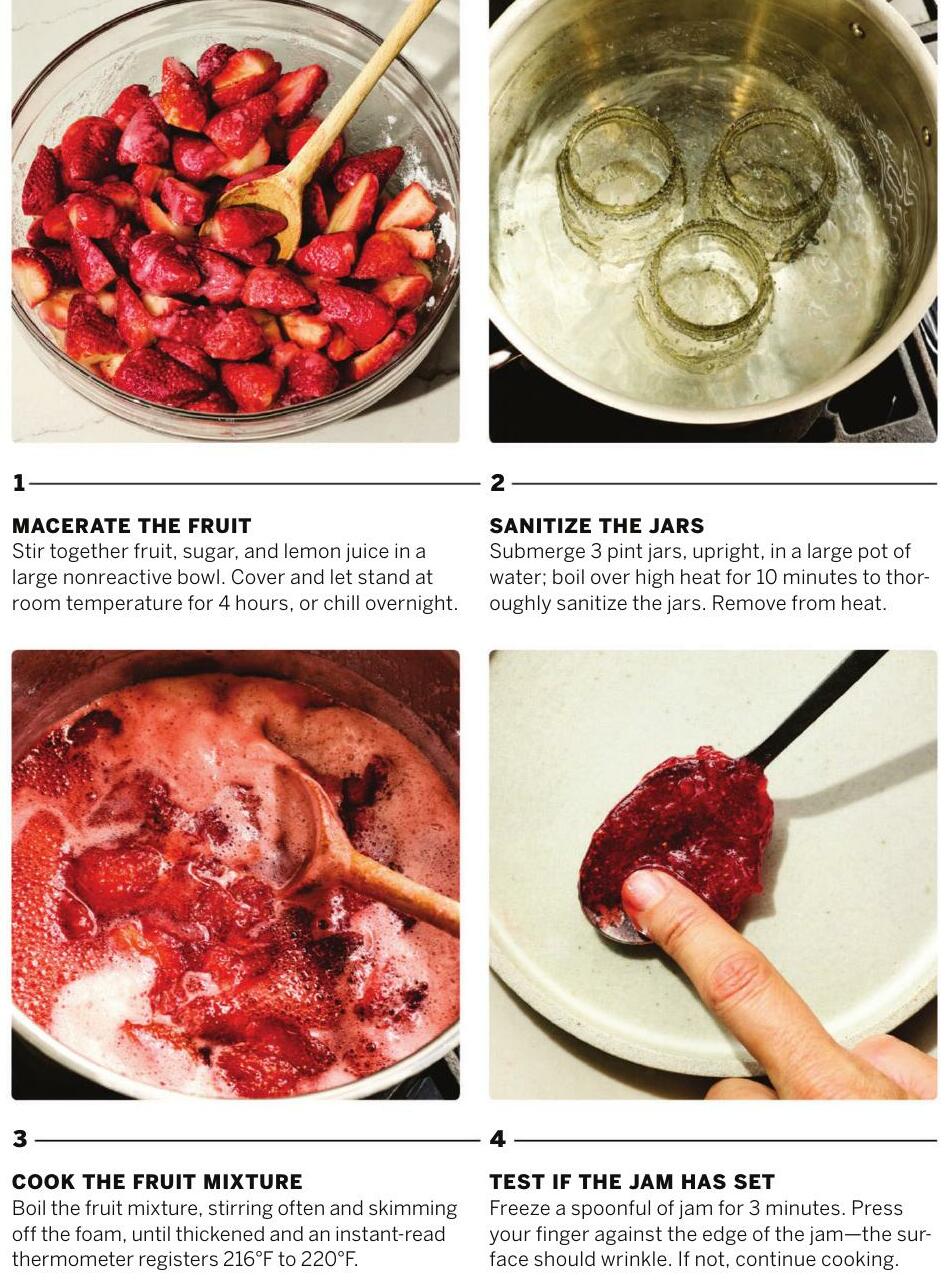 Once your fruit is ready, cook it in a wide pot-this allows the jam to thicken quickly, locking in the vivid, fresh flavors of the fruit. Varying levels of water content and natural pectin cause some fruits to cook quicker and set at a slightly lower temperature than others. (See “Fruit Cooking Times and Temperatures” at right.) Once the jam is on the stove, err on the side of undercooking. You don’t want the jam to shift in color, from bright to brown-this signals that the sugar has caramelized and the delicate fruit flavor has been lost.

Diese Geschichte stammt aus der June 2025-Ausgabe von Food & Wine.
Abonnieren Sie Magzter GOLD, um auf Tausende kuratierter Premium-Geschichten und über 9.000 Zeitschriften und Zeitungen zuzugreifen.
Sie sind bereits Abonnent? Anmelden
WEITERE GESCHICHTEN VON Food & Wine
Food & Wine
Party Pours
31 stellar, celebratory wines that cost $25 or less

7 mins
December 2025

Food & Wine
Floating Through France
The most idyllic way to explore Champagne is on a boutique river barge.
2 mins
December 2025

Food & Wine
Celebrate with CIARA
WHY THE SINGER, SONGWRITER, AND ENTREPRENEUR IS TOASTING THE HOLIDAYS WITH HER AWARD-WINNING RUM
4 mins
December 2025

Food & Wine
A Winning Mindset
Top Chef season 22 winner Tristen Epps is bringing bold global flavors to the spotlight.
6 mins
December 2025
Food & Wine
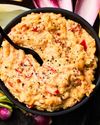
Slam Dunk
Upgrade your party game with chef designed dips.
3 mins
December 2025

Food & Wine
All Aboard!
Nine excellent food-forward cruises to whet your appetite for adventure
4 mins
December 2025

Food & Wine
Sailing the Mississippi
Viking’s American river cruise spotlights Southern flavors.
2 mins
December 2025
Food & Wine
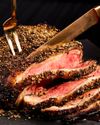
Roasts with the Most
From tender, rosy beef to golden, crispy duck, these meaty holiday mains are made to impress.
8 mins
December 2025
Food & Wine
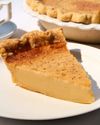
Buttermilk Eggnog Pie
This sweet custard pie is the star of Carla Hall’s holiday table.
5 mins
December 2025

Food & Wine
Galápagos Glories
Ecoventura brings world-class dining to one of the most beautiful—and remote—spots on the planet.
3 mins
December 2025
Listen
Translate
Change font size