A Storied Seasoning
Food & Wine
|August 2025
Fire up the grill and explore the versatility of jerk, a smoky and spicy Caribbean staple.
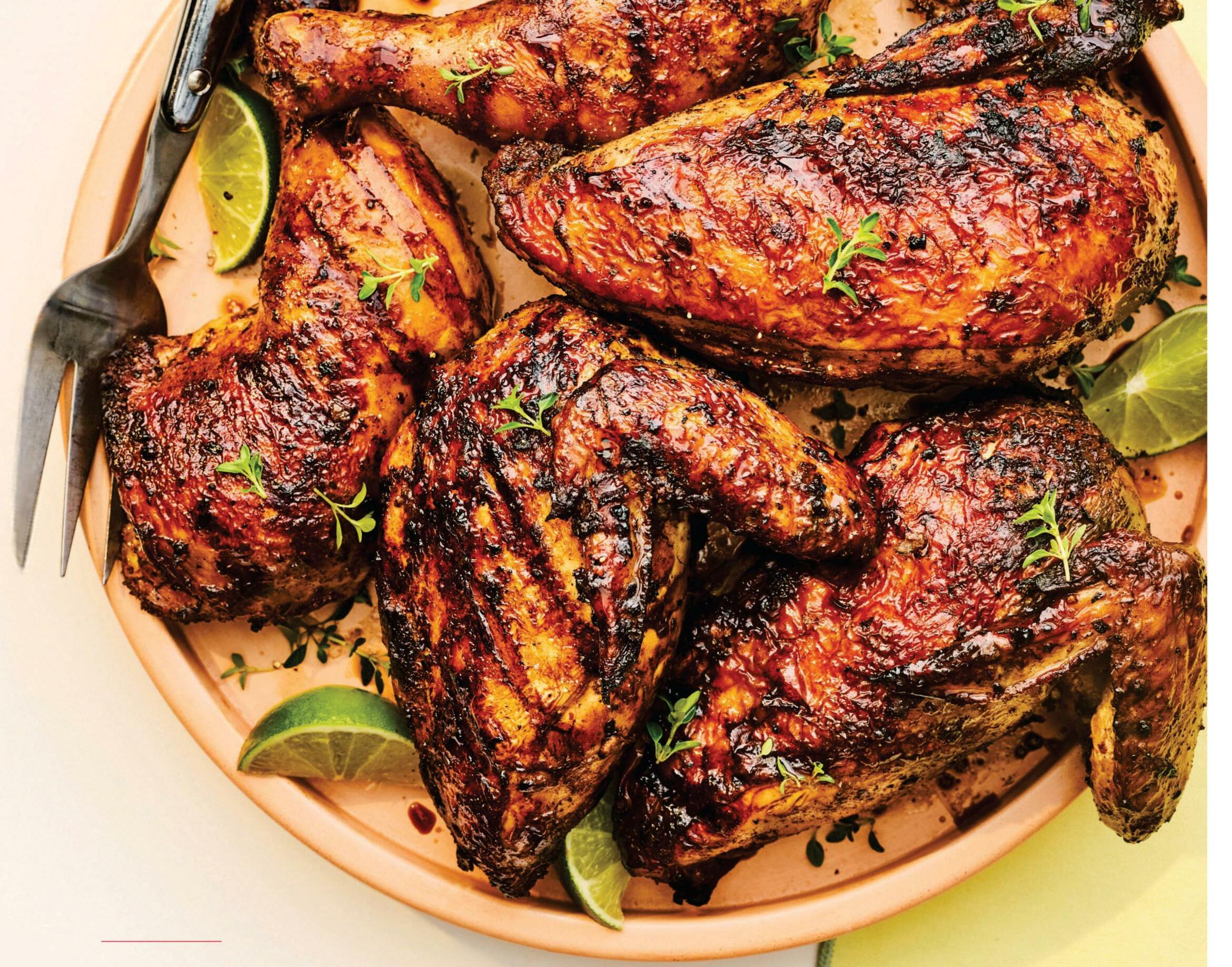
WHEN IT COMES TO JAMAICAN CUISINE, jerk means many things. It is an ingredient (a seasoning dry rub or paste), a process (of barbecuing spiced meat over pimento wood), and a window into Jamaica’s past. Jerk was born from the traditions of Jamaica’s Indigenous Taino people, who gave the island its name: Jamaica is derived from the Taino term xaymaca, which translates to “land of wood and water.” According to some historians, in the early 16th century, the Taino evaded eradication by Spanish colonizers by fleeing into the mountainous interior of the island. During British occupation of the island, in the mid-17th century, descendants of surviving Taino passed on their methods for spicing and cooking meat to the Yenkunkun pikibo—who were once referred to as the Jamaican Maroons, enslaved Africans who escaped to freedom. They hunted wild pigs and other animals and cooked the meat in hot earthen pits to conceal their location. Ginger, thyme, scallions, allspice, and Scotch bonnet chiles were used to flavor the meat, which was cooked over the sweet wood of the pimento (allspice) tree. They remain indispensable anchor ingredients in jerk cooking today. In many contemporary recipes, you'll also find the salty-savory spike of soy sauce. It’s a distinct, complementary addition to jerk, one that nods to the robust culinary culture of the Chinese immigrants who arrived on the island in the 1850s to work as indentured laborers.

Diese Geschichte stammt aus der August 2025-Ausgabe von Food & Wine.
Abonnieren Sie Magzter GOLD, um auf Tausende kuratierter Premium-Geschichten und über 9.000 Zeitschriften und Zeitungen zuzugreifen.
Sie sind bereits Abonnent? Anmelden
WEITERE GESCHICHTEN VON Food & Wine

Food & Wine
Party Pours
31 stellar, celebratory wines that cost $25 or less

7 mins
December 2025

Food & Wine
Floating Through France
The most idyllic way to explore Champagne is on a boutique river barge.
2 mins
December 2025

Food & Wine
Celebrate with CIARA
WHY THE SINGER, SONGWRITER, AND ENTREPRENEUR IS TOASTING THE HOLIDAYS WITH HER AWARD-WINNING RUM
4 mins
December 2025

Food & Wine
A Winning Mindset
Top Chef season 22 winner Tristen Epps is bringing bold global flavors to the spotlight.
6 mins
December 2025
Food & Wine
Slam Dunk
Upgrade your party game with chef designed dips.
3 mins
December 2025

Food & Wine
All Aboard!
Nine excellent food-forward cruises to whet your appetite for adventure
4 mins
December 2025

Food & Wine
Sailing the Mississippi
Viking’s American river cruise spotlights Southern flavors.
2 mins
December 2025
Food & Wine
Roasts with the Most
From tender, rosy beef to golden, crispy duck, these meaty holiday mains are made to impress.
8 mins
December 2025

Food & Wine
Buttermilk Eggnog Pie
This sweet custard pie is the star of Carla Hall’s holiday table.
5 mins
December 2025

Food & Wine
Galápagos Glories
Ecoventura brings world-class dining to one of the most beautiful—and remote—spots on the planet.
3 mins
December 2025
Listen
Translate
Change font size