Versuchen GOLD - Frei
Crystal Calibration with GPS Redux
Circuit Cellar
|June 2025
Stuart revisits an article from 2020 with a different approach, exploring the calibration of microcontroller clock crystals using GPS technology, aimed at enhancing timing accuracy in various applications. Key findings highlight the importance of calibration for long-term timing precision, detailing methods to achieve significant improvements in accuracy.

I described a method of calibrating a 32kHz clock crystal in a TM4C1233D5 microcontroller (MCU) with a GPS module in my article, “Calibrating an MCU’s RTC Using GPS: Put Time on Your Side” (Circuit Cellar 360, July 2020) [1]. The Texas Instruments (TI) TM4C parts have an internal 32KHz oscillator for implementing a real-time clock (RTC). This new approach does the same thing but with a more generalized method that applies to MCUs without a dedicated RTC oscillator and calibration register.
CRYSTAL ACCURACY
A typical crystal, as used in an MCU, has some tolerance, measured in parts per million (ppm). So the frequency of a 14.7456MHz crystal, as I’m using in this design, will vary. It’s exactly like the tolerance in a resistor or capacitor, but the tolerance of resistors and capacitors is measured in percent, or parts per hundred. Crystals are more accurate, so their tolerance is measured in ppm; 1ppm is equivalent to 0.0001%. Just like resistor/capacitor tolerance, the crystal frequency can be higher or lower than the nominal frequency.
To convert this to practical numbers, if the 14.7456MHz crystal I used in this design has a tolerance of ±30ppm, then the frequency variation is ±442Hz (14.7456MHz x 30/1,000,000). Therefore, the frequency of any given part may vary from 14.745158MHz (14,7456,000 - 442) to 14.746042MHz (14.7456,000 + 442).
WHY CALIBRATE?


Diese Geschichte stammt aus der June 2025-Ausgabe von Circuit Cellar.
Abonnieren Sie Magzter GOLD, um auf Tausende kuratierter Premium-Geschichten und über 9.000 Zeitschriften und Zeitungen zuzugreifen.
Sie sind bereits Abonnent? Anmelden
WEITERE GESCHICHTEN VON Circuit Cellar

Circuit Cellar
Bosch Sensortec Launches BMI423 Inertial Measurement Unit
Smart wearables are always on the move-and so is their sensing technology. Bosch Sensortec introduced the BMI423, a new-generation Inertial Measurement Unit (IMU) that combines extended measurement range with low power consumption.

1 mins
February 2026

Circuit Cellar
Renesas Releases its First Wi-Fi 6 and Wi-Fi/Bluetooth LE Combo MCUs for IoT and Connected Home Applications
Renesas Electronics Corp., a premier supplier of advanced semiconductor solutions, has introduced the RA6W1 dual-band Wi-Fi 6 wireless microcontroller (MCU), along with the RA6W2 MCU that integrates both Wi-Fi 6 and Bluetooth Low Energy (LE) technologies.
1 mins
February 2026

Circuit Cellar
Airborne Embedded Software: Simplifying Safety and Security
With modern airborne systems no longer isolated computing environments, any vulnerabilities introduced into these increasingly connected devices can quickly become much more than just a cybersecurity issue, but a safety risk no one can afford.
4 mins
February 2026

Circuit Cellar
Wearable LIDAR Spatial Audio Navigator for Visually-Impaired Individuals
Built with a Raspberry Pi Pico, a TF-Luna LiDAR Sensor, and a Hand-Held Potentiometer
13 mins
February 2026

Circuit Cellar
ADRs: The Missing Memory in Embedded Projects
Remembering and communicating why design decisions were made and the reasons behind their particular implementations can be critical when it comes to developing software as a team and maintaing that software in the future. This time Jacob shares his thoughts on and experience with one of the most valuable tools to extend the reach of software development memories.
9 mins
February 2026

Circuit Cellar
Sensors: From Canned Tuna to Caviar
In the first installment of a new Circuit Cellar column on sensors, Brian Chee looks at how sensors figure into larger application packages and when \"just enough sensors\" can be the perfect solution.
10 mins
February 2026
Circuit Cellar
Embedded DSP with the RT1010 MCU
Part 2: Delay, Flanger, IIR, and Overdrive
15 mins
February 2026
Circuit Cellar
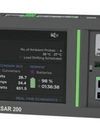
Omnion Power Provides Modular, Scalable DC Power System Monitoring and Control with New Pulsar 200 Controller
Omnion Power is helping to redefine the role of the DC power system controller with its next-generation Pulsar 200 platform.
1 mins
February 2026

Circuit Cellar
Robot Operating System 2 (ROS 2): Core Concepts, Architecture, and Real-World Capabilities
The Robot Operating System 2 (ROS 2) is an open-source, middleware framework that addresses the communication and coordination challenges inherent in modern, distributed robotic systems. In this article, Pedro details how ROS 2's architectural foundations successfully address the core limitations of its predecessor, ROS 1, using real-world scenarios, and steps for setting up the ROS 2 Foxy environment on Ubuntu Linux distro, and cross-platform communication between a host PC and a Raspberry Pi module.
14 mins
February 2026

Circuit Cellar
Ambiq Unveils Atomiq, the World's First Ultra-Low Power NPU SoC Built on SPOT
Ambiq Micro, Inc., a recognized leader in ultra-low-power semiconductor solutions for edge AI, announced Atomiq, the highly anticipated system-on-chip (SoC) integrating a Neural Processing Unit (NPU) designed to enable real-time, always-on artificial intelligence at the edge.
1 mins
February 2026
Listen
Translate
Change font size