Versuchen GOLD - Frei
How empire ruptured rural Britain
BBC History UK
|February 2025
We know that enslaved Africans and their descendants suffered in the distant colonies of empire. But, as Corinne Fowler explains, the colonial system also had dire impacts on people in the countryside of the 'motherland'
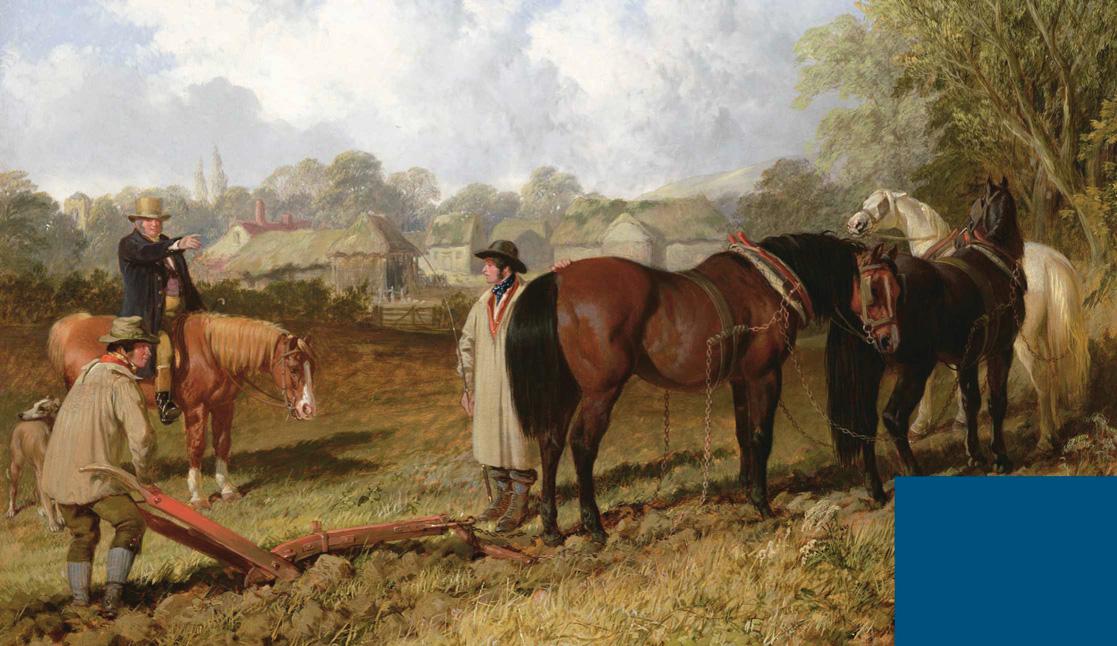
For an encounter with one of the most eye-opening legacies of Britain's colonial projects, take a drive along the A31 in southern Dorset. On the stretch between the delightfully named villages of Winterborne Zelston and Sturminster Marshall, the road kinks nearly 90 degrees; lining the verge here you'll notice a wall - not hugely tall, but impressively long. Reputedly stretching for 3 miles and comprising nearly 2 million bricks, it was almost certainly built with profits from slavery.
This is the so-called 'great wall of Dorset' - one of England's longest, built around 1841 to encircle the vast Dorset estate of Charborough Park. It belongs to the Drax family, an old propertied clan who owned tobacco and sugar plantations in Barbados - and who massively increased their wealth by boosting profits through the use of slave labour.
It is easy to forget that colonial governors, slave-owners and East India Company employees and their heirs commonly became rural magistrates, customs officials, industrialists and politicians in Britain. The newly acquired land and social networks of these men allowed them to hold sway over other Britons in countryside regions. So it's important to understand that, when it comes to exploring rural history, it's not enough to ask where the money came from to buy country houses or fund village schools. What also matters is how these figures and their descendants exercised their power, wealth and influence in such areas.
Back in 2020, I undertook an audit of published academic research about National Trust properties and their colonial links. So I already knew that country estates such as Basildon Park in Berkshire and Harewood House in Yorkshire were built and landscaped with colonial profits, and that Speke Hall near Liverpool was bought and restored with money from Jamaican slavery.

Diese Geschichte stammt aus der February 2025-Ausgabe von BBC History UK.
Abonnieren Sie Magzter GOLD, um auf Tausende kuratierter Premium-Geschichten und über 9.000 Zeitschriften und Zeitungen zuzugreifen.
Sie sind bereits Abonnent? Anmelden
WEITERE GESCHICHTEN VON BBC History UK
BBC History UK
On the skids
Richard Rodgers and Oscar Hammerstein II's smash musical Oklahoma! opened on Broadway on 31 March 1943.

1 min
Christmas 2025

BBC History UK
Small pleasures
Memory is imperfect, but what if you could get a professional model maker to recreate a moment from the past?
1 min
Christmas 2025

BBC History UK
Bath in five places
In the Georgian era, Bath became arguably Britain's most fashionable destination. KIRSTEN ELLIOTT promenades five historic highlights
3 mins
Christmas 2025
BBC History UK
End times
Why do civilisations that dominated their epoch fail? In an era of autocracy, climate change, the rise of Al and a first-hand understanding of how deadly pandemics can be, it's a question that seems pertinent.
1 min
Christmas 2025
BBC History UK
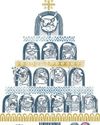
What are the origins of the Yule Lads?
To learn about the Jólasveinar (Yule Lads), we must start with their mother, the terrifying ogress Grýla. Her name appeared in Icelandic texts as early as the 13th century, although it wasn’t until later that those 13 mischievous lads became associated with her. Folk tales and poems tell how she descends from the mountains with an empty sack to stuff full of children. Grýla owns the monstrous Jólaköttur (Yule Cat), which roams the countryside on Christmas Eve, searching for children to gobble up if they're not wearing new clothes.
1 mins
Christmas 2025
BBC History UK
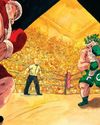
Santa Claus v Father Christmas
The true identity of the white-bearded, red-robed figure who fills children's stockings at Christmas has long been debated. Thomas Ruys Smith sizes up the merry contenders
8 mins
Christmas 2025

BBC History UK
Frontier friction
Set in Washington Territory in 1854, The Abandons is a Western that's unusual for having two matriarchs, women whose lives become entangled, at its centre.
1 min
Christmas 2025
BBC History UK
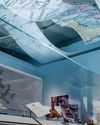
The Last Days of Pompeii: The Immersive Experience
Delve into the culture of daily Roman life, witness the momentous eruption of Mount Vesuvius, and follow its fallout in Immerse LDN's new exhibition. In a blend of cutting-edge technology and vivid storytelling, this exhibition launches visitors into Pompeii's rich history with recreations of the ancient city's beautiful pre-eruption landscape, a 360-degree virtual reality Roman amphitheatre experience, and a digital metaverse recreating Pompeii's 'Villa of Mysteries'.
1 min
Christmas 2025
BBC History UK
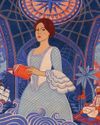
Elizabeth Marsh The corsair's captive
Taken hostage by a Barbary ship's captain in the 18th century, a young Englishwoman found herself fighting for her freedom in Marrakech. ADAM NICHOLS introduces a brave captive who later wrote a book about her dramatic experiences
6 mins
Christmas 2025
BBC History UK
29 DECEMBER 1170: Thomas Becket is murdered in Canterbury
Knights loyal to Henry II rid him of the “low-born cleric”
2 mins
Christmas 2025
Listen
Translate
Change font size