
Mit Magzter GOLD unbegrenztes Potenzial nutzen
Erhalten Sie unbegrenzten Zugriff auf über 9.000 Zeitschriften, Zeitungen und Premium-Artikel für nur
Versuchen GOLD - Frei
TURN OFF THE LIGHT
The New Yorker
|February 27, 2023
What’s lost when darkness becomes endangered?

The Luxor Hotel’s powerful “sky beam” confuses flying creatures drawn to the light.
Among the many looming ecological disasters that terrify us today, one that only a handful of people have contemplated as sufficiently looming and terrifying is the loss of the bats in our belfry. According to “The Darkness Manifesto” (Scribner), by the Swedish ecologist Johan Eklöf, most churches in southwest Sweden had bat colonies back in the nineteen-eighties, and now most of them don’t. Light pollution, his research suggests, has been a major culprit: “District after district has installed modern floodlights to show the architecture it’s proud of, all the while the animals—who have for centuries found safety in the darkness of the church towers and who have for 70 million years made the night their abode—are slowly but surely vanishing from these places.”
The presence of bats in the belfry, as a metaphor for disordered thinking, is usually taken to refer to the way bats would flutter around the upper stories of distressed churches, but a larger madness, Eklöf thinks, is responsible for their absence. A professor at Stockholm University, he is an expert in bats, which might suggest a
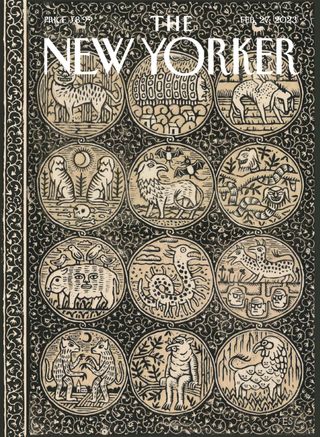

Diese Geschichte stammt aus der February 27, 2023-Ausgabe von The New Yorker.
Abonnieren Sie Magzter GOLD, um auf Tausende kuratierter Premium-Geschichten und über 9.000 Zeitschriften und Zeitungen zuzugreifen.
Sie sind bereits Abonnent? Anmelden
WEITERE GESCHICHTEN VON The New Yorker
The New Yorker
CONTACT SOLUTIONS
“Disclosure Day.”

6 mins
June 22, 2026

The New Yorker
BAD ROMANCE
When did white-collar work start to look so bleak?
14 mins
June 22, 2026
The New Yorker
MUTTER
I'm waiting for my mother at the airport, holding a strip of cardboard above my head that says \"MUTTER.\"
10 mins
June 22, 2026

The New Yorker
BILLIONS AND BILLIONS
The hedge-fund titan Ken Griffin beats the competition at making money—and spending it.
40 mins
June 22, 2026

The New Yorker
MISERY LOVES COMPANY
The rise of \"Admin Nights\" in pursuit of productivity.
13 mins
June 22, 2026
The New Yorker
MEET RUSS FREUD
It used to be called the Roberts Institute for Living, but everybody knew that it was the insane asylum, and that’s what people called it.
3 mins
June 22, 2026

The New Yorker
UP TO NO GOOD
The hell-raising rocker who conquered country radio.
5 mins
June 22, 2026
The New Yorker
SOUL-SEARCHING
How the American church found its followers.
12 mins
June 22, 2026
The New Yorker
FAREWELL, MY LOVELY
Gustavo Dudamel and James Conlon put down their batons in Los Angeles.
9 mins
June 22, 2026

The New Yorker
ALLIES ON ICE
How the secret plans to take over Greenland have ruptured transatlantic relations.
44 mins
June 22, 2026
Translate
Change font size