Versuchen GOLD - Frei
THE SECRET KEEPERS
The New Yorker
|July 28, 2025
The C.I.A. is accustomed to threats—but now they're coming from above.
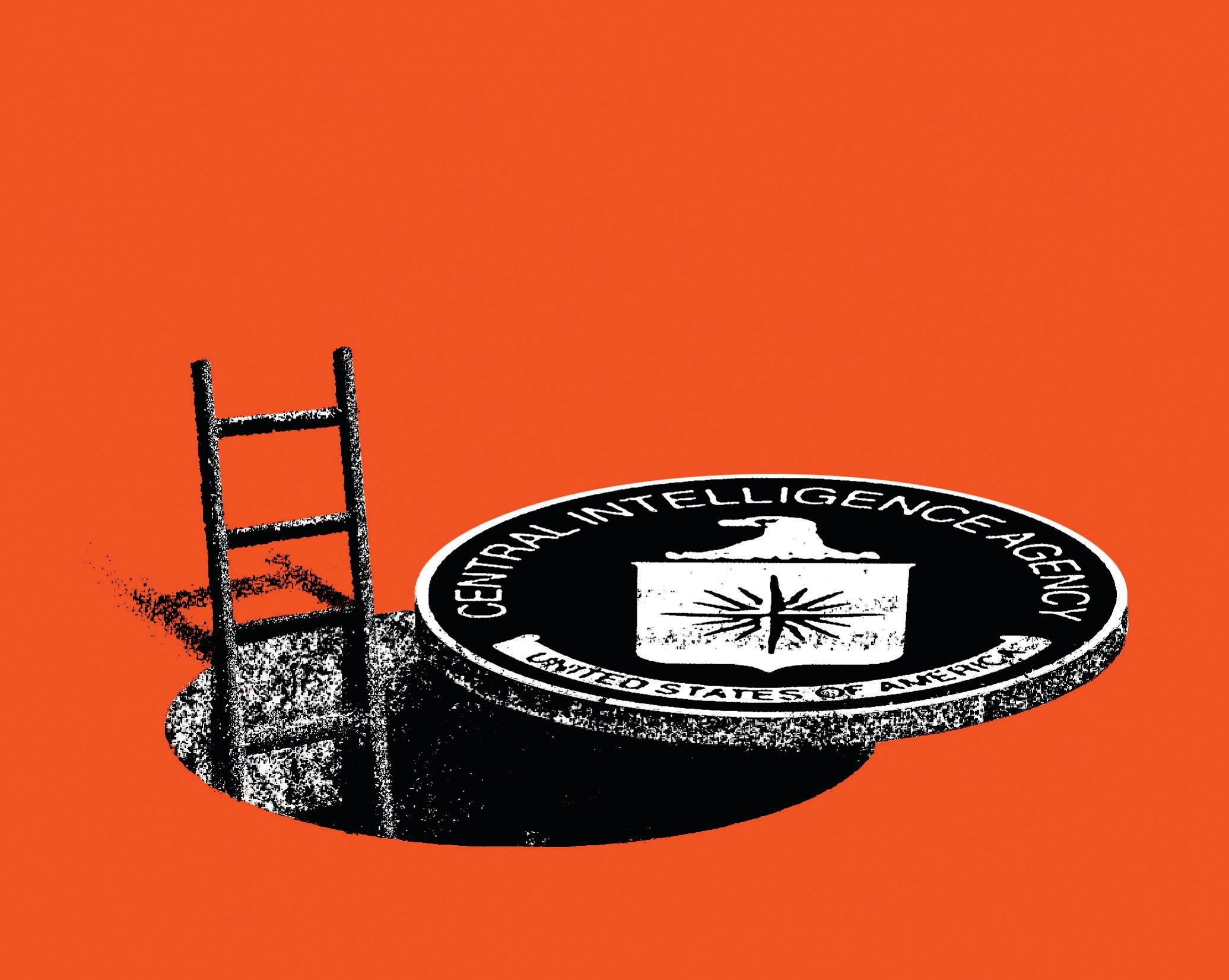
From assassination plots to torture programs, the agency's darkest operations have always been at the President's behest.
In December, 1988, as the Soviet Union was beginning to come apart, Senator Bill Bradley, a member of the Senate Select Committee on Intelligence, convened a closed-door hearing with several of the C.I.A.'s top Soviet experts. These were analysts, not operatives. They did not run spies or weapons, or shoot poisoned darts at people; mostly, they sat at their desks at Langley, reading Pravda or studying photographs of Soviet military parades. The hearing found them in a melancholy mood, pondering life without the U.S.S.R. “The Soviet Union is so fundamental to our outlook on the world, to our concept of what is right and wrong in politics,” Douglas J. MacEachin, who ran the C.I.A.’s office of Soviet analysis, said, “that major change in the U.S.S.R. is as significant as some major change in the sociological fabric of the United States itself.” And so, MacEachin explained, a C.I.A. analyst struggled to see things clearly; not only his world view but his livelihood was at stake. If the Soviet Union disappeared, what would become of those who made their careers analyzing it? “There are not many homes for old wizards of Armageddon,” MacEachin said.
Soon enough, the Soviet Union collapsed with a whimper, and the United States stood alone. Perceiving no enemies on the near horizon, the nation stopped looking for them so fervently. Budgets were cut, retirements suggested. Agents in the field were brought in from the cold. Bill Clinton, the first post-Cold War President, was elected to fix the economy. So infrequent were Clinton’s meetings with his first C.I.A. director, James Woolsey, that when a small plane crashed onto the White House lawn, in the fall of 1994, people joked that it must be Woolsey, trying to get an audience with the President.

Diese Geschichte stammt aus der July 28, 2025-Ausgabe von The New Yorker.
Abonnieren Sie Magzter GOLD, um auf Tausende kuratierter Premium-Geschichten und über 9.000 Zeitschriften und Zeitungen zuzugreifen.
Sie sind bereits Abonnent? Anmelden
WEITERE GESCHICHTEN VON The New Yorker

The New Yorker
VISITING HOURS
In Harriet Clark's début novel, a prisoner's daughter must find her way.

10 mins
May 11, 2026

The New Yorker
REVAMPS
Two new musicals on Broadway, \"Schmigadoon!\" and \"The Lost Boys.\"
7 mins
May 11, 2026

The New Yorker
RESOLVED
High-school debate, our real national pastime.
4 mins
May 11, 2026

The New Yorker
THE BIG PICTURE
Frederic Church turned landscape into a vision of national virtue.
17 mins
May 11, 2026

The New Yorker
COUTURE SHOCK
\"The Devil Wears Prada 2.\"
6 mins
May 11, 2026
The New Yorker
THE SHOT HEARD ROUND THE WORLD?
The American Revolution was just one front in a vast global war. Which went rather well for the Brits.
16 mins
May 11, 2026

The New Yorker
CROSSROADS
The inventor of “intersectionality” looks back—and ahead.
16 mins
May 11, 2026
The New Yorker
WHAT WE HOLD
The writing and meaning of the Declaration of Independence.
19 mins
May 11, 2026

The New Yorker
STANDINGS
My given name, Jeon-Gi, with a hard “G,” was one that some of the kids in my apartment complex enjoyed deforming.
33 mins
May 11, 2026

The New Yorker
AMERICAN TWEEN
In some ways, the world is cooked. But being a twelve-year-old still kind of eats.
33 mins
May 11, 2026
Listen
Translate
Change font size