Versuchen GOLD - Frei
EVOLUTION
The New Yorker
|August 07, 2023
Bethany Cosentino's songs of self-actualization

These days, it’s not uncommon to hear moviegoers, exhausted by new releases based on toys, comic books, or films they’ve already seen, lament the disappearance of a middle ground between blockbuster and avant-garde: stories that are character-driven but not too opaque or ponderous, that are neither blind to suffering nor drowning in pathos, that aren’t fusty or overly youth-obsessed. That same void exists, to a lesser degree, in the music industry. It’s easy to find records that feel raw and challenging, or, conversely, records that have been focus-grouped and smoothed into oblivion. It is much more difficult to find music that explores whatever might lie in between. On “Natural Disaster,” out this month, the singer, songwriter, and guitarist Bethany Cosentino takes an unexpected swing at normie rock and roll. The album’s references are clear: Liz Phair in her “Why Can’t I?” era, Alanis Morissette, Pete Yorn, the Wallflowers, Don Henley, Matchbox Twenty, and, perhaps most vividly, Sheryl Crow, who in the second half of the nineties had a lock on bluesy, loping, straightforward guitar pop. Cosentino, who was born in Los Angeles, came of age as part of Best Coast, an indie-rock duo she formed with the multi-instrumentalist Bobb Bruno. Best Coast released its début LP, “Crazy for You,” in 2010, and Cosentino became beloved for her gauzy and cacophonous tunes about longing and despair. She had recently spent a depressed nine months living in Brooklyn, interning at

Diese Geschichte stammt aus der August 07, 2023-Ausgabe von The New Yorker.
Abonnieren Sie Magzter GOLD, um auf Tausende kuratierter Premium-Geschichten und über 9.000 Zeitschriften und Zeitungen zuzugreifen.
Sie sind bereits Abonnent? Anmelden
WEITERE GESCHICHTEN VON The New Yorker
The New Yorker
DEPT. OF ETCHING
One recent weekday morning, the British painter Peter Doig arrived at a bonded warehouse—a cavernous brick building—about a mile south of the River Thames, but not subject to the import taxes of the United Kingdom.

3 mins
January 19, 2026

The New Yorker
SUBWAY VIGILANTE
Revisiting the New York shooting that defined an era
17 mins
January 19, 2026

The New Yorker
MOM AND DAD: THE PERFORMANCE REVIEW
Mom, Dad, thanks for being on time this year. Dad, I can see by your T-shirt that it was a challenge. So you've already exceeded expectations.
3 mins
January 19, 2026
The New Yorker
Patrick Radden Keefe on Truman Capote's “In Cold Blood”
In 1972, on “The Tonight Show,” Johnny Carson asked Truman Capote about capital punishment. Capote had written, in unsettling detail, about the hanging of two killers, Dale Hickock and Perry Smith. Carson said, of the death penalty, “As long as the people don't have to see it, they seem to be all for it”; if executions occurred “in the public square,” Americans might stop doing them. Capote wasn't so sure. His hands laced together professorially, he murmured, in his baby-talk drawl, “Human nature is so peculiar that, really, millions of people would watch it and get some sort of vicarious sensation.”
3 mins
January 19, 2026
The New Yorker
BOOTS ON THE GROUND
There aren't many moments in Donald Trump's political career that could be called highlights.
4 mins
January 19, 2026
The New Yorker
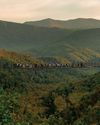
CALL OF THE WILD
When calamity strikes in America's busiest national park, who comes to the rescue?
35 mins
January 19, 2026

The New Yorker
UNDER THREAT
The Danes were America's most loyal ally. Now they feel targeted—and terrified.
22 mins
January 19, 2026

The New Yorker
CONTAGION
A Broadway revival of Tracy Letts's “Bug.”
6 mins
January 19, 2026

The New Yorker
ANNALS OF TECHNOLOGY: HEY THERE!
How WhatsApp took over the global conversation.
25 mins
January 19, 2026
The New Yorker
M.I.P. IN CHAINS
Whatever else you think about invading a country and capturing its President, there's no getting around the inconvenience of imprisoning Nicolás Maduro in New York City.
7 mins
January 19, 2026
Translate
Change font size