
Mit Magzter GOLD unbegrenztes Potenzial nutzen
Erhalten Sie unbegrenzten Zugriff auf über 9.000 Zeitschriften, Zeitungen und Premium-Artikel für nur
LOST ROMAN RESORT
Archaeology
|May/June 2023
In the Bay of Naples, miles of ruins recall the splendor of ancient imperial holidays

POMPEII GETS ALL THE scientific and public attention, and it's not hard to understand why. The city buried by the eruption of Mount Vesuvius in A.D. 79 provides an endless source of artistic marvels and archaeological insight, and the cone-shaped stratovolcano still looms over Naples with familiar menace. But just on the other side of Naples' modern sprawl is a kind of shadow Pompeii called Baiae, another ancient town lost to volcanic activity-but not due to a sudden cataclysm. Once a legendary playground for Rome's elite, Baiae slowly sank to a watery end.
Thousands of years before Baiae was known as a resort destination, it would have been the worst place in the world to be. Around 39,000 years ago, the Gulf of Pozzuoli, where Baiae was eventually founded, exploded with 100 times the power of Vesuvius. The waters of the gulf, about 10 miles west of Naples, and the land surrounding it cover a supervolcano known today as the Campi Flegrei, or Phlegraean Fields, meaning the "burning" or "fiery" fields. The caldera is eight miles across, shot through with faults and speckled with 24 craters from smaller bursts on land and underwater. The volcano erupted again around 15,000 years ago, creating vast deposits of the stone called Neapolitan yellow
A mosaic floor with a geometric pattern made of black and white squares of marble called tesserae now sits at the bottom of the Gulf of Pozzuoli off the modern Italian town of Baia. The floor once belonged to a sumptuous seaside home called the Villa with the Porch Entrance in the ancient resort of Baiae tuff, which fronts many of Naples' historic buildings.
The Campi Flegrei has not erupted with that kind of force since but has nonetheless continued to shape the area. Its craters formed inviting basins for Roman ports, its geothermal activity fed hot springs that drew travelers and emperors alike, and its restlessness reshaped the topography and shoreline.


Diese Geschichte stammt aus der May/June 2023-Ausgabe von Archaeology.
Abonnieren Sie Magzter GOLD, um auf Tausende kuratierter Premium-Geschichten und über 9.000 Zeitschriften und Zeitungen zuzugreifen.
Sie sind bereits Abonnent? Anmelden
WEITERE GESCHICHTEN VON Archaeology
Archaeology
THE EGYPTIAN SEQUENCE
Until now, the earliest Egyptians to have even part of their DNA sequenced were three people who lived between 787 and 544 B.C.

1 mins
November/December 2025
Archaeology
SOURCE MATERIAL
As early as 40,000 years ago, some hunter-gatherers in southern Africa ventured long distances to procure special types of stone to make their tools.
1 min
November/December 2025

Archaeology
Secrets of the Seven Wonders
How archaeologists are rediscovering the ancient world's most marvelous monuments
13 mins
November/December 2025
Archaeology
ACTS OF FAITH
Evidence emerges of the day in 1562 when an infamous Spanish cleric tried to destroy Maya religion
12 mins
November/December 2025

Archaeology
OASIS MAKERS OF ARABIA
Researchers are just beginning to understand how people thrived in the desert of Oman some 5,000 years ago
8 mins
November/December 2025
Archaeology
FOSSIL FORCE
One of the planet's most successful arthropods, trilobites, abounded in the oceans from about 520 million to 250 million years ago.
1 min
November/December 2025
Archaeology
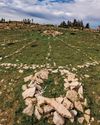
BIGHORN MEDICINE WHEEL, WYOMING
Perched almost 9,700 feet above sea level on Medicine Mountain in Wyoming's Bighorn Range, the Medicine Wheel is an 80-foot-diameter circular structure made from limestone boulders.
2 mins
November/December 2025
Archaeology
ANCIENT LOOK BOOK
A young woman buried in China's Tarim Basin some 2,000 years ago went to the afterlife accompanied by the height of fashion.
1 mins
November/December 2025
Archaeology
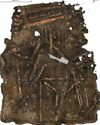
A FAMILIAR FACE
In the early eleventh century, a landslide on the island of Ostrów Lednicki in western Poland caused a hillfort to collapse and slip to the bottom of Lake Lednica.
1 min
November/December 2025
Archaeology
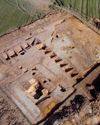
Temples to Tradition
A looted cache of bronzes compels archaeologists to explore Celtic sanctuaries across Burgundy
13 mins
November/December 2025
Translate
Change font size