Versuchen GOLD - Frei
SWORD BEACH
All About History UK
|Issue 153
QUISTREHAM, FRANCE 6 JUNE 1944
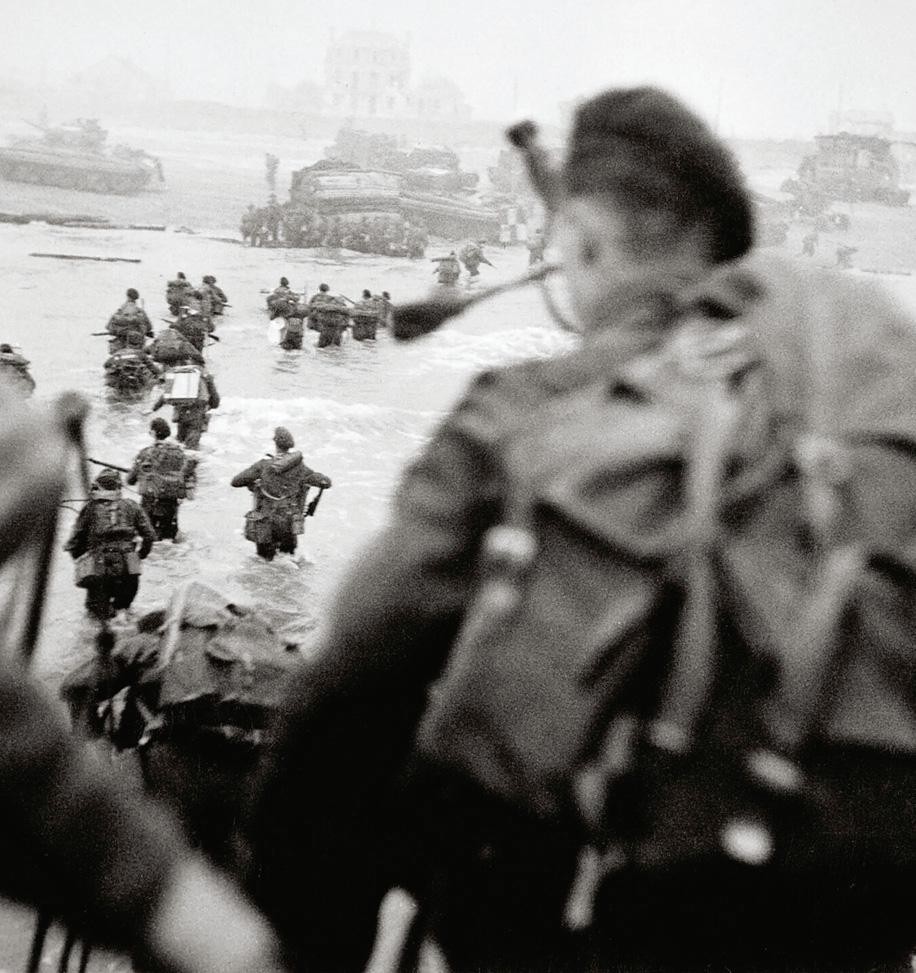
On 6 June 1944, the long-anticipated Allied assault on occupied France took place along an 80km front - however the amphibious landings were confined to roughly 19km of beaches across five areas. One of the smallest landing areas was the easternmost, where the British 3rd Infantry Division would land on Queen White and Red beaches alongside the town of Ouistreham.
Sword Beach would be a tough nut to crack. The beach itself was well defended by the formidable stützpunkt 20, codenamed strongpoint Cod by the British, a significant company-sized fortification and the largest single strongpoint on all five Normandy beaches. To the east widerstandsnest 18 (Skate) was equipped with a 75mm anti-tank gun that could fire down the length of the beach, while widerstandsnest 21 (Trout) a little to the west could bring fire down on the attackers' right flank. A little recognised fact is that, although considerably narrower than Omaha Beach, the average strength of the defences per kilometre was practically the same on Sword.
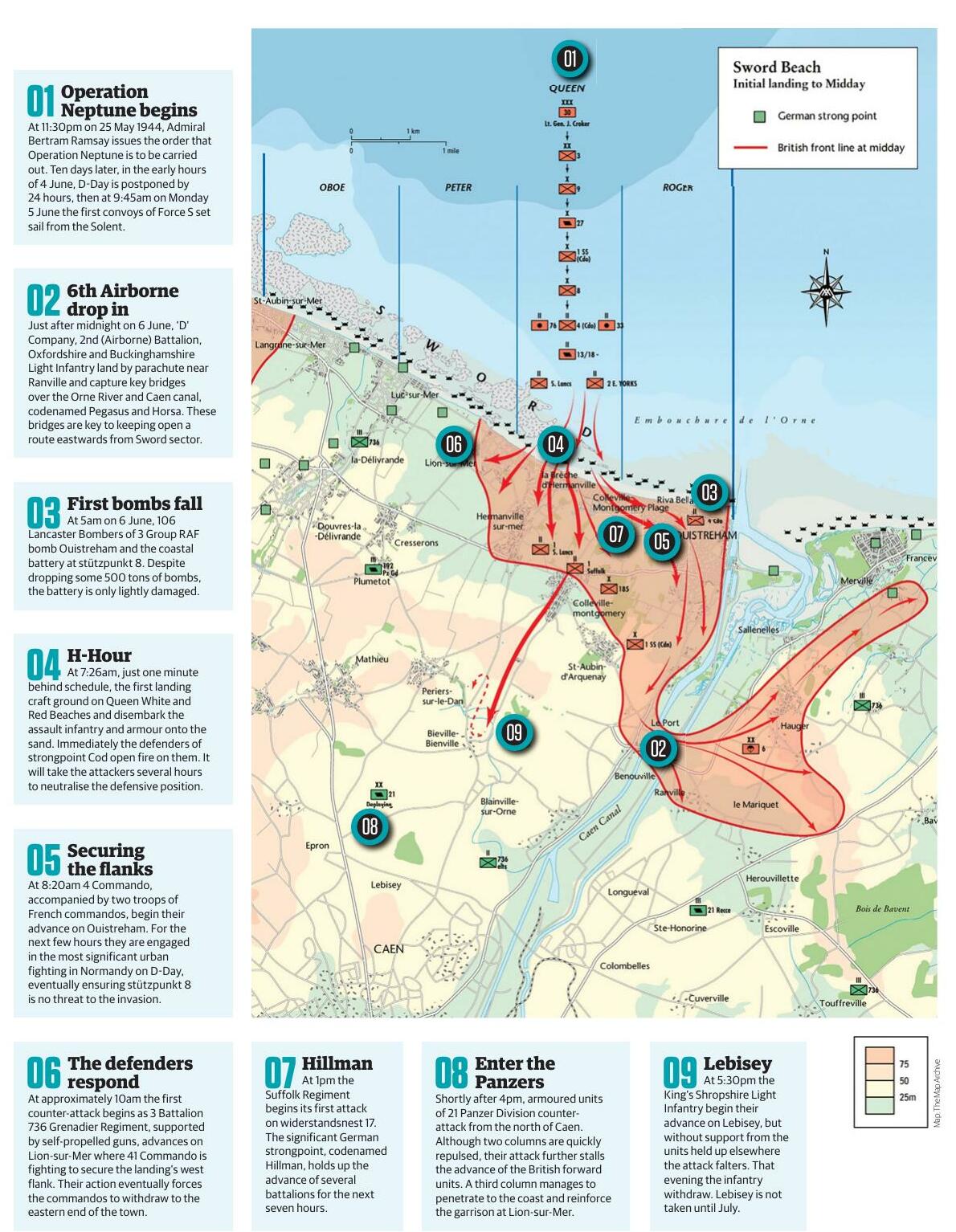 Unlike Omaha, Sword was relatively low-lying and the attackers would not have to contend with the high bluffs that characterised the US beach. But unlike Omaha, 3rd Infantry Division would have to deal with significant defences inland as well. Once off the beach, several artillery strongpoints and command posts barred the way, the strongest of which was widerstandsnest 17 (Hillman). Set into the broad Periers ridge 3km inland, it boasted numerous underground bunkers, steel cupolas and anti-tank guns. Moreover, its strength had been badly underestimated by Allied intelligence.

Diese Geschichte stammt aus der Issue 153-Ausgabe von All About History UK.
Abonnieren Sie Magzter GOLD, um auf Tausende kuratierter Premium-Geschichten und über 9.000 Zeitschriften und Zeitungen zuzugreifen.
Sie sind bereits Abonnent? Anmelden
WEITERE GESCHICHTEN VON All About History UK

All About History UK
73 EASTING
SOUTHEASTERN IRAQ 26-27 FEBRUARY 1991

10 mins
Issue163

All About History UK
MARIE ANTOINETTE: FASHION ICON
A new exhibition explores the enduring style of the infamous 18th-century French queen
2 mins
Issue163
All About History UK
INK! FROM THE AGE OF EMPIRE TO BLACK POWER, THE JOURNALISTS WHO TRANSFORMED BRITAIN
Bringing seven fascinating voices back into the limelight
1 mins
Issue163

All About History UK
THE HURRICANE
Does this story of unjust incarceration stick to the evidence?
1 min
Issue163

All About History UK
JANE AUSTEN'S ENGLAND
How Regency romance, society and family bonds inspired one of the nation's greatest authors
14 mins
Issue163

All About History UK
THE VALUE OF SPICES
Roger Crowley explains how spices transformed the world and why they were such a valuable commodity
4 mins
Issue163
All About History UK
EL GENERALISIMO
A new biography explores the life of Francisco Franco - the dictator who ruled Spain for 39 years
1 min
Issue163

All About History UK
Founder of the Persian Empire
How Cyrus the Great forged his kingdom using force and smart administration of his government
8 mins
Issue163
All About History UK
PORTUGUESE NAU
Portugal 14th - 16th century
2 mins
Issue163

All About History UK
LEMON SYLLABUB
ENGLAND, 16-19TH CENTURY
1 mins
Issue163
Listen
Translate
Change font size