Versuchen GOLD - Frei
CITY OF FOOD
All About History UK
|Issue 158
David Downie explains why, for centuries, Paris has been a go-to destination for cuisine of all kinds
-
How did Paris earn a reputation as a food-loving city?
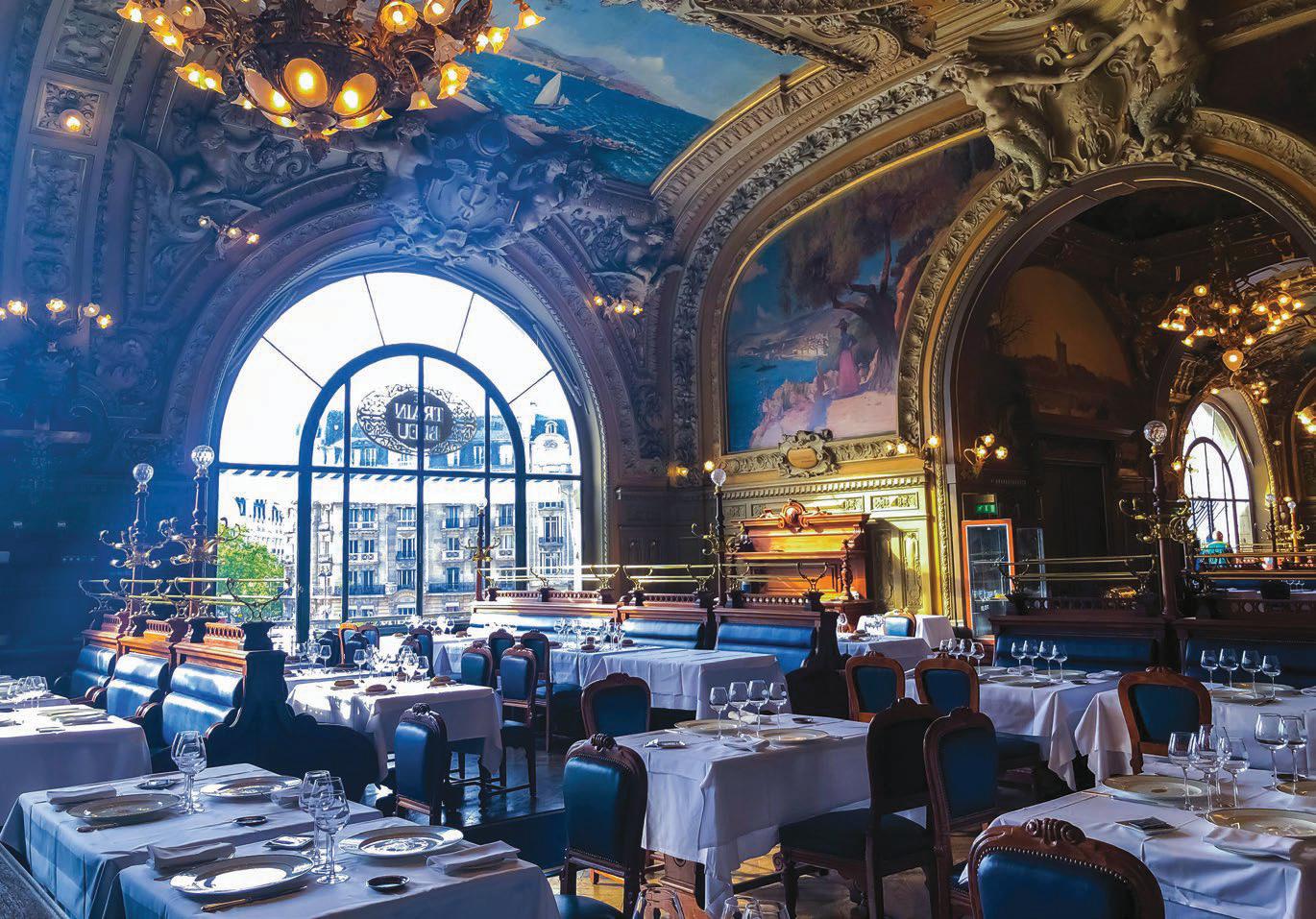
That reputation has a lot to do with the invention, if you will, of the à la carte restaurant in the second half of the 1700s. Prior to that you went to a tavern, or auberge, and got pot luck, meaning whatever was available that day. Suddenly a handful of eating establishments popped up in the vicinity of the Louvre and PalaisRoyal, the heart of historic Paris, with menus offering a selection of tempting dishes of the kind the aristocrats and haute bourgeoisie [upper middle class] might eat at home.
It's hard to exaggerate how revolutionary the concept was. You had your own table, you weren't forced to sit with others; you were waited on by a professional, not a scullery maid; and you were promised healthful, delicious food that would 'restore' you, hence the term, restaurant - a place to be restored.
The tale of the unemployed chefs of the Ancien Régime inventing the restaurant is a myth. Restaurants got started before the revolution of 1789. It is true, however, that the number of restaurants skyrocketed once the aristocrats fled abroad or got their heads chopped off and the chefs had to scramble, so to speak, to find employment. That reputation grew in the 1800s thanks to these once-grand chefs of once-grand noble families who were now running eateries of all descriptions.
Why did the restaurant come into being almost overnight?
There are various theories, based on eyewitness accounts from the 1760s onward, and there's lots of speculation.

Diese Geschichte stammt aus der Issue 158-Ausgabe von All About History UK.
Abonnieren Sie Magzter GOLD, um auf Tausende kuratierter Premium-Geschichten und über 9.000 Zeitschriften und Zeitungen zuzugreifen.
Sie sind bereits Abonnent? Anmelden
WEITERE GESCHICHTEN VON All About History UK
All About History UK
THE KING'S TRAITOR
A comprehensive study of Reginald Pole, Henry VIII's arch rival

1 min
Issue 164
All About History UK
A ROYAL OUTCAST: THE LIFE AND SCANDAL OF PRINCESS LOUISE, PRINCE ALBERT'S MOTHER
The fascinating story of a little-known royal
2 mins
Issue 164

All About History UK
WHAT IF...THE NAZIS HAD THE ATOM BOMB FIRST?
With the ultimate weapon in his grasp, would Hitler have held Europe to ransom or reduced it to rubble?
6 mins
Issue 164

All About History UK
HISTORY VS HOLLYWOOD EDEN
How did the promise of Utopia in the Galápagos Islands really unravel?
1 min
Issue 164

All About History UK
15 Historic Deadly Diet Tips
UNCOVER SOME OF THE PAST'S STRANGEST AND MOST DANGEROUS EATING HABITS AND WEIGHT-LOSS FADS
5 mins
Issue 164

All About History UK
GUACAMOLE: CENTRAL AMERICA, 14TH CENTURY - PRESENT
Today guacamole is a common sight around the globe, frequently served with a plate of loaded nachos in your favourite drinking establishment or slathered through a spicy burrito.
1 mins
Issue 164

All About History UK
The Baroness of the Sea
Discover the life of the pioneering woman who broke boundaries in circumnavigating the oceans
6 mins
Issue 164

All About History UK
AZTEC SACRIFICE
Why this great empire believed bloody rites and cannibalism brought order to the cosmos
13 mins
Issue 164

All About History UK
RISE OF THE WAAF
How a group of women risked their lives to protect their nation in WWII and shatter social norms
6 mins
Issue 164
All About History UK
NAGAYA ROWHOUSE Edo Japan c.1603 - present
During the Edo period, residences were built to house the lower strata of Japanese society.
1 min
Issue 164
Listen
Translate
Change font size