Versuchen GOLD - Frei
3D Printing in Textiles Manufacturing: A Game-Changer in Design, Sustainability, and Efficiency
Textile Value Chain
|November 2025
The global textile and apparel industry is undergoing a radical transformation due to the convergence of digital design, advanced material technology, and next-generation manufacturing. Of the latter, few have greater potential to change how textiles are made today than additive manufacturing, better known as 3D printing.
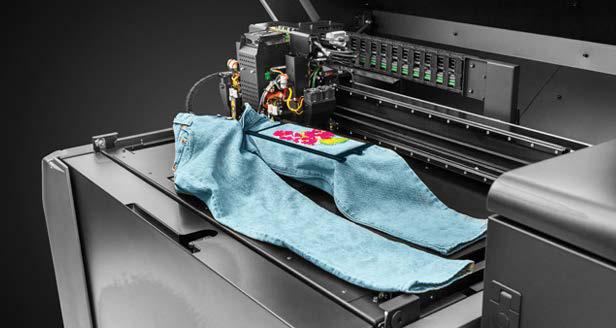
From its origins in prototyping and product design, 3D printing has evolved to become a robust industrial technology-one that can create customised, complex, and sustainable textile elements. With a growing requirement for minimal waste, increased speed to market, and personalisation, brands are redefining how fabrics will be envisioned, engineered, and manufactured with 3D printing.
Design and Material Innovation: Engineering Textiles with Digital Precision
Unlike traditional weaving, knitting, or stitching, 3D printing enables the direct creation of textile structures from digital models. This layer-by-layer fabrication process, powered by computer-aided design, enables the designer to fully control every geometric and material aspect of the textile. Such digitally engineered fabrics form a new category in which precision, performance, and artistic creativity are combined.
Designers can now create lattice geometries, variable-density structures, and integrated functionalities for ventilation, support, or compression within one print. This degree of control in design opens up possibilities that are not achievable by conventional methods in textiles.
As per Vertex Market Research, a leading market research firm, the global 3D printing materials market was valued at approximately USD 3 billion in 2024 and is expected to exceed USD 10 billion by 2030, growing at a CAGR of about 20%. Much of this growth emanates from the adoption of advanced polymers, including thermoplastic polyurethane (TPU) and polylactic acid (PLA), both renowned for their elasticity, biodegradability, and comfort.

Diese Geschichte stammt aus der November 2025-Ausgabe von Textile Value Chain.
Abonnieren Sie Magzter GOLD, um auf Tausende kuratierter Premium-Geschichten und über 9.000 Zeitschriften und Zeitungen zuzugreifen.
Sie sind bereits Abonnent? Anmelden
WEITERE GESCHICHTEN VON Textile Value Chain

Textile Value Chain
Rieter Winding Suction Nozzle Upgrade: More Yarn, Less Energy Use
After upgrading the suction nozzles on their 32 winding machines, Sanyang Textile Co., Ltd., China, saw an increase in yarn production of 3% and a reduction of 13% in energy use. The flow-optimised, aerodynamically designed suction nozzle enables efficient upper yarn search and pickup from the package. This results in a 55% reduction in red light percentage and a significant reduction in the operator's workload.

1 mins
November 2025
Textile Value Chain
EU's Extended Producer Responsibility (EPR) Law and Its Implications for India's Textile Industry
The European Union (EU) has approved a new Extended Producer Responsibility (EPR) framework for textiles. This is a major regulatory shift that makes fashion brands and producers accountable for their products' entire lifecycle, from design and production through collection, sorting, recycling and disposal.
9 mins
November 2025

Textile Value Chain
Reinterpreting Korean Street Fashion through Sustainable Design Practices
A Path through Eco-conscious Urban Fashion
7 mins
November 2025
Textile Value Chain
3D Printing in Textiles Manufacturing: A Game-Changer in Design, Sustainability, and Efficiency
The global textile and apparel industry is undergoing a radical transformation due to the convergence of digital design, advanced material technology, and next-generation manufacturing. Of the latter, few have greater potential to change how textiles are made today than additive manufacturing, better known as 3D printing.
5 mins
November 2025
Textile Value Chain
Future Outlook & Conclusion: The Next Phase of Textile Manufacturing
7 mins
November 2025

Textile Value Chain
3D Printing in Textile Production: Weaving the Future, Layer by Layer
What if someone told you that the future of fashion might not rely on scissors, sewing machines, or piles of fabric scraps?
5 mins
November 2025

Textile Value Chain
The Impact of Textile Automation: Transforming an Industry Thread by Thread
Walk into any modern textile factory today, and you'll witness something remarkable.
7 mins
October 2025
Textile Value Chain
Textile Circularity - A Decade of Experiments and Experiences at Meemansa
The textile industry is a paradox: it is a generator of beauty, culture, and livelihoods - yet also one of the most resource-intensive and waste-producing sectors in the world.
6 mins
October 2025

Textile Value Chain
Geopolitical Risks and the Future of Indian Textile Exports: Navigating an Uncertain World
The global textile trade, once anchored in predictable economic cycles and established trade corridors, now finds itself navigating one of the most volatile geopolitical landscapes in decades. From the Russia x Ukraine war to the conflict in West Asia, from U.S. x China, U.S. x India tariff hostilities to fragmented global trade alliances, uncertainty has become the new constant.
4 mins
October 2025
Textile Value Chain
Australia's Cotton Industry in 2025: Navigating Markets, Sustainability, and Change
As the Australian cotton season draws to a close in October 2025, the industry stands at a pivotal moment shaped by steady production, dynamic export trends, and a sharpened focus on sustainability.
3 mins
October 2025
Listen
Translate
Change font size