
Mit Magzter GOLD unbegrenztes Potenzial nutzen
Erhalten Sie unbegrenzten Zugriff auf über 9.000 Zeitschriften, Zeitungen und Premium-Artikel für nur
Versuchen GOLD - Frei
Mission Millets
Fortune India
|December 2022
Activists, food companies and now even the government have come together to revive India's forgotten ancient grains (millets) to traverse from food security towards nutrition security. Will they succeed?
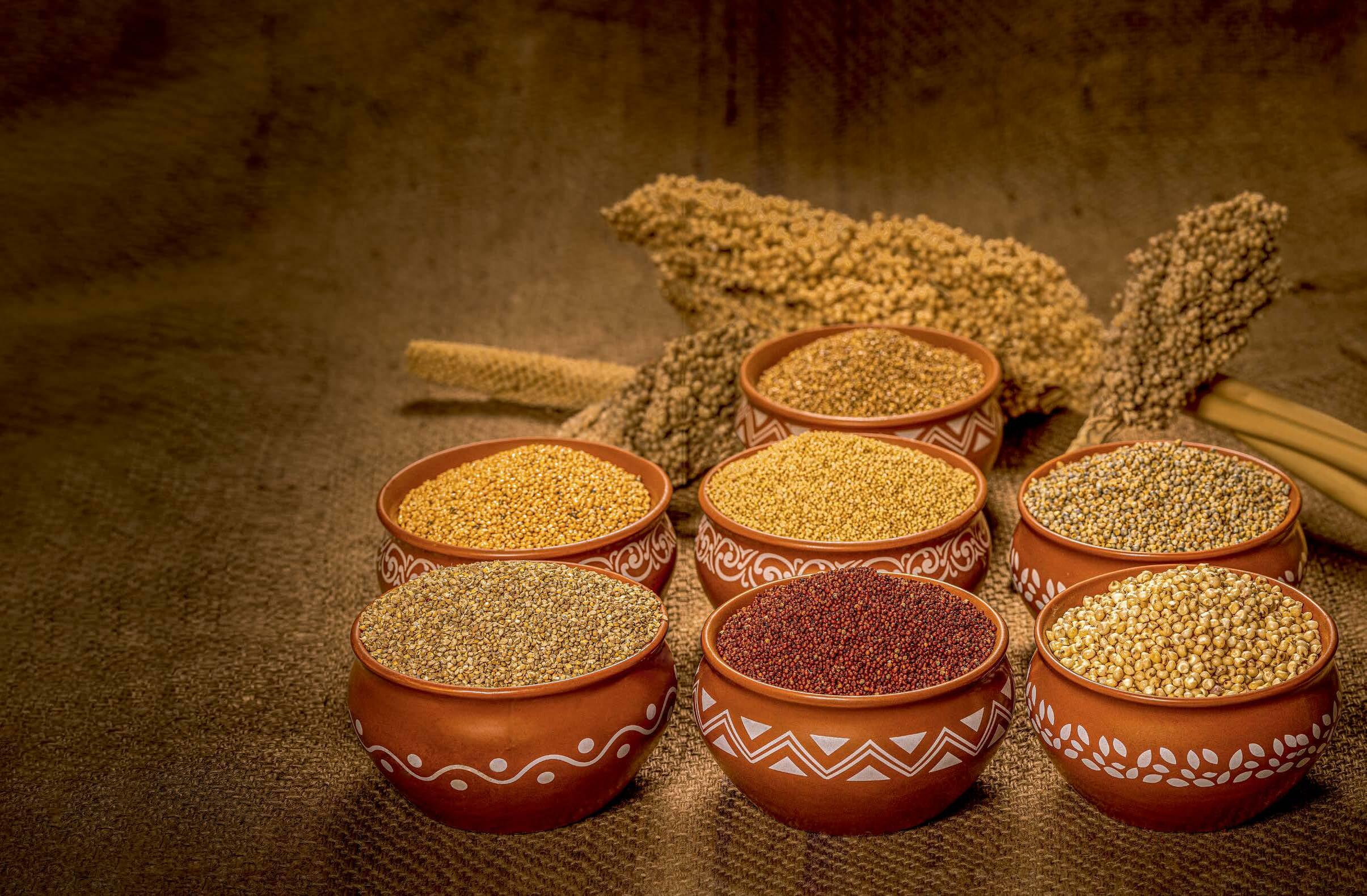
DHRUVA JYOTHI, a home chef in the palace town of Mysuru in Karnataka, is known for his authentic Kannadiga vegetarian thali. As the journalist turned entrepreneur lovingly serves a sumptuous spread on a banana leaf, he proudly rattles names of luminaries who have savoured his food - yesteryear's cricket stars Javagal Srinath, Anil Kumble, and a host of senior politicians and bureaucrats. However, it is not just the authentic Kannada food which attracts his patrons. It's the ingredients. Jyothi's thali is a tribute to a variety of forgotten ancient Indian grains', better known as millets. Rice is not the regular paddy, but 'little millet', rotis are made out of jowar' and the kheer comprises 'foxtail millet.
Five years ago, a major health issue forced Jyothi to undergo a lifestyle change. He eliminated rice, wheat, and sugar from his diet and switched to far more nutritious' millets. "I have always been a foodie and have loved to cook. I found enough ways of making millet-based food delicious," says Jyothi, who claims millets have also helped him get rid of his ailments.
Millets come in two genres: 'Major millets' (jowar, bajra, and ragi, which constitute 80% of millets grown in India) and 'minor millets' (foxtail, little millets, barnyard, kodo, and brown-top). They are India's very own superfoods and are considered far more nutritious than the South American quinoa or chia, which has become a fad among up-market Indians. Millets are also rich in carbohydrate, protein, dietary fibre, good-quality fat, and have substantially higher amounts of minerals, including calcium, potassium, magnesium, iron, manganese, zinc and B-complex vitamins. Most importantly, they are one-fourth the price (a 1 kg pack of quinoa is priced at ₹500) of the imported grains.

Diese Geschichte stammt aus der December 2022-Ausgabe von Fortune India.
Abonnieren Sie Magzter GOLD, um auf Tausende kuratierter Premium-Geschichten und über 9.000 Zeitschriften und Zeitungen zuzugreifen.
Sie sind bereits Abonnent? Anmelden
Translate
Change font size