Versuchen GOLD - Frei
Pilot Pain
Forbes India
|December 26, 2025
The IndiGo fiasco was not a scheduling failure alone. Pilots spill the beans on the fractures in training, rostering, working conditions and the shrinking captain pool
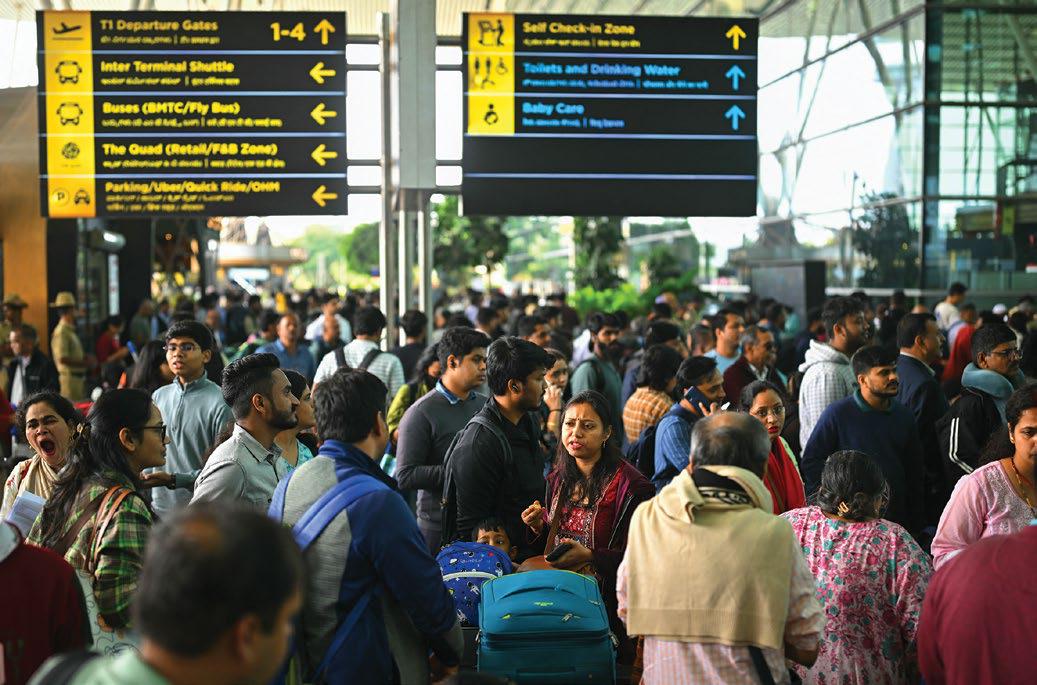
IndiGo suffered one of the most severe operational breakdowns in recent aviation history in December.
The airline, which controls over 65 percent of India's domestic market, buckled under the revised Flight Duty Time Limitation (FDTL) norms, which came into effect on November 1, leading to thousands of flight cancellations and inconvenience for lakhs of passengers. What began on December 2 escalated by December 5, when approximately 1,600 IndiGo flights were cancelled in a single day and the airline's on-time performance (OTP) came down to 35 percent after maintaining nearly 90 percent in recent months.
The collapse reveals a deeper structural issue in Indian aviation: The long and slow erosion of pilot working conditions and the industry's dependence on fatigue-inducing rosters optimised for utilisation rather than human physiology. “On an average, I flew 60 to 70 hours a month, but my total monthly duty time was often 140 to 150 hours, at times, even more. Discontent among the fraternity was growing as rostering became more aggressive,” a former IndiGo pilot who spent over 10 years with the airline told Forbes India. “You are required to report an hour before, but you are paid only for flight hours. Turnarounds and post-flight work are not the same.”
Apart from this, first officer entry salaries have either remained stagnant or gone down over the last decade. This, even as training costs have shot up exponentially, creating debt burdens for cadet pilots. An Akasa Air pilot with less than five years of experience reveals that the in-hand starting salary across airlines now is between ₹1.2 lakh and ₹1.5 lakh a month—a figure that, another pilot shares, was their starting package even in 2010.
Industry veteran Captain Shakti Lumba, who headed Alliance Air and retired as an IndiGo executive, says, “IndiGo was caught between a rock and a hard place. It had increased its winter schedule and didn't have enough pilots to run it.


Diese Geschichte stammt aus der December 26, 2025-Ausgabe von Forbes India.
Abonnieren Sie Magzter GOLD, um auf Tausende kuratierter Premium-Geschichten und über 9.000 Zeitschriften und Zeitungen zuzugreifen.
Sie sind bereits Abonnent? Anmelden
Listen
Translate
Change font size