Versuchen GOLD - Frei
Furious Over Fast
Forbes India
|January 23, 2026
With 10-minute delivery workers organising strikes against harsh working conditions, experts suggest legal frameworks and a more humane approach to quick commerce
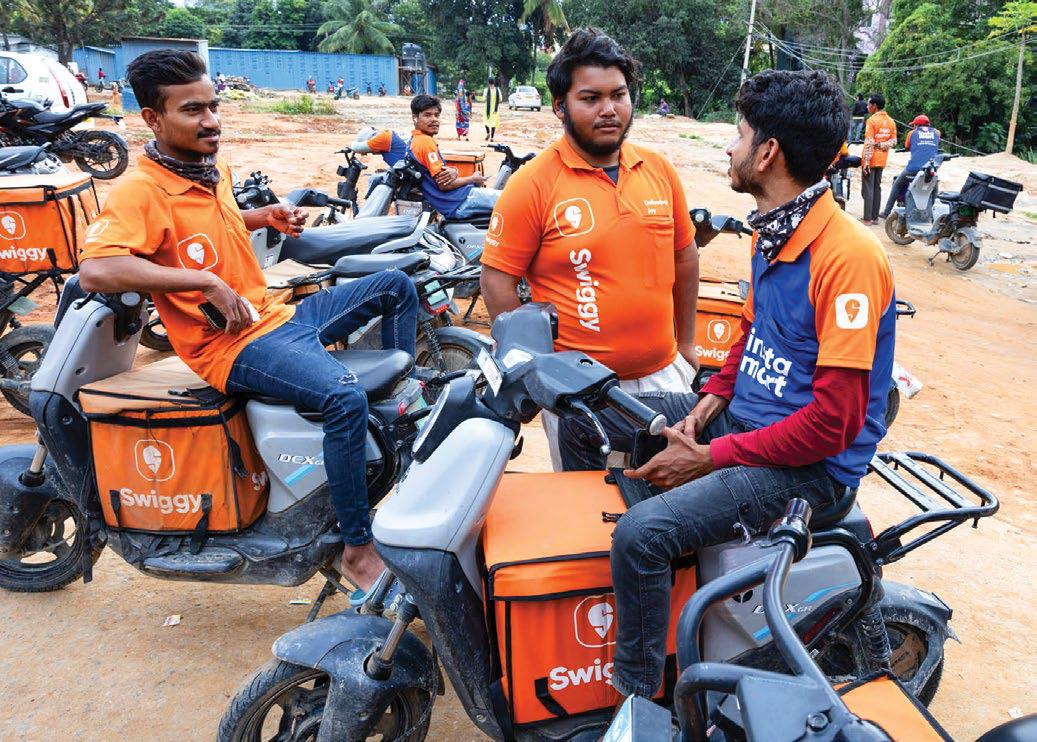
The gig economy in India faced its latest organised strike in December, with delivery workers across platforms refusing to work on high-demand days such as Christmas and New Year's Eve across multiple cities.
The strike highlighted concerns about labour practices, gig workers' earnings, and social and health coverage, especially in the context of 10-minute deliveries, which have come under scrutiny and criticism in the recent past.
In a demand charter submitted to the central government, a letter from the Gig and Platform Services Workers Union (GIPSWU) demanded that the 10-20-minute delivery service should be discontinued to prioritise worker safety. “Fix minimum per-kilometre rates at ₹20 for Zomato, Swiggy, Blinkit, Zepto, Flipkart and BigBasket workers; ensure workplace safety for women. Grant emergency leave and comprehensive maternity protection to women service workers, eliminate arbitrary ID blocking and punitive rating systems and guarantee minimum monthly earnings of ₹40,000,” the letter said.
News reports on January 13 claimed that Mansukh Mandaviya, Minister of Labour and Employment, met major quick commerce players like Blinkit, Zepto, Swiggy and Zomato, and urged them to drop their aggressive 10-minute delivery promise due to growing safety concerns for delivery workers. Following these discussions, Blinkit dropped its tagline highlighting 10-minute deliveries, and reworded its brand message to “30,000+ products delivered at your doorstep”. Other platforms were expected to take similar steps in the following days.
Although the stand against 10-minute deliveries focuses on worker safety and financial security, it gains significance in a labour market where gig work, once viewed as a stopgap or side hustle, has embedded itself in the country’s mainstream employment ecosystem, absorbing lakhs of workers.


Diese Geschichte stammt aus der January 23, 2026-Ausgabe von Forbes India.
Abonnieren Sie Magzter GOLD, um auf Tausende kuratierter Premium-Geschichten und über 9.000 Zeitschriften und Zeitungen zuzugreifen.
Sie sind bereits Abonnent? Anmelden
Listen
Translate
Change font size